St. Anne’s Church
Vilnius, Lithuania
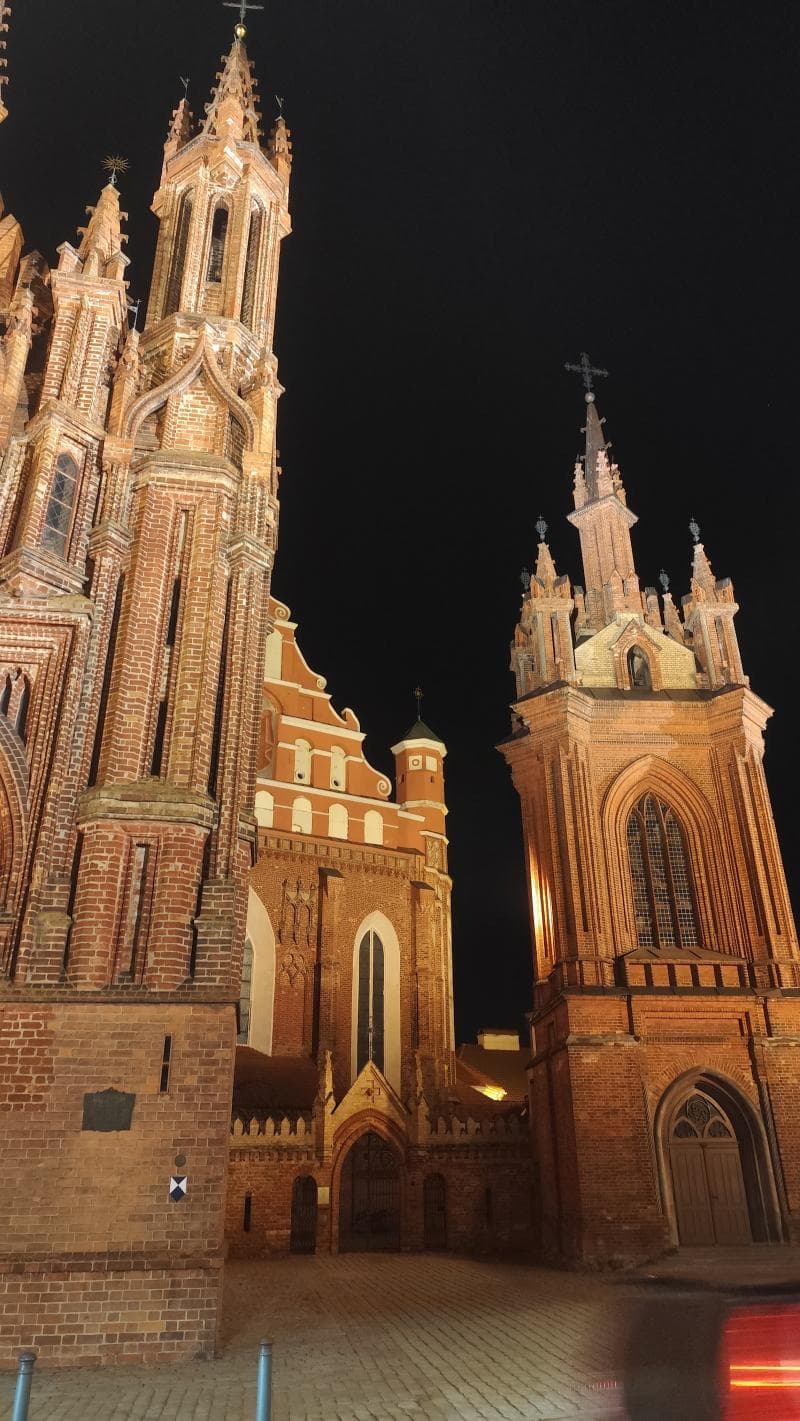
Discover St. Anne's Church in Vilnius, Lithuania: a stunning example of Flamboyant Gothic architecture in the heart of Vilnius Old Town. Explore its history and unique brick design.
Overview
Nestled within the enchanting Vilnius Old Town, a UNESCO World Heritage site in Vilnius, Lithuania, stands St. Anne’s Church, a breathtaking masterpiece of Gothic architecture. Its distinctive red brick façade and intricate design make it one of the city's most recognizable and revered landmarks. Consecrated around 1500, this Roman Catholic church is a prime example of both Flamboyant Gothic and Brick Gothic styles, captivating visitors with its enduring beauty and historical depth.
The church forms part of a remarkable architectural ensemble, situated alongside the larger Gothic Church of St. Francis and Bernardine, and a monastery. This pairing offers a fascinating glimpse into the rich religious and architectural heritage of the region, inviting curious travelers to explore centuries of devotion and craftsmanship.
History & Cultural Background
The story of St. Anne’s Church begins even before the current brick structure. An earlier wooden church, built for Anna, Grand Duchess of Lithuania and wife of Vytautas the Great, stood on this site. This initial church was tragically destroyed by a fire in 1419.
The construction of the present brick church commenced between 1495 and 1500, initiated by King of Poland and Grand Duke of Lithuania Alexander I Jagiellon. Its exterior has remarkably remained almost unchanged since its completion, a testament to the original builders' vision and the enduring quality of its design. Throughout the centuries, St. Anne's has witnessed pivotal moments in Lithuanian history, retaining its spiritual significance despite various conflicts and periods of change. In the early 16th century, the church was even integrated into Vilnius' defensive wall, with shooting openings visible in its walls, highlighting its strategic importance beyond its religious function.
What Makes It Special
What truly sets St. Anne's Church apart is its extraordinary architecture, particularly its flamboyant façade. It is often celebrated as one of the most interesting examples of Gothic architecture in Lithuania. The church was constructed using an impressive 33 different types of red clay bricks, a technique that allowed for the creation of its unique, flowing, and almost flame-like forms, characteristic of the Flamboyant Gothic style.
The main façade is a symphony of Gothic elements, featuring dramatic arches, a symmetrical design, and ornate pillars. Traditional Gothic arches are framed by rectangular elements, creating a dynamic impression that feels both intricate and harmonious. While the interior has seen some Baroque-style decorations added over time, the exterior has preserved its original late 15th-century character, offering an unparalleled visual experience. Inside, visitors can admire the altarpiece, carved wooden sculptures, and stained-glass windows, all contributing to a solemn yet inviting atmosphere.
Stories, Fun Facts & Local Details
Perhaps the most famous legend surrounding St. Anne's Church involves Emperor Napoleon Bonaparte. During the Franco-Russian War in 1812, upon seeing the church, he was so captivated by its beauty that he reportedly expressed a wish to carry it back to Paris 'in the palm of his hand'. This enduring anecdote highlights the church's profound aesthetic impact on even the most formidable historical figures, underscoring its status as an architectural marvel.
The church's proximity to the Bernardine Church creates a unique visual and historical pairing. These two distinct yet complementary structures stand side-by-side, offering a deeper insight into the medieval urban planning and religious life of Vilnius. In recent years, St. Anne's Church has also gained recognition for its dedication to the Tridentine Mass, a detail that further adds to its unique cultural and religious identity within modern-day Lithuania.
Visitor Perspective
For any traveler exploring Vilnius Old Town, St. Anne's Church is an essential stop. Its location is easily accessible, typically within a 15-minute walk from Vilnius Cathedral, and is often included in various walking tours of the Old Town.
The church is generally open to the public during the afternoons, though specific hours may vary and it's advisable to check in advance, especially since it is closed on Mondays. Entrance is usually free, but respectful conduct and modest dress are encouraged, particularly if visiting during worship services. Attending a service can offer a unique opportunity to experience local customs and traditions within this historic setting. The surrounding area also offers a blend of historical significance and contemporary charm, with cobblestone streets, local cafes, and nearby Bernardine Park providing a pleasant atmosphere for exploration.
Coordinates: 25.29333, 54.68306
View on Google Maps💬 How Travelers Describe This Place
Based on community votes
Unique
982Photogenic
876Must See
458Interesting
235Beautiful
197
Traveler Stories
Discover memorable experiences shared by travelers who have visited this place.
No traveler stories yet.
Be the first traveler to share what made this place memorable.

Tour
By
Spot
Discover amazing places around the world. Your journey starts here.
Explore
© 2026 TourBySpot. All rights reserved.