Sri Veeramakaliamman Temple
Singapore, Singapore
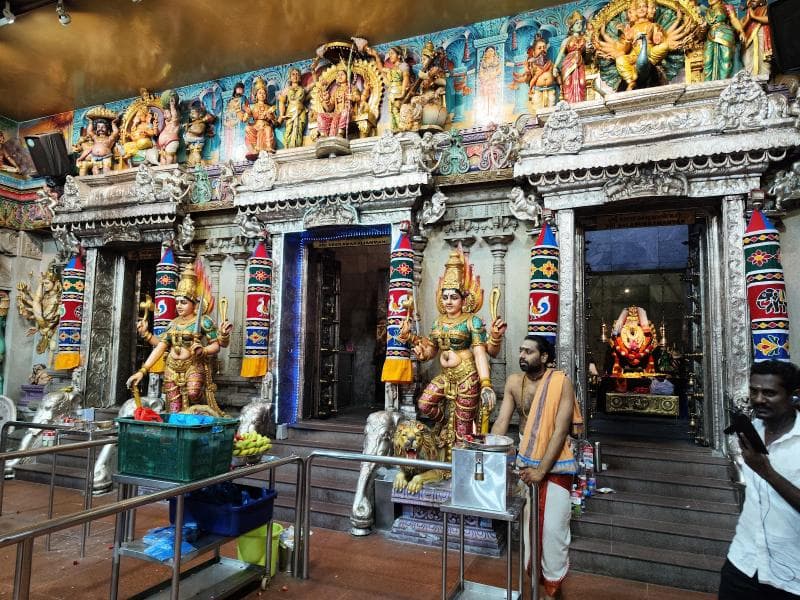
Explore Sri Veeramakaliamman Temple in Little India, Singapore, one of the oldest Hindu temples dedicated to Goddess Kali, showcasing stunning Dravidian architecture and rich cultural history.
Overview
Nestled in the vibrant heart of Little India, Singapore, the Sri Veeramakaliamman Temple stands as a magnificent testament to Hindu faith and the rich cultural heritage of the Indian community. Dedicated to the powerful goddess Kali, this oldest Hindu temple in Singapore is an essential spiritual and architectural landmark. Its distinctive Dravidian-style architecture, characterized by an intricately carved gopuram (entrance tower), immediately captures the eye, inviting travelers into a world of profound devotion and historical significance. The temple serves not only as an active place of worship but also as a cultural anchor for both local devotees and curious visitors, offering a unique window into Tamil traditions.
History & Cultural Background
The origins of the Sri Veeramakaliamman Temple trace back to the mid-19th century, when Indian pioneers, primarily Tamil laborers working in the lime kilns around Kampong Kapor, established a humble shrine to Goddess Kali as early as 1855. This initial shrine, then known as 'Soonambu Kambam Kovil' or 'temple at the lime village,' grew out of the deep-seated need for a spiritual sanctuary among the migrant Indian population in a foreign land. The presence of a place of worship dedicated to Veeramakaliamman, revered as the 'Destroyer of Evil', offered solace and a sense of security to these early settlers. A more formal structure began to take shape in 1881, with some accounts suggesting the involvement of Bengali laborers in its construction. By 1908, after a period of disrepair, municipal laborers took over the temple's management, importing a significant statue of Kali from South India and expanding the main hall and shrine. Throughout the years, the temple continued to evolve, adding more shrines and features, ultimately reflecting over 160 years of incremental development.
What Makes It Special
What truly sets the Sri Veeramakaliamman Temple apart is its stunning Dravidian architecture, an artistic marvel that transports visitors to the heart of South India. The temple's majestic gopuram is a focal point, adorned with hundreds of vibrant, hand-painted stucco figures depicting various Hindu deities and mythological scenes. Inside, the temple is filled with intricate carvings and statues, most notably those of Goddess Kali herself, often depicted with a garland of skulls and symbols of her protective power. Beyond its visual splendor, the temple is special for its role as a living, breathing center of worship. It remains an active and revered site where daily poojas (rituals) are performed, allowing devotees to connect deeply with their faith and traditions. This continuous spiritual activity, combined with its historical significance, makes it a unique cultural institution that preserves and showcases the essence of Hindu culture in Singapore.
Stories, Fun Facts & Local Details
The Sri Veeramakaliamman Temple holds many compelling stories and interesting facts. During the tumultuous years of World War II and the Japanese occupation of Singapore, the temple served as an unexpected sanctuary. Many locals sought refuge within its sturdy walls during air raids, and remarkably, the temple and those sheltering inside emerged unscathed, a detail often cited as a testament to the goddess's protection. Another fascinating historical note dates to October 1943, when a temple trustee, G. Maruthamuthu Pillai, presented a silver-bladed sword with a gilt handle to the Indian National Army. The temple also underwent a significant rebuilding project starting in 1983, culminating in a grand 'Kumbhabhishekam' ceremony in 2016, a sacred consecration ritual that re-energizes the temple and its deities after renovation. Its recognition as a conserved building and inclusion in the National Heritage Board's Little India Heritage Trail further underscore its importance in Singapore's cultural landscape.
Visitor Perspective
Visiting the Sri Veeramakaliamman Temple offers a truly immersive cultural experience. Admission is free, and the temple welcomes respectful visitors daily from 5:30 AM to 9:00 PM. To ensure a respectful visit, appropriate attire is essential; shoulders and knees should be covered, and cover-ups are often provided at the entrance if needed. Visitors are also expected to remove their footwear before entering the temple premises, a common practice in Hindu temples. While photography is generally allowed, it's advised to be considerate of worshippers and to check for any restrictions in inner sanctums. Witnessing a 'pooja' (ritual) can be a particularly profound experience, with bells, chanting, and drums creating a vibrant spiritual atmosphere. The temple's location in Little India makes it easily accessible via the Little India MRT Station, providing a perfect starting point for exploring the surrounding bustling streets, shops, and eateries.
Coordinates: 103.8521544242088, 1.3079492688441978
View on Google Maps💬 How Travelers Describe This Place
Based on community votes
Photogenic
948Unique
595Beautiful
358Interesting
196Must See
19
Traveler Stories
Discover memorable experiences shared by travelers who have visited this place.
No traveler stories yet.
Be the first traveler to share what made this place memorable.

Tour
By
Spot
Discover amazing places around the world. Your journey starts here.
Explore
© 2026 TourBySpot. All rights reserved.