Spiral Staircases
Edinburgh, United Kingdom
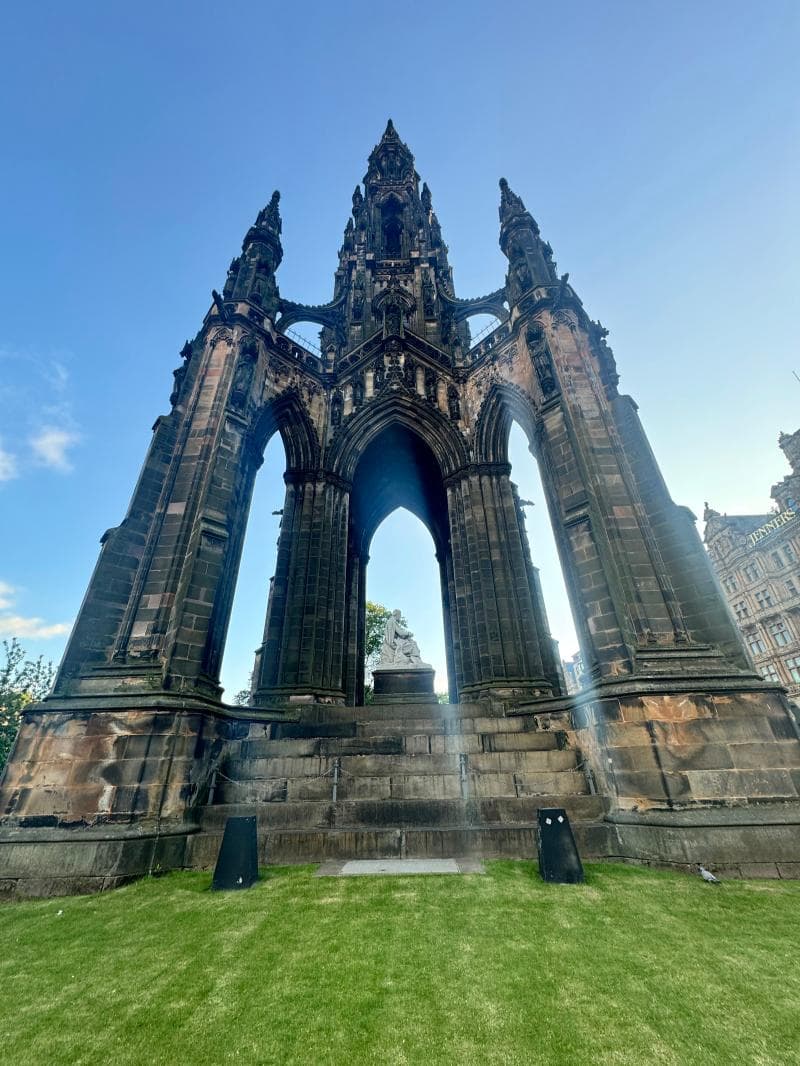
Climb the spiral staircases of the Scott Monument in Edinburgh, United Kingdom, for panoramic city views. Discover its Gothic history and literary secrets.
Overview
Hidden within the soaring Gothic spires of the Scott Monument in Edinburgh, United Kingdom, lies a truly unique adventure: the ascent of its intricate spiral staircases. This monumental tribute to Scottish author Sir Walter Scott, a Victorian-era masterpiece, invites curious travelers to climb its depths for an unforgettable perspective on the city. The journey upwards is not merely a physical feat but an immersive experience, winding through the monument's historical fabric and revealing its architectural grandeur piece by piece.
Standing proudly in Princes Street Gardens, the Scott Monument is one of the world's largest monuments dedicated to a writer. Its distinctive dark sandstone exterior and intricate detailing make it an iconic silhouette against Edinburgh's sky. The real magic, however, begins inside, where a series of spiral staircases challenges visitors with 287 steps leading to the highest viewing platform. Along the way, four distinct levels offer opportunities to pause, absorb the monument's history, and glimpse ever-expanding panoramic views of Edinburgh's historic Old Town, the majestic Edinburgh Castle, and the modern New Town. It is a climb that promises both a physical workout and a feast for the senses, culminating in breathtaking vistas.
History & Cultural Background
The Scott Monument emerged from a national desire to honor Sir Walter Scott following his death in 1832. Scott, a celebrated poet and novelist, left an indelible mark on Scottish literature and identity, popularizing Romantic views of Scottish history through works like 'Waverley' and 'Ivanhoe'. A competition was held for the monument's design, famously won by George Meikle Kemp, a self-taught architect and joiner who submitted his Gothic design under the pseudonym 'John Morvo'. Kemp, fearing his lack of formal qualifications, adopted the name of a 16th-century master stone mason. Construction commenced in 1840, and the monument was inaugurated in 1846, though tragically, Kemp drowned in the Union Canal before its completion.
Built from Binny sandstone, quarried near Ecclesmachan in West Lothian, the monument's dark, almost black, appearance today is a result of this stone absorbing city dust and soot over time, a process that began in the polluted Victorian era and continues to give it its characteristic austere beauty. This natural patina adds a profound historical depth to the structure, embodying the passage of time and the city's own story. At its base, beneath the central arches, rests a striking white Carrara marble statue of Sir Walter Scott, seated with his beloved dog Maida, carved by Sir John Steell. This pristine white marble starkly contrasts with the monument's darkened sandstone, making Scott himself appear to glow from within his grand memorial.
What Makes It Special
The Scott Monument's spiral staircases are far more than mere conduits to a viewpoint; they are an integral part of its allure. The intricate design and the winding nature of the ascent embody the Victorian Gothic aesthetic of the monument itself, a 'gothic rocket' as some have called it. As visitors climb, they pass by 64 small statues intricately carved into the spire, depicting various characters from Scott's celebrated novels, alongside other famous Scots. This sculptural narrative transforms the climb into a journey through Scott's literary world, a unique storytelling element embedded in the very structure.
Furthermore, the changing perspective offered at each of the four viewing platforms is exceptional. From the initial open platforms to the increasingly narrow upper sections, the views evolve, revealing different facets of Edinburgh's stunning urban landscape and its natural surroundings. The interplay of light and shadow within the dimly lit, enclosed stairwells enhances the sense of discovery, creating an atmospheric transition from the bustling city streets to the tranquil heights above.
Stories, Fun Facts & Local Details
One of the most engaging aspects of the Scott Monument's spiral climb is the journey into its tight, historic spaces. The staircases become progressively narrower as you ascend, particularly on the upper levels, requiring climbers to sometimes squeeze past one another. This physical interaction with the monument's architecture connects visitors directly to the craftsmanship of its 19th-century builders. For those who conquer all 287 steps to the highest platform, a special certificate can be requested, a small but cherished memento of their adventurous spirit.
The monument also houses a museum room on its first level, offering a deeper dive into Scott's life and the monument's construction, complete with beautiful stained-glass windows depicting Saints Andrew and Giles, and the coats of arms for Edinburgh and Scotland. These details provide a moment of reflection and historical context amidst the physical challenge of the climb. The very stone of the monument, Binny sandstone, tells a story of Edinburgh's industrial past, its darkening hue a natural record of the city's historic air quality.
Visitor Perspective
Embarking on the spiral staircase climb of the Scott Monument is often described as a challenging yet incredibly rewarding experience. It is a journey that demands a reasonable level of fitness, and those with claustrophobia or significant mobility issues might find the narrow, winding, and sometimes uneven steps a considerable hurdle. However, the effort is consistently deemed worthwhile by those who reach the top.
The panoramic views from the various viewing platforms are truly spectacular, offering unparalleled 360-degree vistas across Edinburgh. From here, visitors can appreciate the grand scale of Edinburgh Castle, the historic Royal Mile, the geometric precision of the New Town, and the distant hills. It provides a unique vantage point for photography and simply to soak in the beauty of Scotland's capital. The experience fosters a sense of accomplishment and a deeper connection to Edinburgh's history and its literary hero, Sir Walter Scott, making it a highlight for many adventurous travelers.
Coordinates: -3.1932, 55.9524
View on Google Maps💬 How Travelers Describe This Place
Based on community votes
Beautiful
898Unique
667Must See
308Photogenic
190Interesting
32
Traveler Stories
Discover memorable experiences shared by travelers who have visited this place.
No traveler stories yet.
Be the first traveler to share what made this place memorable.

Tour
By
Spot
Discover amazing places around the world. Your journey starts here.
Explore
© 2026 TourBySpot. All rights reserved.