Spiral Ramp
Rome, Italy
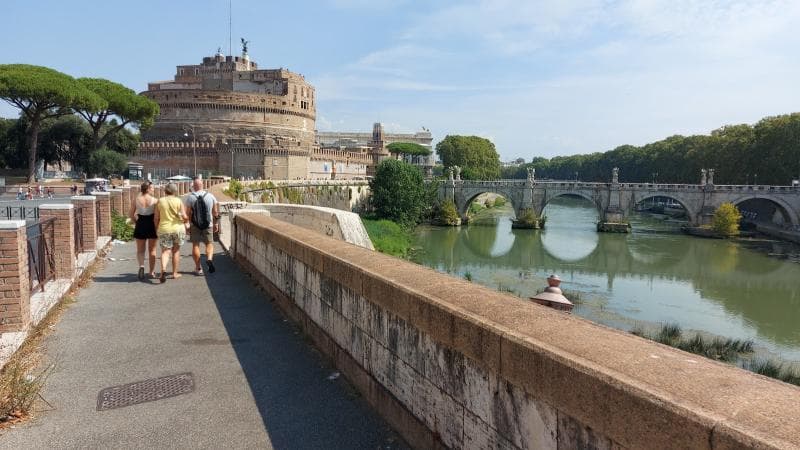
Explore the ancient Spiral Ramp within Rome's Castel Sant'Angelo. Uncover centuries of history, from imperial tomb to papal fortress, in this iconic Roman landmark. Discover its unique architecture and stories.
Overview
Nestled within the imposing circular structure of Castel Sant'Angelo in Rome, Italy, lies an architectural marvel that has silently witnessed nearly two millennia of history: the Spiral Ramp. More than just a pathway, this ancient, gently ascending corridor is the very backbone of the fortress, offering visitors a unique journey through time, from its origins as Emperor Hadrian's mausoleum to its various transformations into a papal fortress, prison, and now a national museum.
The Spiral Ramp, sometimes referred to as the Helical Ramp or Hadrian's Ramp, is an integral part of the castle's lowest levels. It provides a foundational understanding of the structure's original purpose and its enduring legacy. Its ingenious design allowed for a solemn and practical passage, setting the stage for the dramatic layers of history that unfold as one ascends.
History & Cultural Background
The story of the Spiral Ramp begins in the 2nd century AD, commissioned by Emperor Hadrian around 123 AD as a grand mausoleum for himself and his family. The construction, completed in 139 AD by his successor Antoninus Pius, envisioned a monumental resting place on the right bank of the Tiber River. The ramp was the primary ceremonial route for funeral processions, designed to transport imperial urns and sarcophagi with dignity and ease to the central burial chamber.
Originally, this subterranean corridor led to the Hall of the Burial Urns, a richly decorated space where the ashes of emperors from Hadrian to Caracalla were interred. As the Roman Empire waned, the mausoleum was integrated into the Aurelian Walls in 403 AD, fundamentally altering its purpose from a tomb to a defensive stronghold. The Spiral Ramp remained crucial, adapting to the castle's new military functions. Over centuries, various popes, recognizing its strategic importance, further fortified Castel Sant'Angelo, making it an impregnable refuge, a treasury, and even a prison.
What Makes It Special
The exceptional nature of the Spiral Ramp lies in its original Roman engineering and its remarkable preservation. It is a wide, gently sloping corridor, meticulously constructed from brick and concrete, winding for approximately 120 meters. This design was not merely aesthetic; its slight incline was practical, intended to facilitate the solemn passage of heavy funerary chariots and numerous attendants.
While the original lavish marble cladding that adorned the ramp and burial chambers has largely disappeared over time, the underlying Roman structure stands as a testament to the advanced architectural capabilities of the era. The ramp allowed for continuous ascent through the massive cylindrical core of the mausoleum, ensuring structural integrity while also serving its vital ceremonial role. This enduring architectural feature has supported the castle's immense weight and accommodated its evolving functions for nearly two millennia, making it a unique example of Roman ingenuity and adaptability.
Stories, Fun Facts & Local Details
Imagine the silence of this ramp during Hadrian's time, broken only by the hushed steps of a grand imperial funeral procession, carrying an emperor's remains to their eternal rest. The same stones you walk upon once bore the weight of history in its most literal sense. The transition of the building from a pagan tomb to a Christian fortress is epitomized by the legend of Archangel Michael. In 590 AD, during a plague, Pope Gregory the Great reportedly saw the archangel sheathing his sword atop the mausoleum, signifying the end of the pestilence. This vision gave the castle its current name and transformed its identity forever.
A curious detail for visitors is the noticeable change in atmosphere as you traverse the ramp. You might experience an acoustic softening and a slight drop in temperature within its thick masonry walls. This is a subtle yet powerful reminder of ancient Roman environmental control and the sheer mass of the original construction, moderating the climate within, much like a natural air conditioner.
Visitor Perspective
For today's traveler, walking the Spiral Ramp is an immersive journey into Rome's layered past. The ramp is the starting point of your exploration, guiding you upward through the ancient Roman foundations and connecting you seamlessly to the medieval and Renaissance levels of Castel Sant'Angelo. It's an ascent that reveals the building's monumental scale and its dramatic shift in purpose over time.
As you gradually make your way up, the ramp unveils glimpses into the colossal structure. You'll pass by openings and chambers that housed imperial ashes, and feel the weight of countless historical footsteps. This deliberate, slow climb offers a unique perspective on the ingenuity of Hadrian's architects and sets a contemplative tone for the discoveries that await on the upper floors, eventually leading to breathtaking panoramic views of Rome.
Coordinates: 12.46628, 41.90325
View on Google Maps💬 How Travelers Describe This Place
Based on community votes
Unique
445Interesting
416Must See
289Beautiful
141Photogenic
33
Traveler Stories
Discover memorable experiences shared by travelers who have visited this place.
No traveler stories yet.
Be the first traveler to share what made this place memorable.

Tour
By
Spot
Discover amazing places around the world. Your journey starts here.
Explore
© 2026 TourBySpot. All rights reserved.