Spanish Riding School
Vienna, Austria
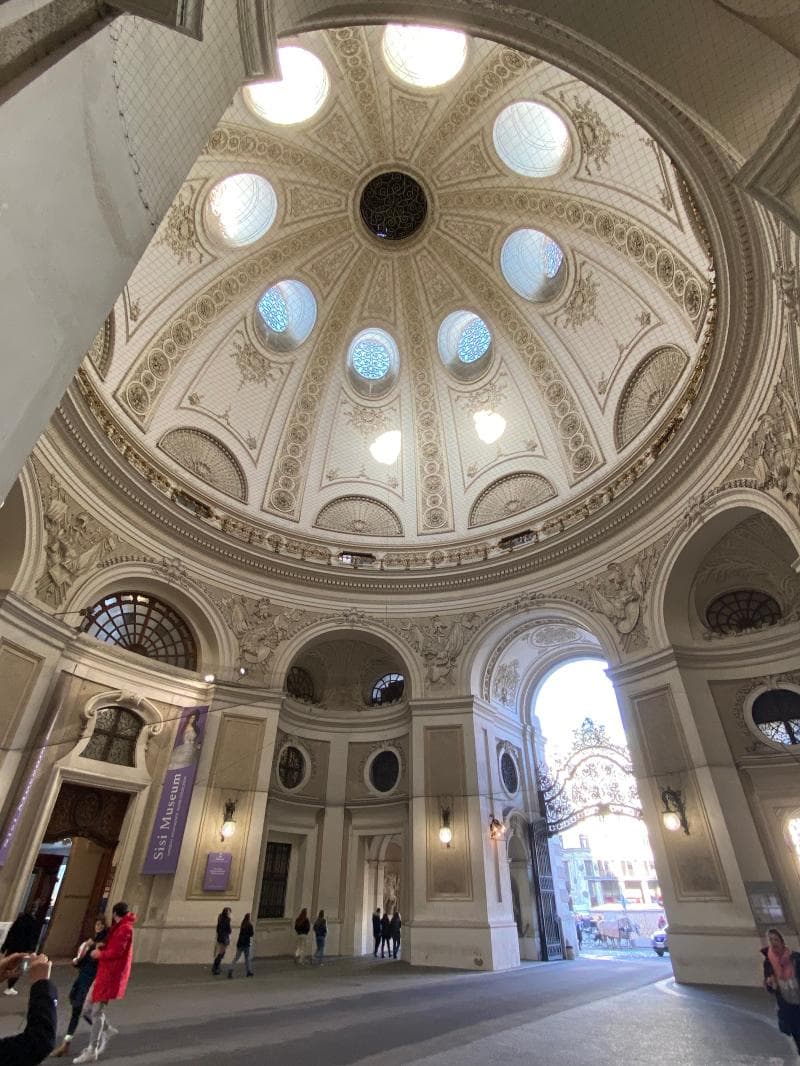
Discover Vienna's Spanish Riding School, a UNESCO-listed institution within the Hofburg Palace, famed for its classical Lipizzaner dressage and rich history in Austria.
Overview
Nestled within Vienna's historic Hofburg Palace, the Spanish Riding School, or 'Spanische Hofreitschule', stands as a beacon of classical horsemanship and a living testament to centuries of tradition. It is the oldest riding school in the world, renowned for preserving the 'High School' of classical dressage through its magnificent Lipizzaner stallions. This institution offers visitors a unique glimpse into an equestrian art form that has remained largely unchanged for over 460 years, evolving from a court school for noble youth to a globally recognized cultural treasure. The Spanish Riding School is not merely an attraction; it is a vibrant cultural institution where the profound bond between rider and horse is celebrated through precise, elegant movements and spectacular performances, often referred to as the 'ballet of the white stallions'.
History & Cultural Background
The roots of the Spanish Riding School trace back to the 16th century, specifically to 1565, which is considered its official founding date with the construction of the Stallburg imperial stables. Its name originates from the Spanish horses that were brought to the Viennese court by Ferdinand I, who grew up in Spain. These Iberian breeds were highly valued for their nobility and docility, making them ideal for classical equestrianism. The Habsburg emperors, eager to provide their court with the finest horsemanship, cultivated these traditions, leading to the establishment of the Lipizzaner breed in 1580 at the stud farm in Lipizza (modern-day Lipica, Slovenia).
The iconic Winter Riding School, a stunning Baroque arena within the Hofburg Palace, was commissioned by Emperor Charles VI and built between 1729 and 1735. Its construction formalized court riding education, ensuring that advanced horsemanship could be practiced year-round. This magnificent hall, designed by Johann Bernhard Fischer von Erlach and completed by his son Josef Emanuel, is considered by many to be the most beautiful riding hall in the world. Over time, the school transitioned from training young nobility for military and ceremonial purposes to focusing purely on the artistic preservation of classical dressage. This dedication to tradition, coupled with a constant pursuit of excellence, led to the classical equestrian art of the Spanish Riding School being inscribed on UNESCO's Representative List of the Intangible Cultural Heritage of Humanity in 2015, with the knowledge of Lipizzaner breeding added in 2022.
What Makes It Special
What truly sets the Spanish Riding School apart is its unwavering commitment to the 'High School' of classical horsemanship, an art form that has been meticulously practiced and passed down through generations. It is one of the 'Big Four' classical riding academies globally, distinguished by its exclusive use of the elegant Lipizzaner stallions. These remarkable horses, mostly white in adulthood, are bred at the Piber Federal Stud in Styria, Austria, and undergo years of rigorous, patient training. The goal is to achieve an incomparable harmony between rider and stallion, allowing them to perform intricate movements such as the piaffe, passage, and the breathtaking 'airs above the ground' like the Levade and Capriole. This dedication ensures that each performance is not just a show, but a living demonstration of history and a deep bond between human and animal.
The architectural grandeur of the Winter Riding School itself adds to the special atmosphere. Its Baroque design, with its soaring ceilings and meticulous details, provides a historical backdrop that transports spectators back to imperial Vienna. The institution's commitment extends beyond performances to the careful breeding and welfare of the Lipizzaners, ensuring the continuation of this unique heritage. The blend of historical significance, the artistry of dressage, and the beauty of the Lipizzaner stallions creates an experience that is both educational and deeply moving.
Stories, Fun Facts & Local Details
One fascinating aspect of the Lipizzaner stallions is that they are born dark, typically black, brown, or grey, and gradually turn white over a period of 6 to 10 years. This transformation adds a layer of magic to their story. While the majority of Lipizzaners are white, tradition dictates that at least one bay (brown) stallion is kept at the school as a good luck charm and a reminder of the breed's original coloring. This custom is steeped in old superstitions and preserves a piece of history. The intensive training regime means that riders often dedicate over a decade to mastering the complex dressage movements alongside their assigned horse, forming an unbreakable bond.
Another notable detail is the recent inclusion of women as riders, breaking a centuries-old tradition that saw only men train and perform. This change, which began in 2008, showcases the institution's evolution while honoring its core principles. The Spanish Riding School was crucial in preserving the Lipizzaner breed during World War II, with stallions being evacuated multiple times across Europe to protect them from conflict, a dramatic event later immortalized in Disney's 'Miracle of the White Stallions'. The school fully returned to its home in the Hofburg Palace in 1955.
Visitor Perspective
Visiting the Spanish Riding School offers several ways to engage with this extraordinary tradition. For those seeking the full artistic experience, attending a formal performance in the opulent Winter Riding School is a must. These performances, which typically last between 45 and 90 minutes, showcase the highest level of classical dressage set to classical Viennese music.
Alternatively, the 'Morning Exercise' sessions provide a more informal insight into the daily training routines of the horses and riders. This allows visitors to observe the development of their skills and the progression of the Lipizzaners' training in a relaxed setting. Guided tours are also available, taking guests through the Stallburg stables, the Winter Riding School, and offering historical context about the institution and the Lipizzaner breed. These tours delve into the architecture and history, providing a deeper understanding of this living cultural heritage. The Spanish Riding School is centrally located within the Hofburg Palace complex, making it easily accessible for travelers exploring Vienna's rich historical landscape.
Coordinates: 16.36671, 48.20731
View on Google Maps💬 How Travelers Describe This Place
Based on community votes
Interesting
748Unique
499Photogenic
427Must See
337Beautiful
94
Traveler Stories
Discover memorable experiences shared by travelers who have visited this place.
No traveler stories yet.
Be the first traveler to share what made this place memorable.

Tour
By
Spot
Discover amazing places around the world. Your journey starts here.
Explore
© 2026 TourBySpot. All rights reserved.