Souvenir Area
Tashkent, Uzbekistan
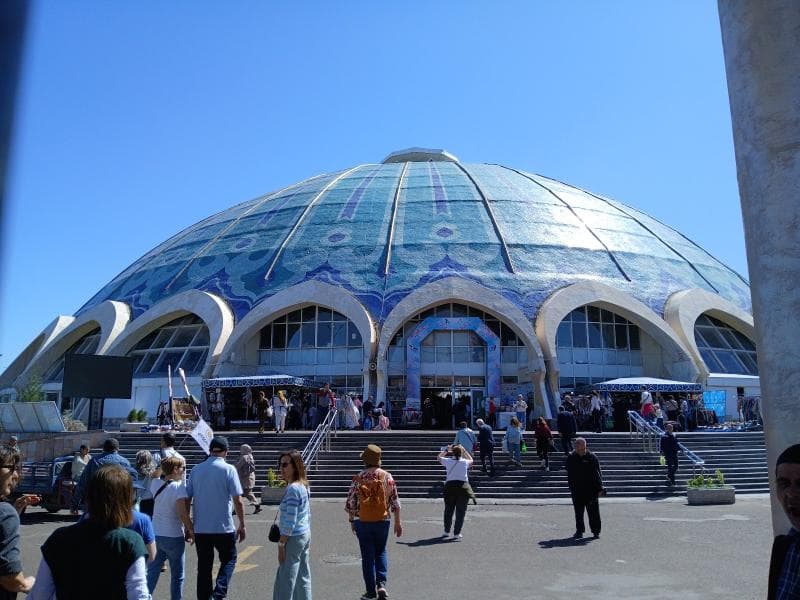
Discover authentic Uzbek handicrafts at the Souvenir Area in Chorsu Bazaar, Tashkent, Uzbekistan. Find textiles, ceramics, and metalwork.
Overview
Stepping into the Souvenir Area within Tashkent's iconic Chorsu Bazaar is like journeying through centuries of Uzbek artistry and tradition. Nestled beneath or adjacent to the bazaar's famous turquoise domes in the heart of the Old Town, this vibrant section offers an immersive cultural experience far beyond mere shopping. It is a dedicated space where the legacy of the Silk Road comes alive through an astonishing array of handcrafted treasures, each telling a story of Uzbekistan's rich heritage. Visitors can discover everything from intricate textiles and gleaming metalwork to vibrant ceramics, all reflecting the profound skills passed down through generations of local artisans. This area serves as a living museum, inviting curious travelers to connect with the artistic soul of Tashkent.
History & Cultural Background
Chorsu Bazaar itself boasts a history stretching back to the Middle Ages, with some accounts suggesting its origins over 2,000 years ago, establishing it as one of Central Asia's oldest continuously operating markets. Its name, 'Chorsu,' derived from Persian, translates to 'four ways' or 'crossroads,' a testament to its strategic position at the intersection of vital trade routes along the ancient Silk Road. For centuries, it has been a bustling nexus where merchants from across Asia, the Middle East, and Europe converged, exchanging not only goods but also ideas and cultural practices. While the present blue-domed structures were constructed in the Soviet era, particularly in the 1970s and 80s, their design consciously echoes the traditional architectural motifs of Central Asia, ensuring the bazaar retained its historical essence. This blend of ancient trading traditions and architectural adaptation forms the backdrop for the craftsmanship found in its souvenir sections, where each item carries the weight of this profound historical and cultural lineage.
What Makes It Special
The Souvenir Area at Chorsu Bazaar is distinct for its unparalleled authenticity and the direct connection it offers to Uzbek craftsmanship. Unlike mass-produced items found elsewhere, many products here are handmade, representing regional artistry and specific cultural narratives. Travelers can find exquisite suzani, intricately embroidered textiles often used as wall hangings or decorative covers, with motifs like the pomegranate symbolizing fertility and protection. Each region contributes its unique style to these textiles.
The area also showcases stunning ceramics, particularly famous from cities like Rishtan, known for their vibrant turquoise and cobalt glazes, or Gijduvan with its earthy tones. These items, from plates and bowls to decorative vases, often feature ancient patterns that have been preserved through generations.
Furthermore, visitors will discover finely crafted metalwork, including the renowned Uzbek knives called 'pichok,' especially those from Chust, characterized by their unique blade shape and often decorative scabbards. Hand-engraved copper and brass items, alongside traditional jewelry adorned with semi-precious stones, also highlight the mastery of local artisans. Skullcaps (doppi) in various regional styles, traditional quilted cloaks (chapan), and even traditional musical instruments like the dutar and rubab complete the rich selection, offering a tangible piece of Uzbek culture to take home.
Stories, Fun Facts & Local Details
Among the many fascinating details, the tradition behind suzani embroidery stands out: embroiderers often intentionally leave the last stitch incomplete. This practice is believed to protect the artisan from having their own life 'completed' prematurely, reflecting a deep-seated superstition and the profound personal connection embedded in their work. The patterns themselves are not merely decorative; they are symbolic, drawing from nature and ancient beliefs to convey blessings, hopes, and protection. For instance, the chili pepper motif on some Tashkent-style skullcaps is believed to ward off evil.
Engaging with the vendors in the Souvenir Area often reveals more than just a price; it's an opportunity to hear the stories behind their crafts. Many artisans are direct descendants of families who have practiced these trades for centuries, making each purchase a direct contribution to preserving a living heritage. The art of bargaining, a time-honored tradition in Central Asian bazaars, is also a friendly interaction rather than a mere negotiation, providing a glimpse into the local way of life and hospitality. The air here buzzes with a unique energy, a blend of commerce and cultural exchange, creating a truly memorable sensory experience.
Visitor Perspective
For the curious traveler, the Souvenir Area at Chorsu Bazaar is more than a shopping destination; it's an exploration. Walking through its bustling lanes, you're enveloped by the sights, sounds, and smells of traditional Central Asian commerce. The vibrant colors of textiles, the gleam of polished metal, and the intricate details of ceramics create a visual feast. Interacting with the artisans, even through simple gestures, adds a personal layer to your visit, allowing you to appreciate the dedication and skill poured into each piece. It's a place to observe life unfolding, to witness traditional crafts in action, and to find unique, meaningful keepsakes. The experience offers a genuine connection to Uzbek culture, ensuring that any souvenir acquired is not just an object, but a cherished memory of Tashkent's ancient heart. When selecting an item, consider asking about its origins or the meaning of its patterns, as this often unlocks a deeper appreciation for the artistry and heritage you are bringing home.
Coordinates: 69.23653, 41.32617
View on Google Maps💬 How Travelers Describe This Place
Based on community votes
Must See
948Beautiful
913Photogenic
499Unique
337Interesting
94
Traveler Stories
Discover memorable experiences shared by travelers who have visited this place.
No traveler stories yet.
Be the first traveler to share what made this place memorable.

Tour
By
Spot
Discover amazing places around the world. Your journey starts here.
Explore
© 2026 TourBySpot. All rights reserved.