South Pole Exhibits
Oslo, Norway
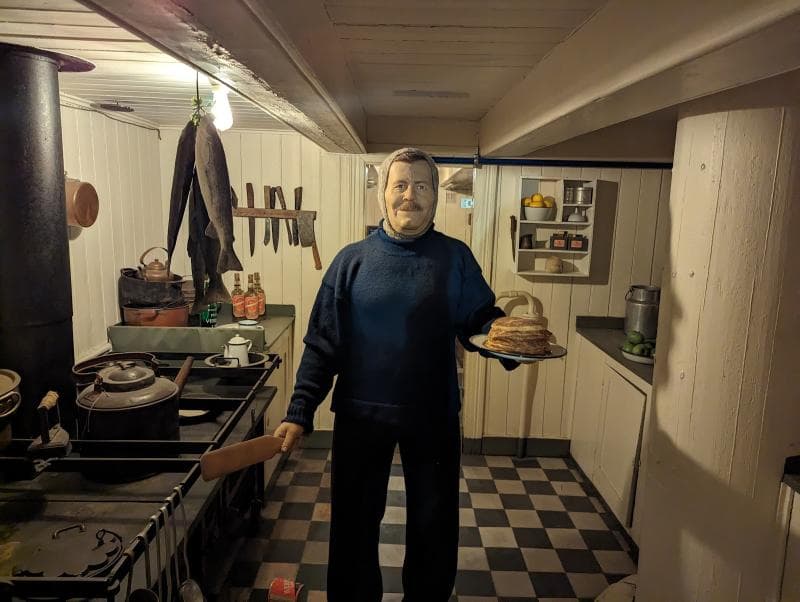
Explore the heroic South Pole Exhibits at the Fram Museum in Oslo, Norway. Discover Roald Amundsen's historic expedition and the legendary Fram.
Overview
Deep within the historic Fram Museum, nestled on the Bygdøy peninsula in Oslo, Norway, lies the compelling South Pole Exhibits. This dedicated area immerses visitors in the extraordinary tale of Norwegian polar exploration, particularly focusing on Roald Amundsen's groundbreaking expedition to the South Pole. The Fram Museum itself is a testament to Norway's pioneering spirit in polar research, preserving the legendary polar ship Fram, an engineering marvel designed to conquer the brutal conditions of the Arctic and Antarctic.
The South Pole Exhibits offer a vivid journey back to the early 20th century, allowing you to walk in the footsteps of explorers who braved unimaginable cold and isolation. It is an integral part of the larger museum, providing detailed insights into the strategies, challenges, and triumphs of the race to the bottom of the world. Through a blend of authentic artifacts, immersive displays, and historical narratives, the exhibits bring this 'heroic age' of exploration to life, making it a compelling destination for anyone fascinated by human endurance and scientific discovery.
History & Cultural Background
The story of the South Pole Exhibits is inextricably linked to the polar ship Fram and its most famous commander, Roald Amundsen. The Fram was specially constructed by Colin Archer in 1891-1892 with a uniquely rounded hull, designed to rise out of the ice pressure rather than be crushed, an innovative feature crucial for survival in polar seas. Originally intended for Fridtjof Nansen's Arctic drift, the ship later carried Otto Sverdrup on his extensive Arctic mapping expeditions.
However, it was Roald Amundsen's use of the Fram for his audacious journey to the South Pole between 1910 and 1912 that cemented its place in Antarctic history. Amundsen famously changed his expedition's objective from the North Pole to the South Pole in secret, after learning that others claimed to have reached the North Pole. He did so 'on the way to' the North Pole, surprising many. This pivotal decision set the stage for one of the greatest races in exploration history. Amundsen and his four companions ultimately reached the South Pole on December 14, 1911, a full month ahead of his British rival, Robert Falcon Scott.
What Makes It Special
What truly sets the South Pole Exhibits apart is the unique opportunity to step aboard the original Fram ship, the very vessel that carried Amundsen and his crew to the Antarctic. You can explore its meticulously preserved cabins, the cargo hold, and even the engine room, gaining a tangible sense of the ship's operational life during those epic voyages. The exhibit employs cutting-edge technology to enhance this historical connection, featuring a breathtaking 270-degree panoramic film that surrounds the ship. This immersive experience includes a dramatic 90-second 'polar storm sequence,' complete with creaking sounds and flashing lights, transporting you directly into the heart of an Antarctic blizzard.
Beyond the ship itself, the exhibits recreate the harsh realities of polar life and the brilliance of Amundsen's planning. Interactive displays allow visitors to experience chilling temperatures firsthand and examine authentic sledges used to traverse the icy continent. A replica of the South Pole tent, alongside equipment and supplies, offers a stark reminder of the extreme conditions faced by the expedition members.
Stories, Fun Facts & Local Details
Roald Amundsen's success in reaching the South Pole was not just about brute force, but also about intelligent planning and adaptability. A key 'fun fact' highlighted in the exhibits is Amundsen's keen observation and adoption of Inuit survival techniques. He learned the invaluable practice of using dog sleds and skis for travel, a method far superior to the ponies favored by his British counterpart, Robert Falcon Scott. Amundsen's expedition was a masterclass in preparation, including the strategic placement of supply depots along their route, ensuring their survival.
Another fascinating detail is the Fram's innovative design. Colin Archer's unique rounded hull meant that when ice pressure built up, the ship would be lifted out of the ice, rather than crushed by it. This design was revolutionary and proved immensely successful, allowing the Fram to survive conditions that would have destroyed other vessels. The Fram’s achievement of sailing both the furthest north and furthest south of any wooden ship stands as a testament to this engineering brilliance. The museum also showcases how the Fram was a self-sufficient floating community, even carrying livestock like pigs and sheep for fresh meat during its long voyages.
Visitor Perspective
A visit to the South Pole Exhibits within the Fram Museum is an incredibly engaging and educational experience. The museum is designed to be accessible and informative, with all exhibits featuring detailed descriptions in multiple languages, including English. Beyond exploring the ship, visitors can delve deeper into the historical context through an introductory film that provides a concise overview of polar history.
For those seeking an even richer understanding, guided tours are available, offering expert insights into the expeditions of Nansen, Sverdrup, and Amundsen. These tours often emphasize themes like courage, cooperation, technological innovation, and humanity's interaction with extreme environments. The museum's location on the Bygdøy peninsula, surrounded by other significant museums, makes it an ideal part of a day-long cultural exploration in Oslo. It is easily reachable by public transport, including a scenic ferry ride from Oslo's City Hall pier during the summer months. The combination of authentic history, immersive technology, and compelling storytelling ensures that a visit to the South Pole Exhibits leaves a lasting impression on every traveler.
Coordinates: 10.69953, 59.90336
View on Google Maps💬 How Travelers Describe This Place
Based on community votes
Must See
826Photogenic
494Beautiful
242Interesting
125Unique
82
Traveler Stories
Discover memorable experiences shared by travelers who have visited this place.
No traveler stories yet.
Be the first traveler to share what made this place memorable.

Tour
By
Spot
Discover amazing places around the world. Your journey starts here.
Explore
© 2026 TourBySpot. All rights reserved.