South Peak
San Francisco, United States
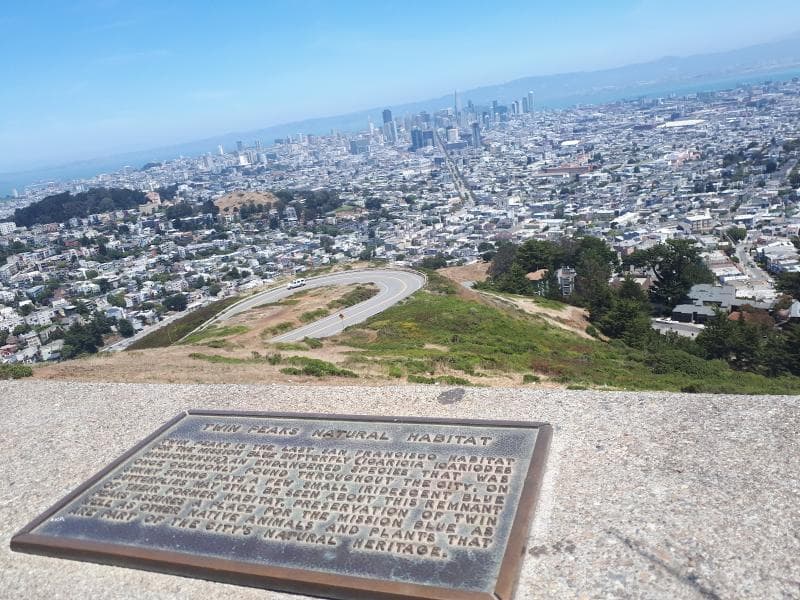
Discover South Peak (Noe Peak) at Twin Peaks, San Francisco, USA. Enjoy 360-degree panoramic views, rich history, and unique wildlife.
Overview
South Peak, affectionately known as Noe Peak, stands as a majestic sentinel within the broader Twin Peaks area, nestled in the vibrant heart of San Francisco, United States. These iconic twin hills, rising approximately 925 feet (282 meters) above sea level, claim distinction as the city's second and third highest natural points, surpassed only by Mount Davidson. As a pivotal part of a 64-acre natural expanse, South Peak offers an unparalleled vantage point, delivering breathtaking 360-degree panoramic views that stretch across the bustling cityscape, the shimmering San Francisco Bay, and the vast expanse of the Pacific Ocean beyond. Open daily from early morning until midnight, this remarkable destination invites curious travelers and locals alike to explore its trails and soak in its grand vistas, all free of charge.
History & Cultural Background
The history of Twin Peaks, including South Peak, is deeply interwoven with the narrative of San Francisco itself, stretching back long before its modern naming. Indigenous Ohlone people, the original inhabitants of this land, likely utilized these prominent hills as strategic lookout points or productive hunting grounds, appreciating their commanding views of the surrounding peninsula. Centuries later, in the 18th century, Spanish conquistadors arrived, bestowing upon the twin hills the evocative name 'Los Pechos de la Chola,' meaning 'Breasts of the Maiden' or 'Breasts of the Indian Maiden,' a nod to their distinctive, rounded contours. During this period, the area was often used for ranching. It was only in the 19th century, following California's integration into the United States, that the more familiar and enduring name, 'Twin Peaks,' was adopted.
A compelling piece of local lore from the Ohlone people speaks of the peaks' origin, suggesting they were once a single, unified mountain, a married couple. However, due to incessant arguments, a great spirit intervened, splitting them apart into the distinct twin formations we see today. This rich tapestry of names and narratives highlights the deep historical and cultural resonance these peaks hold, from ancient indigenous beliefs to colonial observations and modern-day identity.
What Makes It Special
What truly sets South Peak and its northern counterpart apart is their extraordinary ability to provide some of the most comprehensive and unobstructed 360-degree views in San Francisco. From this elevated position, visitors can gaze upon a spectacular tableau that includes the iconic Golden Gate Bridge, the architectural marvel of the Bay Bridge, the storied island of Alcatraz, the dense urban fabric of downtown San Francisco, and the distant shores of Angel Island. Unlike many other viewpoints that might be obscured by trees or buildings, Twin Peaks offers clear sightlines, thanks to the absence of tall vegetation atop its summits.
Beyond the sweeping vistas, the Twin Peaks area is a vital ecological haven. It forms a crucial habitat for the federally listed endangered Mission Blue Butterfly, a delicate species that can often be observed flitting low among the lupine plants that thrive on the hillsides from late March to early July. The peaks also play a significant role in shaping the city's microclimates; their west-facing slopes are frequently shrouded in coastal fog and buffeted by strong winds, while the eastern slopes often enjoy more sunshine and warmth.
Adding to their significance, the Summit Reservoir, constructed in 1954 atop Twin Peaks, is a massive 14-million-gallon water holding facility. This reservoir is not merely a practical infrastructure; it is a critical component of San Francisco's independent High-Pressure Fire System (HPFS), established after the devastating 1906 earthquake and fire. This system ensures a dedicated water supply for firefighting, safeguarding the city.
Stories, Fun Facts & Local Details
Each of the Twin Peaks carries its own distinct identity. While the North Peak is known as Eureka Peak, the South Peak holds the name Noe Peak, reflecting its proximity to the Noe Valley neighborhood. These two natural landmarks are separated by approximately 660 feet (200 meters), creating a unique saddle area between them. A significant portion of the Twin Peaks, comprising a 31-acre undeveloped natural area, is diligently preserved. This protected land serves as a sanctuary for native vegetation and a diverse array of wildlife, managed by the San Francisco Recreation and Parks Department.
For those with a camera, Twin Peaks is a dream location, particularly captivating during sunrise or sunset, when the changing light paints the city in dramatic hues. Interestingly, even on foggy days, the diffused light can create ethereal, Instagram-worthy photographic opportunities. While the views are spectacular, visitors should note the presence of transmission towers atop the peaks, which, despite their utilitarian purpose, are often overshadowed by the magnificent panoramas. A surprising local detail is that San Francisco's tallest building, the Salesforce Tower, at 1,070 feet, actually stands taller than Twin Peaks itself.
Visitor Perspective
A visit to South Peak promises an invigorating experience, but a little preparation goes a long way. Given its elevation and exposure, the peaks can be quite windy and noticeably cooler than downtown San Francisco. Travelers are advised to wear sturdy shoes, especially if planning to hike, and to bring extra layers of clothing, particularly if visiting near sunset. To fully immerse yourself in the natural beauty and appreciate the 360-degree views, consider taking the half-mile walk around the entire area. A 0.7-mile trail network also ascends the peaks, offering even more expansive vistas.
Access to Twin Peaks is relatively straightforward, whether by car, public transportation, or tour bus. For those driving, parking is available, most notably at Christmas Tree Point, though it can fill up quickly during peak times. Public transport options include the 37 Corbett Muni bus line, which stops along Crestline Drive, requiring a short but steep walk to the summit. Most visitors typically spend between 30 minutes and an hour enjoying the scenery. While the area is generally safe and welcoming, it is always wise to remain aware of your surroundings and avoid leaving valuables unattended in vehicles.
Coordinates: -122.447749, 37.7515971
View on Google Maps💬 How Travelers Describe This Place
Based on community votes
Beautiful
995Interesting
839Must See
603Unique
388Photogenic
289
Traveler Stories
Discover memorable experiences shared by travelers who have visited this place.
No traveler stories yet.
Be the first traveler to share what made this place memorable.

Tour
By
Spot
Discover amazing places around the world. Your journey starts here.
Explore
© 2026 TourBySpot. All rights reserved.