South Entrance
Yangon, Myanmar
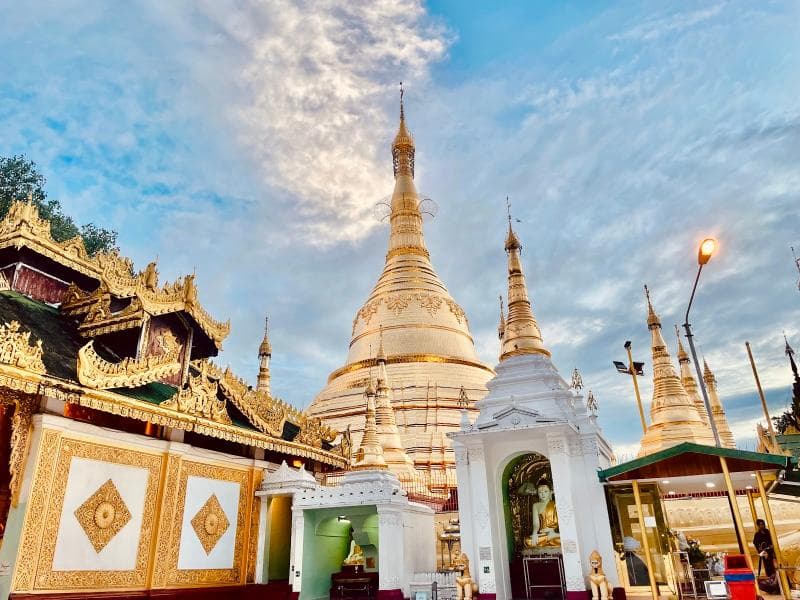
Explore the Shwedagon Pagoda's South Entrance in Yangon, Myanmar. Discover its history, cultural significance, and visitor experience at this sacred Buddhist site.
Overview
Nestled in the heart of Yangon, Myanmar, the Shwedagon Pagoda stands as an iconic symbol of spiritual devotion and architectural grandeur. Among its four cardinal entrances, the South Entrance serves as a primary gateway for countless visitors and pilgrims drawn to this sacred site. Perched atop Singuttara Hill, the pagoda's golden stupa gleams, visible from many parts of the city. The South Entrance is distinguished by its imposing presence, welcoming guests into a realm rich with history and vibrant Buddhist culture.
This particular entrance is widely recognized as the most frequently used by visitors, offering a convenient and impressive initiation into the Shwedagon experience. It leads through covered stairways adorned with intricate carvings, guiding you towards the main platform where the majestic golden stupa resides. The journey through the South Entrance is more than just access; it's a transition into a profound spiritual landscape.
History & Cultural Background
The Shwedagon Pagoda's origins are steeped in ancient legend, with beliefs suggesting its construction over 2,500 years ago, predating the passing of Gautama Buddha. It is revered for enshrining relics of four previous Buddhas, most notably eight strands of hair from Gautama Buddha himself, making it the most sacred Buddhist site in Myanmar. While legendary accounts point to a very early foundation, archaeological and historical consensus suggests the pagoda was likely built by the Mon people between the 6th and 10th centuries AD.
Throughout centuries, the Shwedagon has witnessed numerous transformations, surviving earthquakes, fires, and various historical periods. Successive monarchs, including Queen Shin Saw Pu and King Hsinbyushin, contributed significantly to its height and lavish gilding, ensuring its enduring magnificence. Culturally, the entrances, including the South Entrance, are guarded by colossal *Chinthe*, mythical lion-dragon creatures that symbolize protection for sacred Buddhist sites across Myanmar. These guardians emphasize the sanctity of the space within.
What Makes It Special
The South Entrance distinguishes itself through a blend of accessibility and traditional grandeur. Unlike some other entrances, it is equipped with modern amenities such as escalators and an elevator, making the ascent to the main platform considerably easier for all visitors, including the elderly or those with mobility considerations.
Upon approaching, visitors are immediately greeted by the towering *Chinthe* guardians, their fierce yet protective visages hinting at the spiritual journey ahead. The covered stairway itself is a marvel, often lined with stalls selling a variety of religious paraphernalia, from fresh flowers and incense sticks to small Buddha images and gold leaf. These items are integral to the pilgrims' rituals, allowing them to make offerings and gain merit. The architectural design of the entrance, with its elaborate roofing and carvings, offers a tangible connection to Myanmar's rich artistic heritage.
Stories, Fun Facts & Local Details
A compelling legend associated with the Shwedagon Pagoda tells of two merchant brothers, Tapussa and Bhallika, who journeyed to India and encountered the newly enlightened Buddha. They received eight strands of his hair, which they brought back to Myanmar. With the help of King Okkalapa, these sacred relics, along with others from previous Buddhas, were enshrined on Singuttara Hill, leading to the establishment of the Shwedagon Pagoda.
A remarkable fun fact is that the vast amount of gold adorning the stupa is entirely real, a testament to centuries of devotion. Monarchs, wealthy patrons, and ordinary citizens have continuously donated gold leaf to re-gild the pagoda, a practice that continues to this day and is seen as a way to accumulate good karma. The pagoda has not only been a religious center but also a significant historical landmark, serving as a focal point for various political movements and symbolizing Burmese national identity and resilience.
Visitor Perspective
Entering through the South Entrance offers a quintessential Shwedagon experience. The ease of access via escalators allows visitors to conserve energy for exploring the vast platform. The atmosphere shifts perceptibly as you ascend, moving from the bustling city streets into a serene and deeply spiritual environment.
It's important to remember that this is a living temple, a place of active worship. Visitors are expected to observe a modest dress code, covering shoulders and knees, and must remove their shoes before entering the pagoda complex. Many recommend visiting in the early morning or late afternoon to avoid the midday heat and to experience the pagoda bathed in the soft glow of sunrise or sunset, when it truly emanates a mystical aura and is shared more with local worshippers. The South Entrance thus provides not just a path, but a profound introduction to the heart of Myanmar's Buddhist faith.
Coordinates: 96.14951, 16.79879
View on Google Maps💬 How Travelers Describe This Place
Based on community votes
Must See
998Photogenic
897Beautiful
641Interesting
481Unique
196
Traveler Stories
Discover memorable experiences shared by travelers who have visited this place.
No traveler stories yet.
Be the first traveler to share what made this place memorable.

Tour
By
Spot
Discover amazing places around the world. Your journey starts here.
Explore
© 2026 TourBySpot. All rights reserved.