Sorbonne University
Paris, France
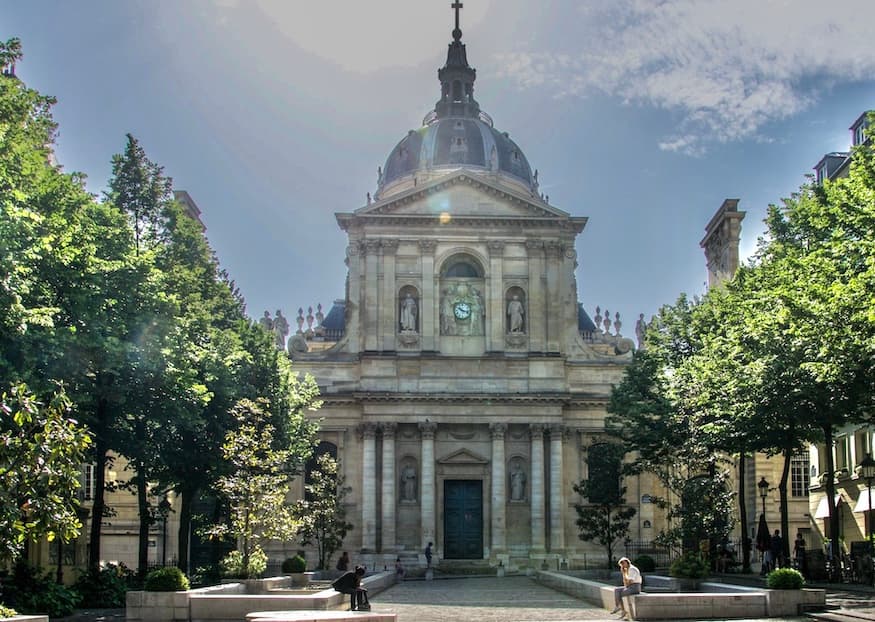
Explore Sorbonne University in Paris, France. Delve into its rich 13th-century history, academic prestige, stunning architecture, and cultural significance within the vibrant Latin Quarter.
Overview
Nestled in the vibrant heart of Paris's historic Latin Quarter, Sorbonne University stands as a timeless symbol of intellectual pursuit and academic excellence. Far more than just a university, 'the Sorbonne' refers to both an iconic institution with a rich legacy and a magnificent architectural complex that has shaped French and European thought for centuries. It is intrinsically linked to the very identity of the Latin Quarter, a neighborhood that has buzzed with scholarly discourse since the Middle Ages. As you wander the cobbled streets of this Parisian district, the grand edifice of the Sorbonne serves as a constant reminder of the profound intellectual heritage embedded in the city's fabric.
History & Cultural Background
The story of the Sorbonne begins in the mid-13th century, founded around 1253 or 1257 by Robert de Sorbon, chaplain and confessor to King Louis IX (Saint Louis). Initially conceived as a theological college for impoverished students, it quickly grew in reputation and became an integral part of the broader University of Paris. During the medieval period, the Sorbonne became a leading center for learning, attracting students and scholars from across Europe to study law, medicine, theology, and the liberal arts. The widespread use of Latin among its academic community gave the surrounding area its enduring name: the Latin Quarter.
The 17th century marked a significant transformation under the patronage of Cardinal Richelieu, who became the Sorbonne's principal in 1622. He initiated a major rebuilding program, commissioning architect Jacques Lemercier to construct the magnificent chapel that still graces the complex today. Richelieu's vision brought renewed grandeur to the institution. Over centuries, the Sorbonne adapted to various political and social changes. Following the French Revolution, the university system was reorganized by Napoleon. In the 20th century, the seismic student protests of May 1968, where the Sorbonne played a central role, led to the division of the historic University of Paris into multiple autonomous institutions. More recently, in 2018, the modern Sorbonne Université was formed through the merger of Paris-Sorbonne University (Paris IV) and Pierre et Marie Curie University (Paris VI), uniting a vast array of disciplines under a single banner, while maintaining its historical ties to the original Sorbonne building.
What Makes It Special
What truly sets Sorbonne University apart is its unparalleled intellectual legacy and its enduring role as a beacon of knowledge. For nearly eight centuries, it has fostered critical thinking and scholarly debate, earning an international reputation for academic excellence in sciences, arts, and humanities. The architecture itself is a testament to its prestige. The 'new Sorbonne' building, largely designed by Henri-Paul Nénot and completed by 1901, exhibits a complex yet harmonious blend of neo-Renaissance, ancient, and classical styles. Its grand facades, stately courtyards, and the iconic dome of the Lemercier Chapel are architectural masterpieces. Inside, features like the grand vestibule, monumental staircase, and the majestic Grand Amphitheatre are classified as Historic Monuments, showcasing the Third Republic's dedication to education.
Beyond its academic achievements, the Sorbonne holds a fascinating place in history. It was within its walls, at a sports festival in 1892, that Pierre de Coubertin first proposed the reinstatement of the Olympic Games, leading to their revival at a congress two years later in 1894. The institution remains a powerful symbol of French academic tradition, continually balancing its rich past with a forward-looking approach to education and research.
Stories, Fun Facts & Local Details
The very name 'Latin Quarter' evokes the Sorbonne's profound influence; it was here that students and masters communicated primarily in Latin, solidifying the district's identity. One of the most impactful periods in modern French history, the student protests of May 1968, saw the Sorbonne become a focal point of dissent and a powerful symbol of academic freedom. These events profoundly shaped the university's identity and influenced France's educational system. Within the serene Sorbonne Chapel lies the tomb of Cardinal Richelieu, an architectural and historical treasure sculpted by François Girardon in 1694, a striking detail for those who delve deeper into its history. The Sorbonne Library itself houses thousands of rare and ancient volumes, making it an invaluable resource and one of Paris's oldest libraries. Many illustrious figures, from philosophers and scientists to writers and politicians, have walked its revered halls, contributing to its intellectual richness. While Marie Curie is famously interred in the Panthéon nearby, her connection to the scientific advancements nurtured at the broader University of Paris, of which the Sorbonne was the heart, is undeniable.
Visitor Perspective
For a curious traveler, a visit to the Sorbonne offers a chance to connect with centuries of intellectual life. While it remains an active academic institution, parts of the historic building are occasionally accessible to the public, notably during events like the European Heritage Days or through guided tours, which can be booked via its official channels. Even without full access to all interiors, simply strolling through its grand courtyards and admiring the intricate architecture from the outside provides a profound sense of its history. Observing the scholarly plaques and the overall solemnity of the place, surrounded by the lively student atmosphere of the Latin Quarter, creates a unique juxtaposition. A visit to the Sorbonne can be perfectly combined with exploring nearby attractions such as the Panthéon, the Luxembourg Gardens, or the charming bookshops and cafes that characterize the Latin Quarter, allowing you to absorb the intellectual spirit that permeates this extraordinary Parisian enclave.
Coordinates: 2.3432, 48.8485
View on Google Maps💬 How Travelers Describe This Place
Based on community votes
Unique
748Photogenic
304Must See
85Beautiful
73Interesting
35
Traveler Stories
Discover memorable experiences shared by travelers who have visited this place.
No traveler stories yet.
Be the first traveler to share what made this place memorable.

Tour
By
Spot
Discover amazing places around the world. Your journey starts here.
Explore
© 2026 TourBySpot. All rights reserved.