Socialist Era Displays
Ulaanbaatar, Mongolia
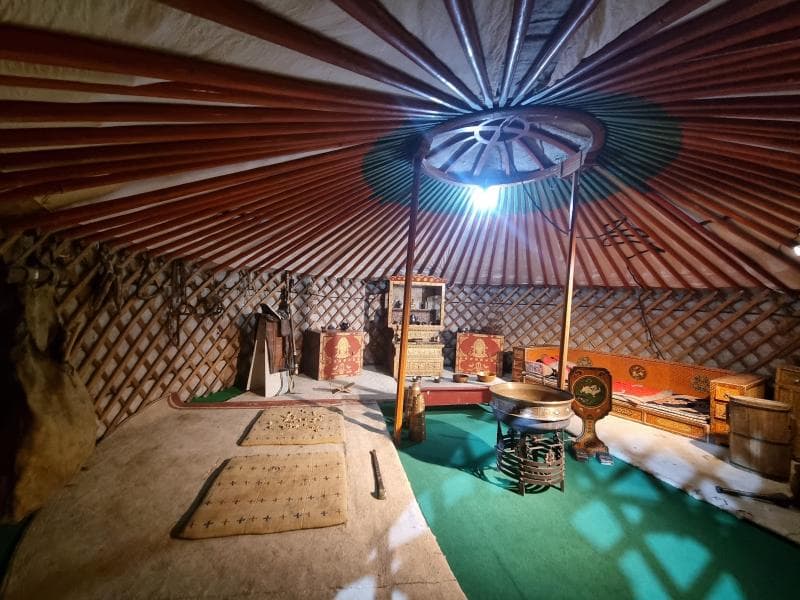
Explore the Socialist Era Displays at the National Museum of Mongolia in Ulaanbaatar, showcasing 20th-century history and cultural transformation.
Overview
Nestled within the comprehensive National Museum of Mongolia in Ulaanbaatar, the 'Socialist Era Displays' offer a profound journey into a pivotal chapter of Mongolian history. Officially known as Hall 8, this exhibition covers the period from 1921 to 1989/1990, detailing Mongolia's transformation under socialist ideology. It presents a nuanced view of the political, social, economic, and cultural developments that shaped the nation during the 20th century. This dedicated space provides visitors with an opportunity to delve deep into the country's fascinating and often complex past, showcasing the shifts from a traditional nomadic society to a modern socialist state.
History & Cultural Background
Mongolia's socialist era began with the People's Revolution of 1921, which led to the establishment of the Mongolian People's Republic. This marked a significant departure from centuries of theocratic rule and Chinese suzerainty. Influenced heavily by its powerful neighbor, the Soviet Union, Mongolia embarked on a path of rapid modernization and ideological restructuring. The 'Socialist Era Displays' chronicle this period, highlighting the initial struggles for independence, the rise of key figures like Damdin Sukhbaatar, and the profound societal changes that followed. The exhibition explores how the state implemented socialist policies, impacting everything from education and healthcare to agriculture and industry.
What Makes It Special
What makes the Socialist Era Displays particularly compelling is their candid presentation of both the advancements and the challenges faced during this time. The hall doesn't shy away from depicting the difficulties alongside the achievements, offering a balanced perspective on a contentious period. Visitors can observe original documents, photographs, and artifacts that illustrate daily life, political campaigns, and cultural shifts. Significant items on display include various currencies and banknotes from the Mongolian People's Republic, examples of early industrial products, and even awards given to honored herders, providing tangible connections to the era's economic and social fabric.
Stories, Fun Facts & Local Details
Beyond the official narrative, the exhibit features fascinating individual stories and unique details. For instance, you might encounter historical photographs of Damdin Sukhbaatar, a hero of the 1921 revolution, or learn about his meeting with Vladimir Lenin. The museum itself holds a unique historical context, as the building was originally constructed in 1971 as the Museum of Revolution, housing artifacts of 20th-century history before merging into the current National Museum of Mongolia. Visitors might also spot quirky technological relics from the era, such as a 'Felix' mechanical calculator, or even a Mongolian cosmonaut suit, symbolizing the nation's participation in Soviet-led space endeavors. These artifacts offer a glimpse into the everyday lives and aspirations of people living in a rapidly changing Mongolia, adding a human touch to the grand historical narratives.
Visitor Perspective
As you navigate through the Socialist Era Displays, you'll find yourself walking through a thoughtfully curated timeline. The exhibition uses a combination of visual aids, such as historical photographs and explanatory texts, alongside three-dimensional objects to create an immersive experience. Labels are often provided in both Mongolian and English, making the content accessible to a wide audience. The displays encourage reflection on Mongolia's journey, from its revolutionary origins to its eventual transition to democracy in the 1990s. It's a powerful reminder of how political ideologies can shape a nation's identity and progress. Allowing ample time here is recommended to absorb the rich details and contextualize Mongolia's unique path in the 20th century, offering a deeper understanding of the modern nation.
Coordinates: 106.9154, 47.9208
View on Google Maps💬 How Travelers Describe This Place
Based on community votes
Unique
961Interesting
695Photogenic
605Must See
404Beautiful
336
Traveler Stories
Discover memorable experiences shared by travelers who have visited this place.
No traveler stories yet.
Be the first traveler to share what made this place memorable.

Tour
By
Spot
Discover amazing places around the world. Your journey starts here.
Explore
© 2026 TourBySpot. All rights reserved.