Six Minarets
Istanbul, Turkey
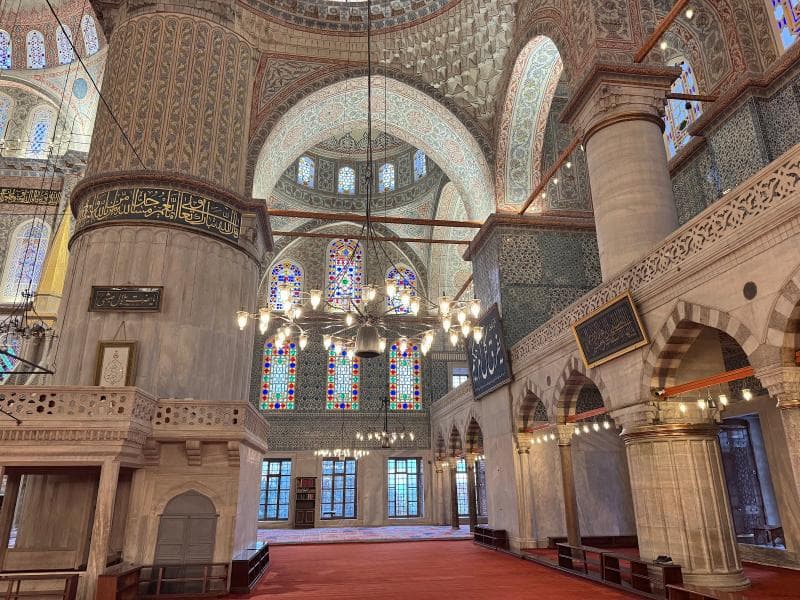

Discover the fascinating story of the Six Minarets of Istanbul's Blue Mosque (Sultan Ahmed Mosque). Explore its unique history, architectural grandeur, and cultural significance in Turkey.
Overview
Nestled in the heart of Istanbul, Turkey, the majestic Blue Mosque, officially known as the Sultan Ahmed Mosque (Sultanahmet Camii), stands as an enduring symbol of Ottoman grandeur. While its interior dazzles with thousands of exquisite blue Iznik tiles, it is the mosque's striking exterior, crowned by its six slender minarets, that immediately captures the eye and distinguishes it on the city's iconic skyline. These six elegant towers are not merely architectural elements; they tell a unique story of ambition, legend, and religious significance, making the Blue Mosque one of the most remarkable structures in the Islamic world.
Completed in the early 17th century, the presence of six minarets was, and still is, an extraordinary feature, setting it apart from nearly all other mosques globally. They contribute to the mosque's harmonious silhouette, drawing the gaze upwards and framing its cascading domes, offering a powerful visual statement to anyone approaching this historic quarter of Istanbul.
History & Cultural Background
The Sultan Ahmed Mosque was commissioned by the young Sultan Ahmed I when he was just 19 years old, with construction commencing in 1609 and concluding in 1616 or 1617. The Sultan's motivation was deeply rooted in a desire to build a monument that would reassert Ottoman power and piety, particularly after military setbacks, and to rival the splendor of the Hagia Sophia, which stands directly opposite. The chosen architect was Sedefkar Mehmed Agha, a talented pupil of the renowned master architect Mimar Sinan, who brought classical Ottoman architectural principles to life in this grand project.
Building such an immense mosque was a significant undertaking, funded directly from the imperial treasury, which was unusual at the time and sparked some controversy. However, Sultan Ahmed I was deeply committed, even said to have participated in the initial groundwork himself, ensuring his vision of a truly magnificent imperial mosque came to fruition.
What Makes It Special
The defining feature that makes the Blue Mosque's exterior truly special is its unique complement of six minarets. Most imperial mosques typically feature two or four minarets, making the Sultan Ahmed Mosque an architectural anomaly. These six towers are strategically positioned: four grand minarets, each boasting three balconies (known as 'şerefe'), rise from the corners of the main prayer hall, while two slightly smaller minarets, each with two balconies, stand at the corners of the outer courtyard.
Beyond their practical function of providing a platform for the call to prayer, these minarets are crucial to the mosque's aesthetic composition. They provide vertical emphasis that perfectly balances the horizontal spread of the mosque's domes and semi-domes, creating a visually stunning and dynamic profile. This arrangement gives the mosque its distinctive, soaring silhouette against the Istanbul sky, a masterpiece of classical Ottoman design that has captivated observers for centuries.
Stories, Fun Facts & Local Details
The existence of six minarets at the Blue Mosque is famously linked to an intriguing legend and generated considerable debate at the time of its construction. According to popular folklore, Sultan Ahmed I had requested 'altın minaret' (gold minarets) from his architect. However, due to a phonetic similarity in Turkish, the architect purportedly misheard this as 'altı minaret' (six minarets).
This 'misunderstanding' led to a significant controversy, as the only other mosque in the world with six minarets at that time was the Masjid al-Haram, surrounding the Kaaba in Mecca, the holiest site in Islam. Critics argued that the Sultan was displaying undue hubris by seemingly trying to rival Mecca. To resolve this delicate religious and political issue, Sultan Ahmed I is said to have personally funded the construction of a seventh minaret for the Grand Mosque in Mecca, thus preserving the unique supremacy of Islam's holiest sanctuary.
Historically, muezzins would climb the narrow spiral staircases within these minarets five times a day to deliver the 'adhan', the call to prayer, echoing across the city. Today, loudspeakers carry the call, but the minarets remain powerful symbols of faith and architectural prowess.
Visitor Perspective
For any traveler visiting Istanbul, the sight of the Blue Mosque's six minarets piercing the horizon is an unforgettable experience. Whether viewed from the bustling Sultanahmet Square, the ancient Hippodrome, or from the waters of the Bosphorus, they command attention and convey a sense of enduring history and spiritual grandeur.
These towering structures not only define the mosque's exterior but also serve as a constant reminder of the rich tapestry of stories and traditions woven into Istanbul's fabric. They invite visitors to ponder the ambition of a young Sultan, the skill of his architect, and the cultural nuances that led to such a distinctive architectural choice. The six minarets stand as a testament to the Ottoman Empire's artistic zenith and its profound connection to Islamic heritage, offering a truly immersive historical and visual journey.
Coordinates: 28.9768, 41.0054
View on Google Maps💬 How Travelers Describe This Place
Based on community votes
Unique
623Photogenic
545Interesting
343Beautiful
302Must See
88
Traveler Stories
Discover memorable experiences shared by travelers who have visited this place.
No traveler stories yet.
Be the first traveler to share what made this place memorable.

Tour
By
Spot
Discover amazing places around the world. Your journey starts here.
Explore
© 2026 TourBySpot. All rights reserved.