Blue Mosque
Istanbul, Turkey
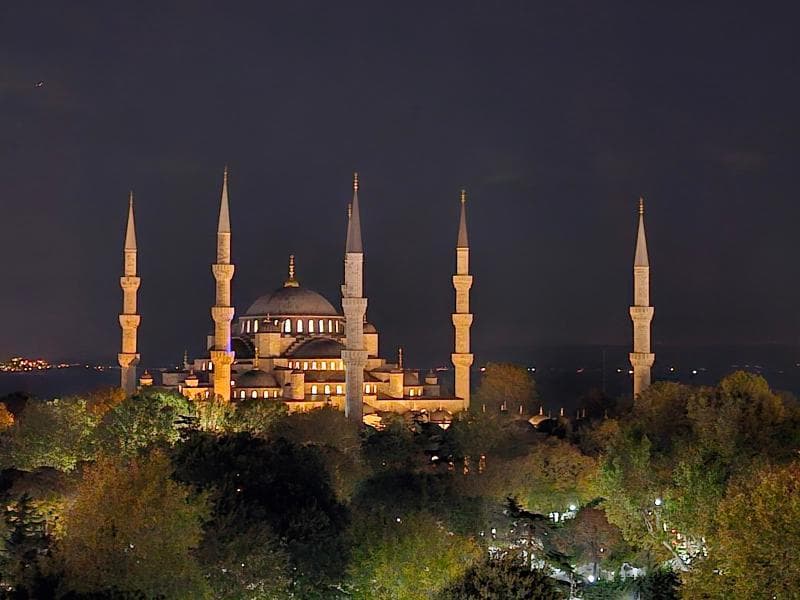

Discover Istanbul's iconic Blue Mosque (Sultan Ahmed Mosque), a 17th-century masterpiece with stunning Iznik tiles, six minarets, and rich Ottoman history.
Overview
Stepping into the heart of Istanbul's historic Sultanahmet district, one is immediately captivated by the majestic presence of the Sultan Ahmed Mosque, globally known as the Blue Mosque. This iconic structure, an enduring symbol of Ottoman imperial architecture, stands proudly opposite the equally magnificent Hagia Sophia, creating an unparalleled vista of historical grandeur. Commissioned by Sultan Ahmed I, this active mosque was constructed between 1609 and 1617 and continues to welcome worshippers and visitors from around the world, making it one of Turkey's most revered landmarks. Its popular moniker, 'Blue Mosque', stems from the dazzling array of hand-painted blue tiles that adorn its interior, casting a serene, otherworldly glow upon entering.
A masterpiece of its era, the Blue Mosque is distinguished by its unique architectural composition, notably featuring six slender minarets that pierce the Istanbul skyline. It is a UNESCO World Heritage Site, recognized for its profound cultural and historical significance.
History & Cultural Background
The construction of the Blue Mosque was a significant undertaking during the reign of the young Sultan Ahmed I. Enthroned at just 13 years old, the Sultan sought to reaffirm Ottoman power and piety, particularly after military setbacks. Unlike previous imperial mosques often funded by war spoils, Sultan Ahmed I bravely financed this monumental project directly from the imperial treasury, an act that was considered controversial at the time.
The mosque's architect, Sedefkar Mehmed Ağa, a student of the legendary Mimar Sinan, meticulously blended traditional Islamic architectural elements with some Byzantine influences, drawing inspiration from the neighboring Hagia Sophia. Its strategic placement was a deliberate statement, intended to rival the grandeur of Hagia Sophia and symbolize the triumph of an Islamic monument in the city. The site itself holds layers of history, built atop the grounds of the old Byzantine Imperial Palace and incorporating parts of the ancient Hippodrome.
What Makes It Special
The Blue Mosque's distinctiveness is multifaceted, beginning with its renowned six minarets. This number was highly unusual and even caused controversy, as only the Kaaba in Mecca possessed six minarets at the time. Legend recounts that the Sultan's instruction for 'gold minarets' (altın minaret) was misheard by the architect as 'six minarets' (altı minaret). To resolve this perceived challenge to Mecca's sanctity, Sultan Ahmed I later funded the construction of a seventh minaret for the mosque in Mecca.
However, the mosque's most celebrated feature is undoubtedly its interior. Over 20,000 exquisite, handmade Iznik ceramic tiles, in fifty different tulip designs and other floral motifs like roses, carnations, and lilies, adorn the walls. Predominantly in shades of blue, green, and white, these tiles give the mosque its popular name. Natural light streams through more than 200 stained glass windows, illuminating the intricate tilework and the beautiful calligraphy of Quranic verses by Seyyid Kasim Gubari. The central dome, reaching 43 meters in height and 23.5 meters in diameter, rests on four colossal 'elephant foot' pillars, surrounded by a cascading series of semi-domes, creating a breathtaking sense of space and serenity.
Stories, Fun Facts & Local Details
Beyond its grand architecture, the Blue Mosque holds many fascinating details. The very nickname, 'Blue Mosque', originates purely from the captivating blue hues of its interior tiles, rather than any external color. The structure's location necessitated the costly demolition of several palaces belonging to Ottoman viziers, underscoring the Sultan's determination to realize his vision.
Historically, ostrich eggs were placed in the mosque's chandeliers, believed to repel spiders, adding a quaint, practical detail to its ornate decor, though most of these original elements are now gone. The extensive Külliye (complex) of the mosque originally included a madrasah (religious school), a hospital, and a public kitchen, reflecting its role as a vital social and religious center.
Visitor Perspective
Visiting the Blue Mosque offers a profound cultural experience. As it remains an active house of worship, visitors are kindly requested to observe specific etiquette. The mosque is open daily but closes to non-worshippers during the five daily prayer times, each lasting approximately 90 minutes. It also remains closed for tourists on Friday mornings until after the main congregational prayer, typically around 2:30 PM.
Entry is free, though donations are appreciated for the mosque's upkeep. A modest dress code is enforced: shoulders and knees must be covered for both men and women, and women are required to wear a headscarf, which can be borrowed at the entrance if needed. Shoes must be removed before entering, with plastic bags provided for convenience. Photography is permitted, but flash photography is prohibited, and photographing people engaged in prayer is strictly forbidden to ensure respect for worshippers. To avoid the largest crowds, weekday mornings (9:00 AM - 11:30 AM) or late afternoons (2:00 PM - 4:00 PM) are often recommended. The mosque's central location in Sultanahmet Square makes it easily accessible, surrounded by other major historical sites, inviting a comprehensive exploration of Istanbul's rich past.
Coordinates: 28.976944, 41.005278
View on Google Maps💬 How Travelers Describe This Place
Based on community votes
Must See
961Interesting
710Beautiful
448Unique
156Photogenic
87
Traveler Stories
Discover memorable experiences shared by travelers who have visited this place.
No traveler stories yet.
Be the first traveler to share what made this place memorable.
Things to see at Blue Mosque



Tour
By
Spot
Discover amazing places around the world. Your journey starts here.
Explore
© 2026 TourBySpot. All rights reserved.