Singapore Botanic Gardens
Singapore, Singapore
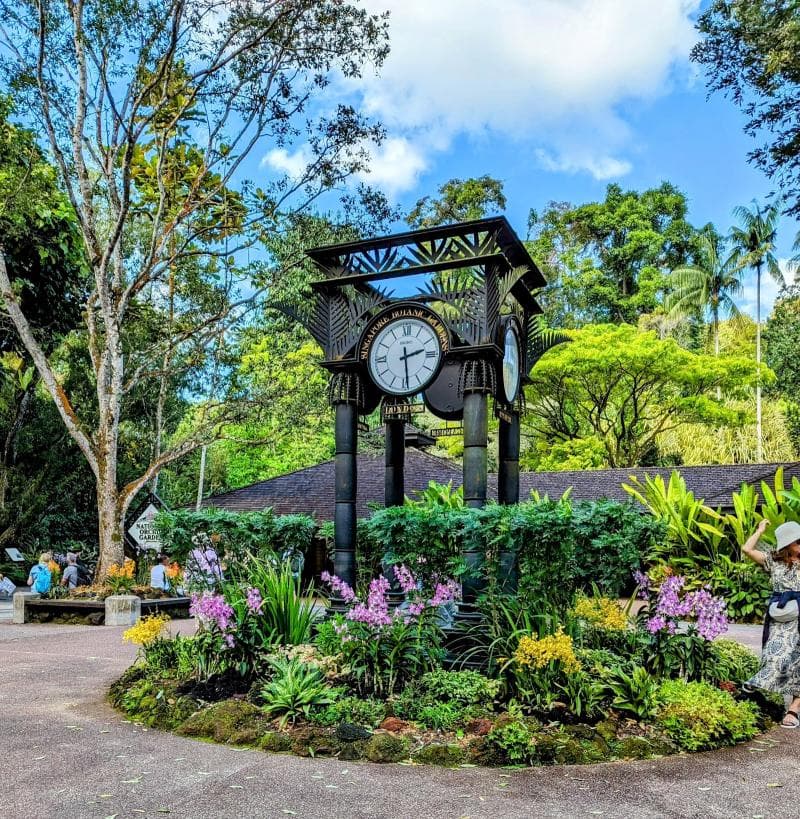
Explore Singapore Botanic Gardens, a UNESCO World Heritage Site in Singapore. Discover its rich history, stunning orchids, and lush rainforest.
Overview
The Singapore Botanic Gardens, nestled near the bustling Orchard Road shopping district, offers a serene escape and a vibrant tapestry of tropical flora in Singapore, Singapore. This magnificent green lung is not just a beloved local landmark but holds the distinguished title as the first and only tropical garden to be honored as a UNESCO World Heritage Site, a recognition bestowed upon it in 2015. Spanning an impressive 82 hectares, or approximately 202 acres, the Gardens welcomes around 4.5 million visitors annually, inviting them to immerse themselves in its natural beauty and diverse collections. The main Gardens are open daily from 5 AM to 12 midnight, with free admission, offering a tranquil respite almost any time of day. Its existence and continuous development have profoundly shaped Singapore's identity as a 'Garden City'.
History & Cultural Background
The vision for a botanical garden in Singapore dates back to 1822, when Sir Stamford Raffles, the founder of modern Singapore and a keen naturalist, established an initial 'Botanical and Experimental Garden' at Fort Canning. This early endeavor focused on cultivating economic crops like nutmeg and cloves but eventually closed in 1829. The present Singapore Botanic Gardens was officially founded much later in 1859 by the Agri-horticultural Society, on what was once an abandoned nutmeg plantation. In 1874, the colonial government assumed management, transforming it from a pleasure garden into a serious botanical institution.
A pivotal chapter in its history unfolded in the early 20th century with the rubber trade boom. Henry Nicholas Ridley, the Gardens' first scientific director, spearheaded research into rubber cultivation, perfecting techniques for latex extraction still in use today. His efforts were so impactful that he earned nicknames like 'Mad Ridley' for his persistence in convincing planters to grow rubber trees, ultimately leading to the Malayan peninsula cornering half of the global latex production by the 1920s. This agricultural innovation profoundly influenced the region's economic and social landscape. In 1986, the Gardens came under the National Parks Board, leading to significant revitalization and a renewed focus on public amenities, research, and conservation. Its journey culminated in 2015 when it was inscribed as Singapore's first UNESCO World Heritage Site, a testament to its outstanding universal value and cultural significance.
What Makes It Special
The Singapore Botanic Gardens boasts an unparalleled collection of flora, with over 10,000 species. Its crown jewel is undoubtedly the National Orchid Garden, a ticketed attraction that houses one of the world's largest and most comprehensive orchid displays. Here, you'll find an astonishing 1,200 species and 2,000 hybrids, with around 60,000 individual plants in bloom at any given time, showcasing the Gardens' pioneering work in orchid breeding. A unique tradition, known as 'orchid diplomacy,' involves naming new orchid hybrids after visiting heads of state and dignitaries, which are then displayed in the VIP Orchid Gardens. Beyond orchids, the Gardens features a rare six-hectare tropical rainforest, a remnant older than Singapore itself, with some trees predating modern Singapore's founding in 1819. This rainforest is one of only two in the world located within a major city. You can also explore the vibrant Ginger Garden, home to over 250 species of ginger, complete with a picturesque waterfall, or the Jacob Ballas Children's Garden, designed specifically for younger visitors to learn about plants and nature. The serene Swan Lake, one of Singapore's oldest ornamental water features, provides a tranquil spot to observe graceful mute swans from Amsterdam.
Stories, Fun Facts & Local Details
Imagine the Singapore Botanic Gardens once hosting a zoo! From 1870 to 1906, it housed wild deer, lions, tigers, alligators, and monkeys, serving as a popular entertainment venue. Another interesting detail is the iconic Tembusu tree, now featured on Singapore's $5 note, which was merely a seedling during the zoo's time. The Gardens also played a significant role in making 'Vanda Miss Joaquim' the nation's national flower in 1981, a climbing orchid hybrid first propagated here. This deep connection between the Gardens and Singapore's natural heritage is evident everywhere, reinforcing the nation's commitment to its green environment. The architectural charm of buildings like Burkill Hall, once a director's residence, adds to the historical narrative, while the Green Pavilion stands as Singapore's first 'green roof.' For those seeking a deeper dive, free guided tours are often available on Saturdays, offering insights into its rich biodiversity and heritage.
Visitor Perspective
Stepping into the Singapore Botanic Gardens is like entering another world, an exuberant retreat that offers a peaceful and immediate respite from the urban intensity of Singapore. Visitors often describe it as a tranquil sanctuary, an idyllic spot to unwind and reconnect with nature. Its expansive pathways invite leisurely strolls, allowing you to discover countless hidden gems. The Gardens are largely pram and wheelchair-friendly, ensuring accessibility for many. For the most pleasant experience, consider visiting in the early morning or late afternoon when temperatures are cooler and the atmosphere is quieter, perfect for photography or simply soaking in the tranquility. Getting there is convenient, with several MRT stations like Botanic Gardens and Napier, as well as various bus routes, providing easy access. Whether you're an avid botanist, a history buff, or simply seeking a beautiful green space to relax, the Singapore Botanic Gardens offers a profoundly rewarding experience, easily filling a full day with exploration and discovery.
Coordinates: 103.8162, 1.3151
View on Google Maps💬 How Travelers Describe This Place
Based on community votes
Photogenic
926Must See
703Interesting
646Unique
380Beautiful
291
Traveler Stories
Discover memorable experiences shared by travelers who have visited this place.
No traveler stories yet.
Be the first traveler to share what made this place memorable.
Things to see at Singapore Botanic Gardens



Tour
By
Spot
Discover amazing places around the world. Your journey starts here.
Explore
© 2026 TourBySpot. All rights reserved.