Silver Chapel
Innsbruck, Austria
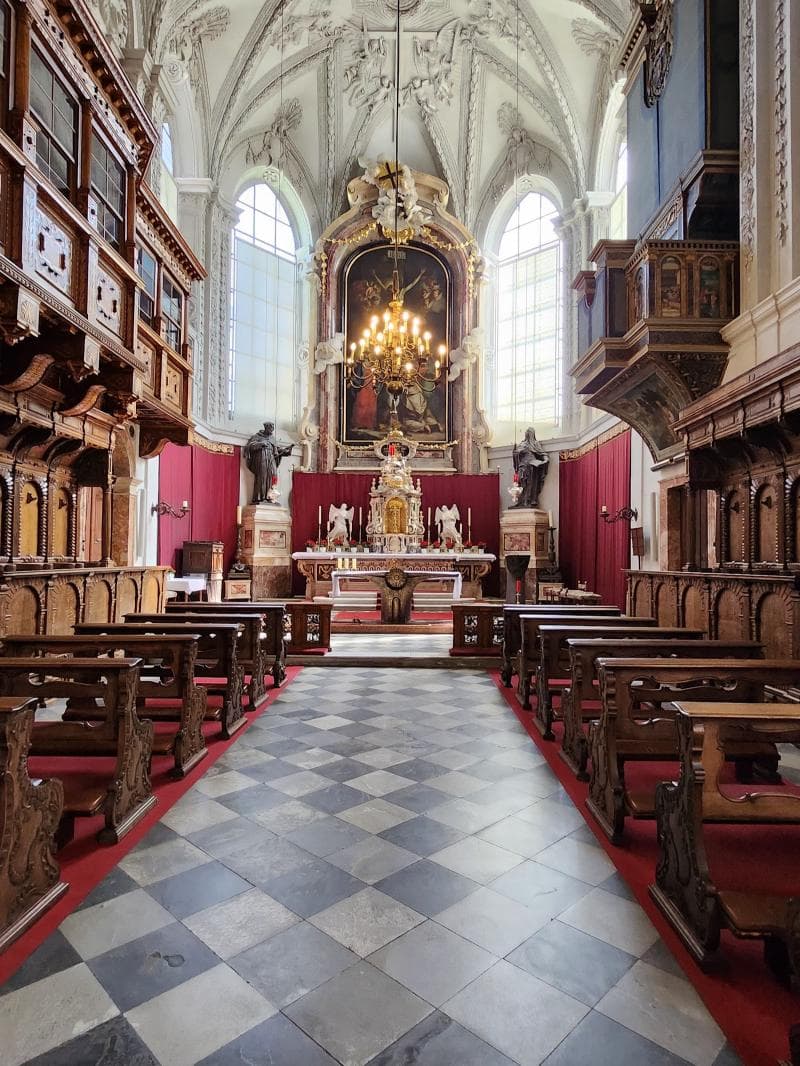
Explore Innsbruck's Silver Chapel in Hofkirche, a stunning Renaissance burial site for Archduke Ferdinand II and Philippine Welser. Discover its silver altar and unique history.
Overview
The Silver Chapel, or Silberne Kapelle, is a profound and intimate space nestled within the grand Hofkirche in Innsbruck, Austria. It serves as the final resting place for Archduke Ferdinand II and his wife, Philippine Welser. The chapel gains its name from its remarkable silver-embossed altar.
History & Cultural Background
Constructed between 1578 and 1587, the Silver Chapel was commissioned by Archduke Ferdinand II, a significant figure in Tyrolean history. He intended it as a personal burial chapel for himself and his beloved first wife, Philippine Welser. Philippine, the daughter of a powerful merchant family, entered into a morganatic marriage with the Archduke, meaning she was of a lower social standing and their children could not inherit titles. This union and its societal implications are subtly reflected in the chapel's design, particularly in the distinct tombs of the couple. The chapel was built by Hans and Albrecht Lucchese, with the wall-niche graves crafted by the Flemish sculptor Alexander Colin. Connected to the main Hofkirche structure, the Silver Chapel sits above what was once the passage route to the city moat, showcasing a blend of Late Gothic and Renaissance styles. The Hofkirche itself was initially built by Ferdinand I as a memorial to Emperor Maximilian I, making the Silver Chapel a poignant addition to a site already rich with Habsburg legacy.
What Makes It Special
The chapel's namesake, the lavish silver altar, is a masterpiece created by Anton Ort. Its silver reliefs intricately depict symbols from the Laurentanian Litany, adding a profound spiritual dimension to the space. Opposite the entrance, one finds the opulent altar featuring a silver-embossed wood Madonna. The resting places of Archduke Ferdinand II and Philippine Welser are central to the chapel's allure. Ferdinand II's tomb is a striking black marble niche adorned with white intarsia and bas-relief panels illustrating scenes from his life. An armored figure of the Archduke kneels perpetually facing the altar, positioned high above his tomb. In the chapel's anteroom, symbolizing their morganatic marriage, lies Philippine Welser's tomb—a white marble niche with a recumbent portrait figure. The room's vibrant red walls, featuring cherubim heads painted by Giovanni Battista Fontana, create a distinct atmosphere. Furthermore, the Silver Chapel houses a remarkable Renaissance organ, built around 1585, with pipes made of cypress wood. This historically significant instrument is not merely an exhibit; it is regularly played, offering visitors a rare auditory experience of centuries-old music.
Stories, Fun Facts & Local Details
The narrative surrounding Archduke Ferdinand II and Philippine Welser is a testament to love transcending societal norms. Their morganatic marriage, where Philippine retained her status as a commoner despite marrying royalty, is subtly underscored by the distinct design and placement of their tombs. The differing materials and locations—Ferdinand's in the main chapel, Philippine's in the anteroom—speak volumes about their unique relationship within the rigid hierarchy of the time. It is said that Ferdinand II sought solace and reflection within the Silver Chapel's walls, perhaps finding peace from the demands of his princely duties or contemplating his actions during the celebrated festivities at nearby Ambras Castle. The chapel is intimately connected to the larger Hofkirche, also known locally as the 'Schwarzmanderkirche' or 'Church of the Black Men,' a name derived from the 28 larger-than-life bronze statues guarding Emperor Maximilian I's empty tomb downstairs. This upper chapel, accessed via a staircase, offers a contrasting, more personal and introspective experience compared to the imperial grandiosity of the main church.
Visitor Perspective
A visit to the Silver Chapel offers a unique journey into the past, presenting a more intimate and reflective facet of the Hofkirche experience. Access to the chapel, along with the main church, is typically gained through the entrance of the Tyrolean Folk Art Museum, creating a comprehensive cultural outing. Travelers often describe the chapel's interior with its red vaulted ceiling and historical tapestries as possessing a rich, aged aesthetic that deeply resonates. Stepping into this venerated space, one is enveloped by a sense of history and profound personal stories, making it a compelling stop for those seeking both clear explanations and a deeper emotional connection to Innsbruck's rich heritage. It is a space where the echoes of a unique royal romance and the artistic brilliance of the Renaissance converge.
Coordinates: 11.3953, 47.2683
View on Google Maps💬 How Travelers Describe This Place
Based on community votes
Must See
872Beautiful
684Unique
363Interesting
250Photogenic
88
Traveler Stories
Discover memorable experiences shared by travelers who have visited this place.
No traveler stories yet.
Be the first traveler to share what made this place memorable.

Tour
By
Spot
Discover amazing places around the world. Your journey starts here.
Explore
© 2026 TourBySpot. All rights reserved.