Side Pedestrian Bridges
Ljubljana, Slovenia
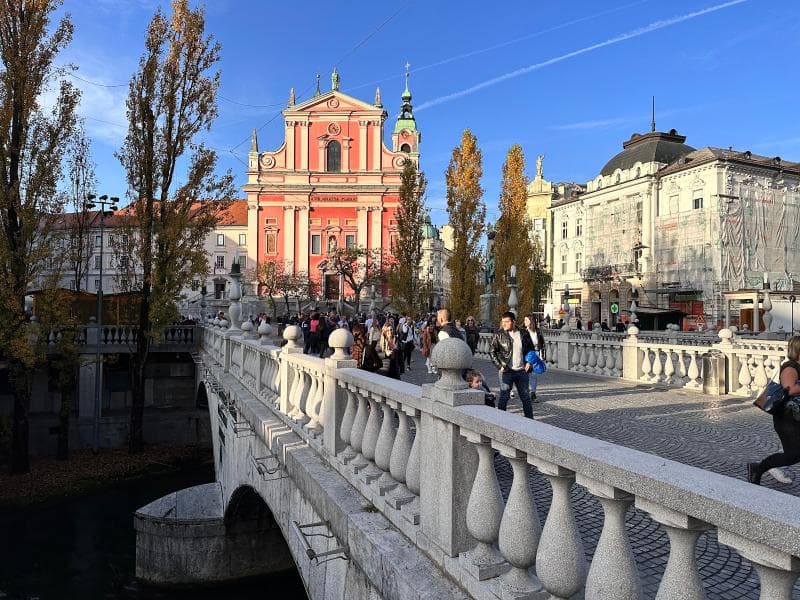
Explore the Side Pedestrian Bridges of Ljubljana's Triple Bridge in Slovenia, a UNESCO site by Jože Plečnik. Discover its history and unique design.
Overview
The Side Pedestrian Bridges are an integral and captivating part of Ljubljana's iconic Triple Bridge (Tromostovje), gracefully spanning the tranquil Ljubljanica River in the heart of Slovenia's capital. These two elegant footbridges, flanking a central stone bridge, form a unique fan-like architectural ensemble that serves as both a vital pedestrian thoroughfare and a beloved cultural landmark. Connecting the historical medieval town on one bank with the lively Prešeren Square on the other, they offer a seamless flow for locals and visitors alike to traverse the city's charming core. The Triple Bridge, including these thoughtfully designed pedestrian wings, stands as a testament to ingenious urban planning and aesthetic harmony, recognized globally as a UNESCO World Heritage Site since 2021.
Far more than mere crossings, the Side Pedestrian Bridges are vibrant public spaces, inviting leisurely strolls, contemplation of the picturesque river, and observation of the city's pulse. Their strategic placement and design contribute significantly to the Triple Bridge's reputation as a bustling hub of activity, featuring street performers, artists, and vendors, especially in the pedestrian-only zone surrounding them.
History & Cultural Background
The story of the Triple Bridge, and by extension its side pedestrian wings, dates back to medieval times. The site was originally home to a wooden bridge, first mentioned in 1280, known as the Old Bridge or Lower Bridge. This crucial crossing linked important trade routes and facilitated the city's early growth. After several reconstructions, a new stone bridge, named the Franciscan Bridge or Franz Karl Bridge, replaced the wooden structure in 1842, designed by Italian architect Giovanni Picco. This central stone bridge forms the core of today's Triple Bridge.
However, by the early 20th century, increasing traffic — both vehicular and pedestrian — presented a challenge for the single stone bridge. Renowned Slovenian architect Jože Plečnik was tasked with finding a solution. His visionary approach, undertaken between 1929 and 1932, was not to demolish the existing structure but to expand upon it. Plečnik ingeniously added two narrower pedestrian bridges, angled slightly on either side of the original 1842 stone bridge, creating the distinctive triple formation seen today. This innovative redesign not only alleviated congestion but also transformed the bridge into an architectural masterpiece, enhancing its functionality while preserving its historical integrity. The completion of these side bridges marked a pivotal moment in Ljubljana's urban development, firmly establishing the Triple Bridge as a symbol of the city's rich heritage and forward-thinking design.
What Makes It Special
What truly sets the Side Pedestrian Bridges apart is Plečnik's brilliant synthesis of practicality and profound aesthetic vision. Instead of a utilitarian extension, he crafted an integrated artistic statement. The two additional pedestrian bridges solved the growing traffic dilemma without sacrificing the existing historic bridge, a testament to his 'reuse' philosophy. Their fan-like layout creates a natural funnel, guiding movement from the expansive Prešeren Square towards the old town.
Plečnik's meticulous attention to detail is evident in every element. He removed the metal railings from the old stone bridge and unified all three bridges with massive, concrete balustrades, featuring 642 balusters, and elegant lamps. From each side bridge, two stairways gracefully descend to lower terraces situated just above the river, a design choice reminiscent of Venetian architecture, which adds to Ljubljana's Mediterranean character. These terraces, once adorned with poplar trees, contribute to the overall picturesque appearance. The use of Glinica limestone and concrete, coupled with granite paving, reflects a careful selection of materials for both durability and visual appeal. This thoughtful design transformed a simple river crossing into an urban focal point, making the entire Triple Bridge complex a destination in itself rather than just a passageway.
Stories, Fun Facts & Local Details
The Triple Bridge, with its distinctive side pedestrian sections, holds many charming tales and interesting facets. One delightful detail is the subtle nod to Venice in Plečnik's design, particularly with the staircases leading down to the riverbanks, creating a 'river portal' and reinforcing Ljubljana's Mediterranean influences. It's said that Plečnik was inspired by the need to connect people with their city and the river more intimately, and these stairways certainly achieve that.
A fun fact is that the entire area around the Triple Bridge has been pedestrianized since 2007, allowing for an even more relaxed and enjoyable experience for those crossing the side bridges. This transformation has solidified its role as a vibrant gathering place, where the sounds of street musicians often fill the air and artists display their work. The balustrades themselves, with their impressive count of 642 balusters, create a rhythmic visual effect, contributing to a sense of continuous movement across the bridges. Additionally, the bridge's strategic position links it not only to the main square but also to Plečnik's wider urban plan, connecting his 'river axis' and 'castle hill axis,' showcasing his grand vision for Ljubljana.
Visitor Perspective
For any traveler exploring Ljubljana, experiencing the Side Pedestrian Bridges is a must. They offer a wonderfully immersive way to connect the city's historical and modern halves. Walking across these bridges is entirely free and accessible 24/7, making it a flexible addition to any itinerary. The design ensures easy access for everyone, including those with wheelchairs or strollers, with ramps and gentle slopes.
Many guided walking tours of Ljubljana prominently feature the Triple Bridge, providing deeper historical and architectural insights. To truly soak in the atmosphere and capture stunning photographs, it's often recommended to visit during the early mornings or late evenings when the light is softer and crowds are fewer. These times offer a serene experience, allowing visitors to appreciate the intricate details of Plečnik's work and the picturesque views of the Ljubljanica River and surrounding architecture. The bridges naturally lead to other key attractions, such as Prešeren Square, the Franciscan Church, and the Central Market, making them a perfect starting point for further exploration. The side bridges are not just a crossing but an experience, embodying the spirit of Ljubljana.
Coordinates: 14.506, 46.051
View on Google Maps💬 How Travelers Describe This Place
Based on community votes
Must See
672Unique
671Photogenic
617Beautiful
356Interesting
220
Traveler Stories
Discover memorable experiences shared by travelers who have visited this place.
No traveler stories yet.
Be the first traveler to share what made this place memorable.

Tour
By
Spot
Discover amazing places around the world. Your journey starts here.
Explore
© 2026 TourBySpot. All rights reserved.