Shardeni Street
Tbilisi, Georgia
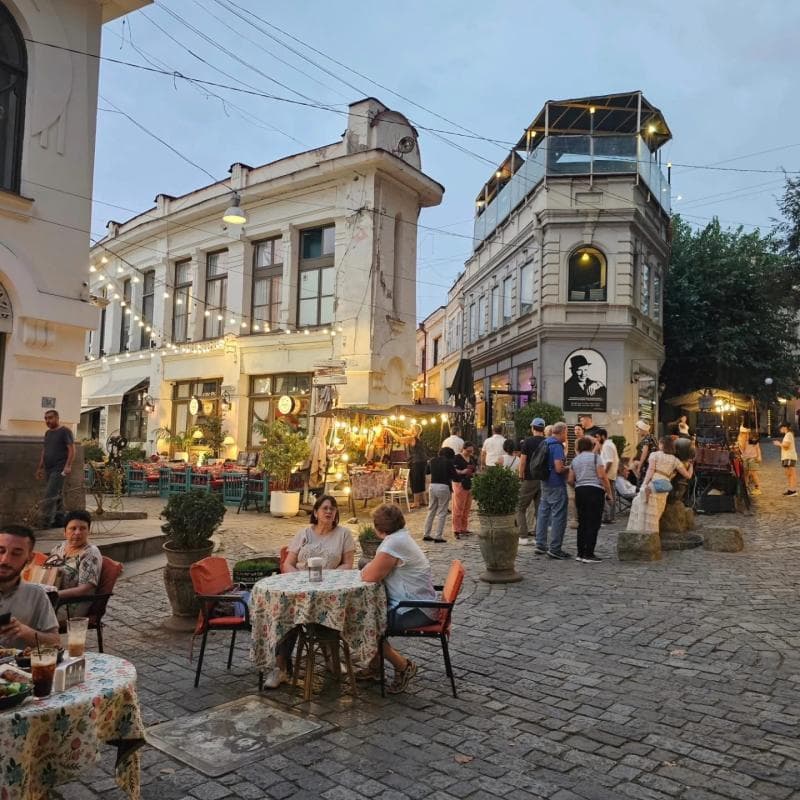
Discover Shardeni Street, a vibrant pedestrian hub in Old Tbilisi, Georgia, rich in history, art, cafes, and lively nightlife.
Overview
Shardeni Street, nestled within the historic district of Old Tbilisi in Georgia's capital, is a vibrant pedestrian thoroughfare that pulsates with cultural and social energy. This charming street is renowned for its lively atmosphere, hosting an array of art galleries, artisanal shops, cafes, restaurants, and bars. It serves as a central hub for both locals and travelers seeking to immerse themselves in Tbilisi's dynamic urban life, particularly during the evenings. Stretching between Vakhtang Gorgasali Square and Sioni Street, Shardeni offers a blend of historical charm and contemporary flair.
History & Cultural Background
Historically, Shardeni Street bore a different name and appearance. In the late Middle Ages, it was known as the 'Dark Street' or 'Dark Row' due to its narrow, roofed-over structure, which shielded a bustling commercial market from the elements. This area was a significant trading hub, with specialized alleys like 'Iron Street' for metal goods and 'Cotton Street' for textiles, forming a structured commercial zone. The street was later renamed in honor of Jean Chardin, a 17th-century French traveler and jeweler who documented his impressions of Tbilisi and Georgian culture during his visit in 1672. His detailed observations provide valuable historical accounts of the city. Significant renovations in the early 2000s transformed Shardeni Street, preserving its historical essence while revitalizing it into the lively cultural and entertainment destination it is today.
What Makes It Special
What truly sets Shardeni Street apart is its unique blend of traditional Georgian architecture and a cosmopolitan 'Parisian flair.' The street is characterized by colorful facades, many with intricately carved wooden balconies, some dating back decades, showcasing a fusion of Georgian, Persian, Russian, and European architectural styles. The cobblestone paths invite leisurely strolls, adding to its enchanting ambiance. At the entrance to Shardeni, visitors encounter the iconic 'Tamada' statue, a bronze replica of a 7th-century BCE artifact discovered in Vani, symbolizing Georgia's deep-rooted winemaking traditions and the role of a toastmaster. The presence of numerous art galleries, salons displaying vitreous enamel, and other handmade items allows visitors to engage with contemporary Georgian art and craftsmanship. By night, Shardeni transforms into a vibrant hub, with cafes and bars spilling onto the street, offering diverse dining and entertainment options, from traditional Georgian eateries to international cuisines.
Stories, Fun Facts & Local Details
Jean Chardin, the street's namesake, described Tbilisi as one of the most beautiful cities in the world, marveling at its diverse mix of peoples—Armenians, Greeks, Jews, Persians, Indians, and Europeans—a testament to its historical role as a multicultural commercial crossroads. The area's evolution from the 'Dark Row' to its present-day form reflects Tbilisi's resilience and capacity for reinvention. While bustling in the evenings, Shardeni Street has a different, quieter charm in the mornings, where one might find locals enjoying coffee. The renovations in the early 2000s were part of a broader effort to restore and revitalize Old Tbilisi, much of which had fallen into disrepair during the Soviet era. This history underscores the street's journey from a mercantile past to a modern-day social heart, where the clinking of wine glasses and conversations in multiple languages fill the air.
Visitor Perspective
For a curious traveler, Shardeni Street offers a multifaceted experience. During the day, it's an ideal place to explore art galleries, pick up unique souvenirs, and admire the distinctive architecture, particularly the cantilevered wooden balconies that are a hallmark of Old Tbilisi. As evening approaches, the street comes alive with music, laughter, and the enticing aromas of Georgian cuisine. It’s a perfect spot for an evening stroll, to savor traditional Georgian wines, or simply to people-watch from one of the many open-air terraces. The nearby Iron and Cotton Rows, with their similar character, further enrich the experience, offering more boutiques and cafes. Whether seeking historical insights, artistic inspiration, culinary delights, or lively nightlife, Shardeni Street provides a concentrated dose of Tbilisi's charm and hospitality.
Coordinates: 44.808437, 41.690479
View on Google Maps💬 How Travelers Describe This Place
Based on community votes
Must See
998Photogenic
897Beautiful
641Interesting
481Unique
196
Traveler Stories
Discover memorable experiences shared by travelers who have visited this place.
No traveler stories yet.
Be the first traveler to share what made this place memorable.

Tour
By
Spot
Discover amazing places around the world. Your journey starts here.
Explore
© 2026 TourBySpot. All rights reserved.