Serbian Academy Of Sciences
Belgrade, Serbia
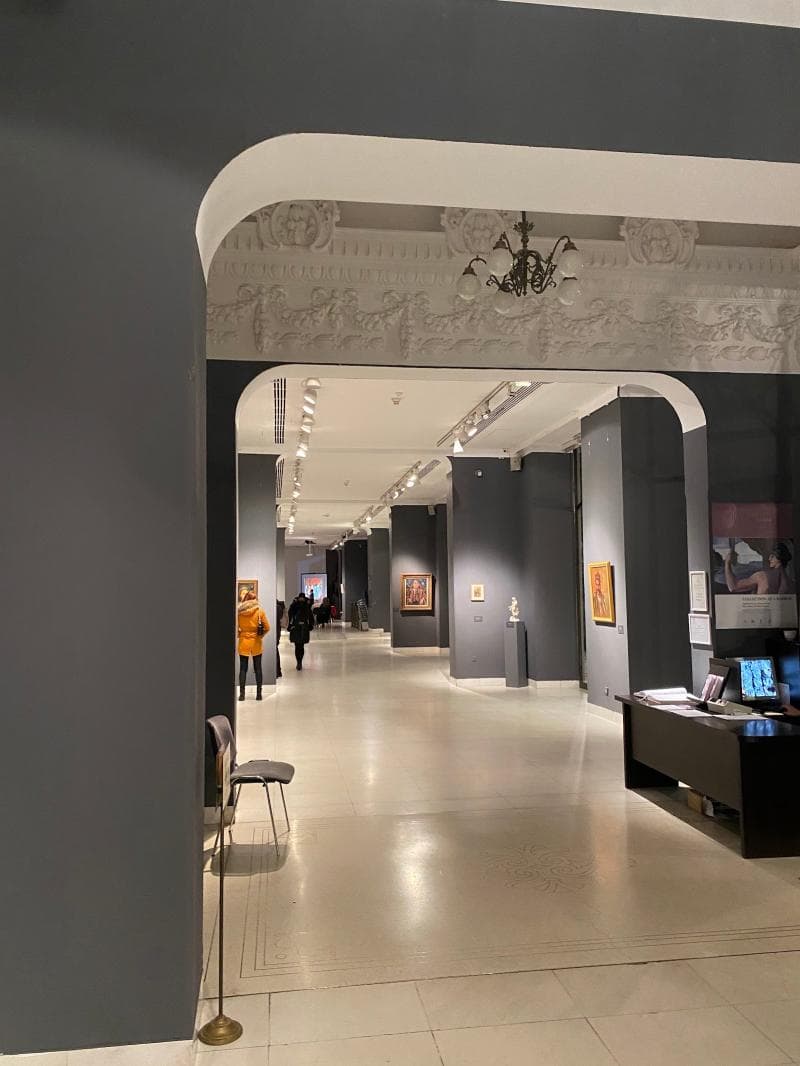
Explore the Serbian Academy of Sciences and Arts (SANU) on Knez Mihailova Street in Belgrade, Serbia. Discover its rich history, stunning architecture, and cultural significance as Serbia's premier academic institution.
Overview
Nestled in the bustling heart of Belgrade's pedestrian zone, along the renowned Knez Mihailova Street, stands the impressive edifice of the Serbian Academy of Sciences and Arts, known locally as SANU. More than just a building, it represents the pinnacle of intellectual and artistic endeavor in Serbia, a place where history, science, and culture converge. Its grand architecture, a striking blend of academic style and Art Nouveau, serves as a prominent landmark and a testament to Belgrade's rich cultural heritage.
As a national academy, SANU is dedicated to fostering scientific research, promoting artistic activity, and preserving Serbia's intellectual legacy. It's a vibrant cultural hub, housing an extensive library, important archives, and galleries that regularly host compelling exhibitions and classical music concerts, inviting both locals and travelers to delve into the country's profound contributions to knowledge and art.
History & Cultural Background
The roots of the Serbian Academy of Sciences and Arts stretch back to 1841 with the founding of the Society of Serbian Letters. This initial institution evolved into the Serbian Learned Society in 1864, laying the groundwork for what would become Serbia's premier academic body. The Academy was officially established as the Serbian Royal Academy (SKA) by a law enacted on November 1, 1886, a decree by King Milan Obrenović.
The plot of land for its magnificent home on Knez Mihailova Street was a generous donation from Prince Mihailo Obrenović, intended for educational purposes, signifying the early importance placed on intellectual development. Although plans for a grand building existed from its inception in 1886, construction faced delays. The current stately building, designed by architects Dragutin Djordjević and Andra Stevanović, was finally completed in 1924, though the Academy itself only moved into its permanent quarters in 1952. After World War II, the institution adopted its current name, the Serbian Academy of Sciences and Arts (SANU), continuing its mission as the highest scientific and art institution in the Republic of Serbia.
What Makes It Special
What truly sets the Serbian Academy of Sciences and Arts apart is its dual role as both a custodian of Serbia's intellectual past and a vibrant center for its future. The building itself is a masterpiece, adorned with intricate Art Nouveau and French decorativist elements, an architectural gem that brought a spirit of modernity to Belgrade's cityscape at the time of its completion. Its facade, overlooking three streets with a prominent central dome, is richly decorated and was even hailed as 'perhaps the only building' that could truly be called a palace in Belgrade in 1924.
Beyond its striking exterior, SANU's significance lies in its profound impact on global thought and culture. Its membership roster has included an astonishing array of luminaries, from Nobel laureates like Ivo Andrić to scientific giants such as Nikola Tesla and Milutin Milanković. It stands as a testament to the Serbian people's enduring commitment to knowledge, art, and innovation, maintaining its role as a prominent member of the international academic community since 1919.
Stories, Fun Facts & Local Details
The Serbian Academy of Sciences and Arts is rich with captivating stories. Imagine the intellectual vibrancy within its walls, where figures like the renowned physicist Nikola Tesla or the brilliant mathematician Milutin Milanković were members, contributing to their fields and enriching Serbian scholarship. Another fascinating detail is the inclusion of international giants such as Victor Hugo, Leo Tolstoy, and Antonín Dvořák among its members, highlighting its global reach and recognition.
A particularly inspiring figure is Isidora Sekulić, who in 1950 became the first woman academic of SANU. A prolific writer, essayist, and polyglot, her membership marked a significant milestone, shattering traditional barriers and paving the way for future generations of women scholars and artists. The building's construction itself was quite revolutionary; it was one of the first in Belgrade to feature dust extraction equipment upon its completion, a marvel of early 20th-century engineering.
Visitor Perspective
For the curious traveler wandering down Knez Mihailova Street, the Serbian Academy of Sciences and Arts offers a profound glimpse into Serbia's intellectual and artistic soul. While it functions as an active academic institution, its public spaces, particularly its galleries, are open and welcoming. Visitors can often enjoy free exhibitions showcasing a diverse range of artistic and historical themes, which are regularly updated, providing new discoveries with each visit.
Stepping inside, one can appreciate the high ceilings and the meticulous beauty of the architecture, a splendid example of architectural heritage. Beyond the visual arts, the Academy also hosts classical music concerts that fill its historic halls with enchanting melodies. While there's no strict uniform, a respectful dress code is appropriate, acknowledging the formal and esteemed nature of this cultural institution. It's a place not just to see, but to feel the pulse of Serbian thought and creativity, offering a quietly inspiring experience amidst the lively city center.
Coordinates: 20.455866, 44.818192
View on Google Maps💬 How Travelers Describe This Place
Based on community votes
Beautiful
886Unique
564Must See
233Interesting
201Photogenic
121
Traveler Stories
Discover memorable experiences shared by travelers who have visited this place.
No traveler stories yet.
Be the first traveler to share what made this place memorable.

Tour
By
Spot
Discover amazing places around the world. Your journey starts here.
Explore
© 2026 TourBySpot. All rights reserved.