Senate Square
Helsinki, Finland
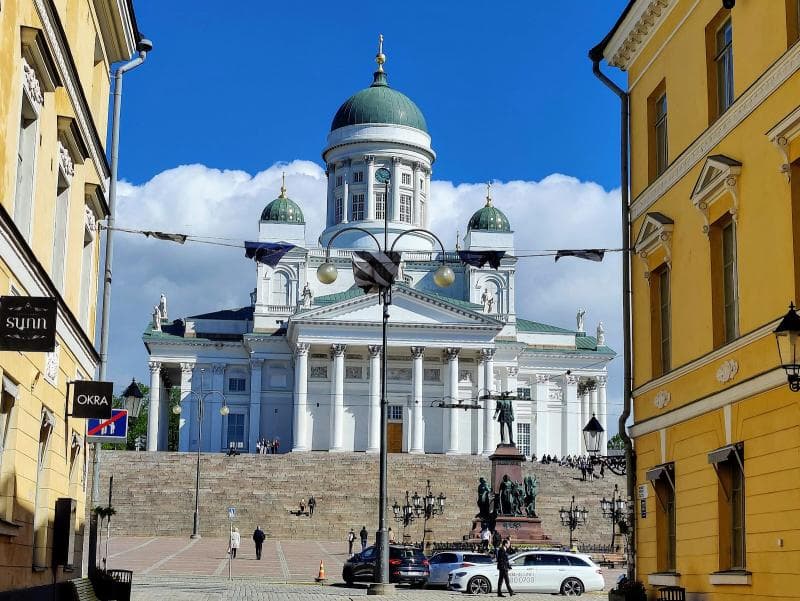
Explore Senate Square, the historical heart of Helsinki, Finland. Discover its Neoclassical architecture, Helsinki Cathedral, and rich Finnish heritage.
Overview
Step into the heart of Helsinki and discover Senate Square, a magnificent open space that serves as the historical and architectural focal point of Finland's capital. Nestled within the larger ambiance surrounding the iconic Helsinki Cathedral, Senate Square, known locally as Senaatintori, is a grand testament to Neoclassical design. It is framed by four distinguished buildings, all products of the visionary architect Carl Ludvig Engel: the majestic Helsinki Cathedral, the stately Government Palace, the venerable main building of the University of Helsinki, and the dignified National Library of Finland. In the center of this elegant tableau stands a statue of Emperor Alexander II, adding a layer of imperial history to the square's Finnish narrative. This harmonious ensemble creates a powerful sense of place, reflecting the very essence of Helsinki's identity as a city of political, religious, scientific, and cultural significance.
History & Cultural Background
The story of Senate Square is deeply intertwined with Helsinki's transformation into the capital of the autonomous Grand Duchy of Finland in 1812, under Russian rule. Following a devastating fire in 1808 that destroyed much of the city's old center, a new urban plan was conceived by Johan Albrecht Ehrenström, with Senate Square designated as its monumental heart. Architect Carl Ludvig Engel was then tasked with bringing this vision to life, designing the principal buildings that define the square today.
Engel dedicated decades to this ambitious project, working from 1818 until his passing in 1840. The Palace of the Council of State, originally the Senate building, was completed in 1822, followed by the main University building in 1832. His most ambitious and enduring work, the Helsinki Cathedral, then known as St. Nicholas' Church, was completed in 1852, twelve years after his death. The architectural style adopted, known as Empire style, draws heavily from ancient Roman and Greek motifs, symbolizing governance and civilization. The Corinthian columns of the Government Palace, for instance, evoke Rome and authority, while the Ionic columns of the University represent Athens and enlightenment.
The statue of Emperor Alexander II, unveiled in 1894, stands as a focal point. It commemorates his significant reforms and the increased autonomy granted to Finland during his reign, earning him the moniker 'the good tsar' among Finns. The entire ensemble of Senate Square and its surrounding Empire-style blocks was protected as built heritage in 1952, preserving its unique character for future generations.
What Makes It Special
Senate Square's unparalleled charm lies in its remarkably unified Neoclassical architecture, making it one of Europe's most aesthetically cohesive and beautiful public squares. The square's true gem is the Helsinki Cathedral, with its pristine white facade, striking green domes, and twelve zinc apostle statues adorning the roofline. It rises majestically above the square, a powerful beacon visible across the city and from the sea, and has become arguably Finland's most recognized and photographed building, embodying a symbol of national identity.
Beyond its visual appeal, the square holds deep historical resonance. It serves as a living museum, where the key institutions of Finnish governance, academia, and faith converge, reflecting the nation's journey and enduring values. This carefully planned space was designed to reflect an allegory of political, religious, scientific, and commercial powers, a narrative that still resonates today through its grand structures.
Stories, Fun Facts & Local Details
Senate Square is rich with intriguing stories and local quirks that add to its character. Historically, the area was a lively marketplace during Swedish rule, and parts of it once housed a graveyard, reminding visitors of the layers of history beneath their feet.
During periods of Russification in the late 19th and early 20th centuries, the statue of Alexander II became an unexpected symbol of quiet resistance. Finns would discreetly place flowers at its base to protest against the oppressive decrees of Nicholas II, honoring Alexander II's more benevolent rule. This act subtly expressed a yearning for independence and resilience.
Today, the square is alive with cultural happenings. Every day at 17:49, visitors can experience 'The Sound of the Senate Square,' a modern sound installation akin to a European glockenspiel. This five-minute and eighteen-second composition travels from one building to the next, adding a unique auditory dimension to the Neoclassical setting.
The oldest stone building in central Helsinki, the Sederholm House, dating back to 1757, is located on the southeast corner of the square, offering a glimpse into Helsinki's earlier architectural heritage.
Visitor Perspective
For any traveler to Helsinki, Senate Square is an essential and easily accessible destination. It's not merely a collection of impressive buildings but a vibrant public space that offers a tangible connection to Finland's past and present. The broad, cobblestoned plaza invites leisurely strolls, contemplation, and photography. The steps leading up to the Helsinki Cathedral provide an excellent vantage point for panoramic views of the square and parts of the city.
Throughout the year, Senate Square transforms with the seasons. In December, it hosts the enchanting Helsinki Christmas Market, filling the air with festive cheer, traditional treats, and unique handicrafts. In early January, the annual Lux Helsinki light festival bathes the surrounding buildings, including the Cathedral, in mesmerizing colors and patterns, brightening the dark Nordic winter nights. It's a place where you can witness national celebrations, art events, and even spontaneous performances by street musicians, making it a dynamic hub for both locals and international visitors. Whether you're seeking historical insights, architectural grandeur, or simply a charming place to soak in the Finnish atmosphere, Senate Square truly offers a memorable experience.
Coordinates: 24.95227, 60.16951
View on Google Maps💬 How Travelers Describe This Place
Based on community votes
Photogenic
800Beautiful
658Unique
589Must See
374Interesting
90
Traveler Stories
Discover memorable experiences shared by travelers who have visited this place.
No traveler stories yet.
Be the first traveler to share what made this place memorable.

Tour
By
Spot
Discover amazing places around the world. Your journey starts here.
Explore
© 2026 TourBySpot. All rights reserved.