Secret Passages
Florence, Italy
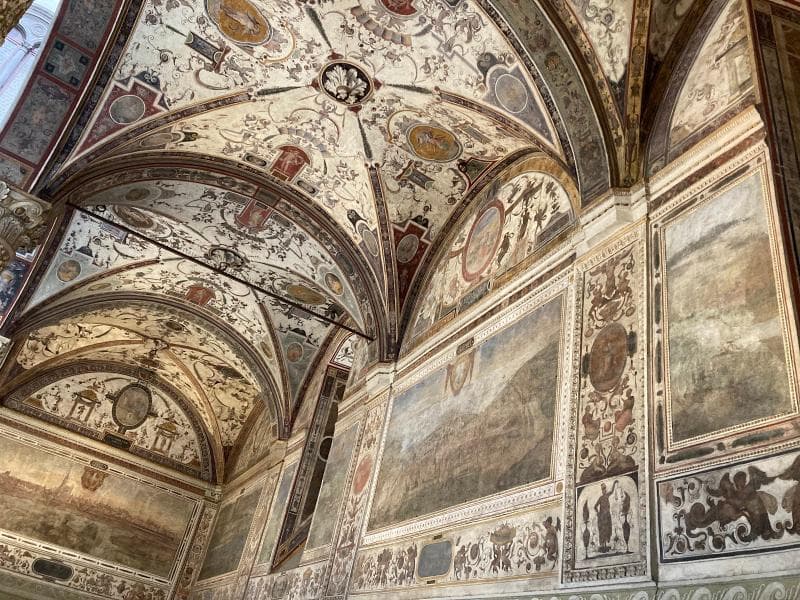
Uncover the Secret Passages of Palazzo Vecchio in Florence, Italy, exploring hidden Medici rooms, escape routes, and surveillance corridors.
Overview
Deep within the imposing walls of Palazzo Vecchio in Florence, Italy, lies a captivating network of ‘Secret Passages’. This historic palace, originally known as Palazzo della Signoria, has stood as the civic heart of Florence since its construction began in 1299. It served as the seat of the Florentine Republic's government and later as a grand ducal residence for the powerful Medici family. The Secret Passages are not a single, continuous route, but rather a collection of hidden staircases, concealed rooms, and clandestine corridors intricately woven into the fabric of the palace itself.
These concealed pathways were not merely architectural curiosities; they were vital instruments of power, protection, and privacy for the rulers of Florence. They offered a discreet means of movement, a secure retreat, and even vantage points for surveillance within the palace and over the city. Today, these passages invite curious travelers to step beyond the grand public halls and explore a hidden history, revealing the ingenious and often pragmatic solutions employed by the Medici and their predecessors to maintain control in a city rife with political intrigue.
History & Cultural Background
The story of the Secret Passages is intrinsically linked to the tumultuous history of Florence and the enduring legacy of the Medici. Construction of Palazzo Vecchio began in 1299 under the design of Arnolfo di Cambio, intended to house the city's governing bodies. Over centuries, the palace underwent numerous transformations, particularly under the rule of the Medici family in the 16th century. When Cosimo I de' Medici decided to make Palazzo Vecchio his official residence before moving to Pitti Palace, he initiated extensive renovations.
It was during this period that many of the most notable secret passages were conceived and integrated. The need for such discreet routes stemmed from a combination of security concerns, the desire for personal privacy—a rare commodity in public life of the era—and the strategic imperative to move unseen and unheard. Even earlier, medieval elements like Duke Gualtieri di Brienne's spiral staircase attest to the palace's long history of concealed routes, driven by the need for escape during periods of political instability.
What Makes It Special
The Secret Passages of Palazzo Vecchio offer an unparalleled journey into the private lives and political machinations of Florence's most influential figures. What makes them truly special is their ability to transport visitors into a narrative of power, secrecy, and survival. Unlike the overtly grand halls, these hidden spaces tell a more intimate, human story of the rulers who once walked them.
The sheer ingenuity of their construction is remarkable, with doors camouflaged within frescoes and wooden panels, and staircases carved directly into the thick walls, blending seamlessly with the palace's architecture. These passages provided the Medici dukes with unprecedented discretion, allowing them to travel between their apartments, offices, and the grand Salone dei Cinquecento without encountering the public, or to observe events from concealed vantage points. Experiencing these hidden corners provides a profound understanding of the complex interplay between public spectacle and private strategy that defined Renaissance Florence.
Stories, Fun Facts & Local Details
- Duke Gualtieri's Escape Route: One of the oldest known secret passages is a medieval spiral staircase, believed to have been used by Duke Gualtieri di Brienne to flee the palace after a failed conspiracy against him. This narrow ascent offers a tangible link to a dramatic moment in Florentine history.
- The Studiolo of Francesco I: A true jewel of Mannerism, this tiny, richly decorated study was the private sanctuary of Francesco I, son of Cosimo I. Here, he indulged his passion for alchemy, science, and the collection of rare and curious objects. It was a place for personal contemplation, connected to the larger palace by discreet entrances, emphasizing the prince's quest for privacy.
- Cosimo I's Tesoretto: Often linked to Francesco's Studiolo, the 'Tesoretto' (little treasure room) was Cosimo I's private chamber for storing valuables and important documents. These connected rooms highlight the Medici's need for secure and secluded spaces for both intellectual pursuits and administrative duties.
- The Hidden Door Behind the Map of Armenia: In the magnificent Hall of Geographical Maps, one of the painted panels, specifically the map of Armenia, conceals a secret door. This passage led directly to the dressing room of Duchess Bianca Cappello, the beloved wife of Francesco I, underscoring the intimate connections facilitated by these hidden routes.
- Surveillance and Security: Many passages and hidden apertures were designed to allow the ruling family and their guards to observe public gatherings or overhear conversations without being detected, a testament to the constant vigilance required to maintain power in Renaissance Florence. This concept of 'power exercised through invisibility' was central to the palace's design.
Visitor Perspective
For those eager to uncover the Secret Passages, a guided tour is essential, as these areas are generally not accessible to the public independently. These exclusive tours typically offer a rare opportunity to explore the lesser-known parts of Palazzo Vecchio, providing expert commentary on their history and purpose.
Visitors can expect to navigate narrow, often medieval, staircases and confined spaces, which contribute to the authentic, clandestine atmosphere. Due to these physical constraints, the tours are usually conducted in small groups and are generally not suitable for individuals with mobility issues, wheelchairs, or strollers. The tours usually last between 75 and 90 minutes, concluding with time to explore the rest of the Palazzo Vecchio museum. Booking in advance is highly recommended due to the limited capacity and high demand for this unique experience.
Coordinates: 11.2562, 43.7693
View on Google Maps💬 How Travelers Describe This Place
Based on community votes
Beautiful
958Interesting
728Must See
719Photogenic
481Unique
382
Traveler Stories
Discover memorable experiences shared by travelers who have visited this place.
No traveler stories yet.
Be the first traveler to share what made this place memorable.

Tour
By
Spot
Discover amazing places around the world. Your journey starts here.
Explore
© 2026 TourBySpot. All rights reserved.