Scientific Manuscripts
Yerevan, Armenia
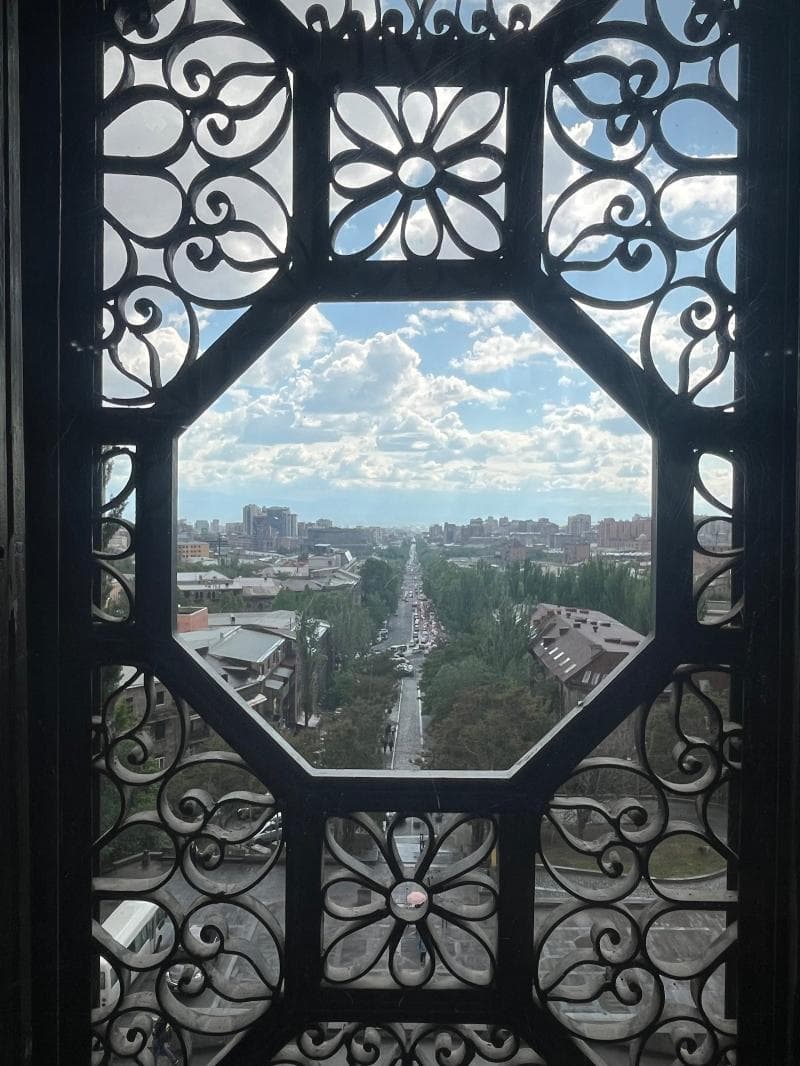
Explore Matenadaran's Scientific Manuscripts in Yerevan, Armenia. Discover ancient texts in diverse fields like medicine, history, and philosophy.
Overview
The Matenadaran, officially known as the Mesrop Mashtots Institute of Ancient Manuscripts, stands as a profound testament to Armenia's rich intellectual and cultural heritage. Located in Yerevan, the vibrant capital of Armenia, this world-renowned institution serves as a museum, archive, and scientific research center dedicated to the preservation, study, and popularization of Armenian manuscripts. Its name, 'Matenadaran', fittingly translates from Armenian as 'repository of manuscripts' or 'book-depository', encapsulating its primary role. The institution proudly houses the world's most extensive collection of Armenian manuscripts, making it a cornerstone of national identity and a vital historical resource. Recognized by UNESCO, its collection is inscribed in the Memory of the World program, highlighting its global significance.
Beyond its vast Armenian holdings, the Matenadaran also safeguards a substantial number of ancient texts in various other languages, reflecting centuries of diverse cultural and intellectual exchange. Visitors to this distinguished institution are invited on a journey through time, exploring not just ancient books, but tangible links to human thought across millennia.
History & Cultural Background
The origins of the Matenadaran's invaluable collection can be traced back to the 5th century, following the creation of the Armenian alphabet by Mesrop Mashtots in 405 AD, and the establishment of manuscript collections within the Armenian Catholicosate, particularly at Etchmiadzin. This venerable tradition of preserving written knowledge endured through centuries, despite numerous invasions and periods of unrest that often led to the pillaging and destruction of libraries across Armenia.
The modern Matenadaran was formally established in 1959, built upon the nationalized collection of the Armenian Church that was transferred to Yerevan in 1939. The main building, a striking example of Armenian medieval architectural influence, was designed by Mark Grigoryan and completed in 1959. Its facade echoes the architecture of Ani, the medieval Armenian capital. In 1962, the institute was named after Mesrop Mashtots, honoring the creator of the Armenian alphabet. Due to the continuous growth of its collection and activities, a new, spacious scientific building, designed by Arthur Meschian, was added in 2011, equipped with advanced facilities for preservation and restoration.
What Makes It Special
The Matenadaran's scientific manuscript collection is unparalleled, comprising approximately 23,000 manuscripts, fragments, and scrolls, alongside over 500,000 archival documents. While the majority are in Armenian, the collection also includes precious texts in Arabic, Persian, Greek, Latin, Syriac, Ethiopian, Georgian, Hebrew, and other languages. These texts cover a vast spectrum of ancient and medieval science and culture, encompassing fields such as history, geography, grammar, philosophy, law, medicine, mathematics, cosmology, and notarial science. The institution also safeguards rare translated literature, miniature paintings, musical notations, and theatrical works.
Among its most treasured items are manuscript fragments dating back to the 5th-6th centuries and the oldest illustrations and miniatures found in the 6th-century Gospel of Etchmiadzin. The Lazarus Gospel from 887 AD stands as the oldest complete manuscript. One of the most famous exhibits is the colossal 'Charentir of Mush' (Homilies of Mush), weighing a staggering 27.5 kilograms and measuring 70x55 centimeters, a testament to medieval scribal dedication. In stark contrast, it also houses one of the world's smallest manuscripts, a 1434 Calendar, weighing a mere 19 grams. Many of these manuscripts are illuminated with intricate designs, often utilizing gold and silver, transforming them into singular artifacts of medieval art.
Stories, Fun Facts & Local Details
Approaching the Matenadaran, visitors are greeted by a monumental statue of Mesrop Mashtots, standing alongside his student Koryun, inventor of the Armenian alphabet. The building's exterior is further adorned with statues of other pivotal figures in Armenian culture and thought, including Movses Khorenatsi, Mkhitar Gosh, Frik, Toros Roslin, Grigor of Tatevatsi, and Anania Shirakatsi, each symbolizing a different sphere of knowledge like historiography, philosophy, cosmology, and poetry. Inside, the lobby features a dramatic mosaic depicting the Avarayr Battle and a fresco chronicling Armenian history, setting a powerful narrative tone for the treasures within.
A fascinating aspect of the Matenadaran's collection is its role in preserving texts whose originals in other languages have been lost to history; these works are now only known through their Armenian translations. This highlights Armenia's historic position as a crossroads of civilizations and a guardian of global knowledge. The collection continues to grow, significantly aided by donations from the global Armenian diaspora, a touching reflection of collective pride and commitment to heritage.
Visitor Perspective
The Matenadaran offers a profoundly enriching experience for any curious traveler. The museum's permanent exhibition skillfully guides visitors through the evolution of Armenian manuscript art, featuring religious, historiographical, medical, and philosophical works. Specialized exhibition spaces include the Hall of Foreign-Language Manuscripts, showcasing the cross-cultural intellectual exchanges, and the Hall of Maps, presenting cartographic materials central to Armenian history. For an interactive insight into medieval craftsmanship, a dedicated laboratory section demonstrates the preparation of pigments, miniature painting techniques, and parchment creation.
The institution is equipped to welcome a diverse audience, providing tactile display cases for visually impaired visitors to appreciate the intricate art of medieval manuscripts. Guided tours are available in several languages, including English, French, German, Russian, Italian, and Spanish, ensuring a comprehensive understanding of the exhibits. The Matenadaran is typically open from Tuesday to Saturday, making it an accessible destination for those eager to delve into the ancient written heritage of Armenia.
Coordinates: 44.52113, 40.19207
View on Google Maps💬 How Travelers Describe This Place
Based on community votes
Unique
995Beautiful
964Photogenic
929Interesting
730Must See
482
Traveler Stories
Discover memorable experiences shared by travelers who have visited this place.
No traveler stories yet.
Be the first traveler to share what made this place memorable.

Tour
By
Spot
Discover amazing places around the world. Your journey starts here.
Explore
© 2026 TourBySpot. All rights reserved.