Science Gallery
Dublin, Ireland
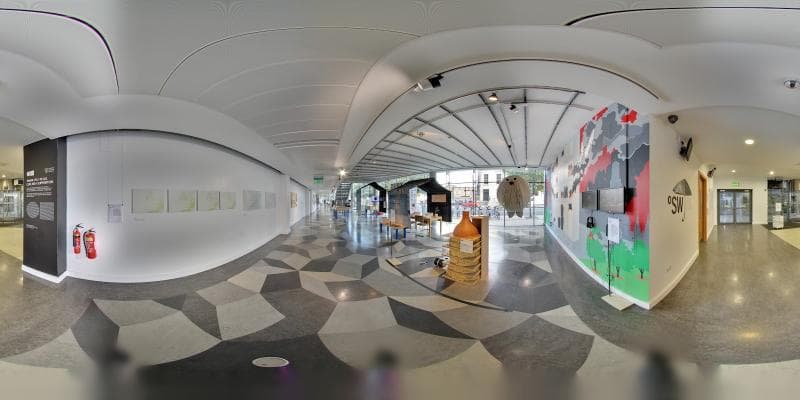
Discover the past of Science Gallery Dublin at Trinity College, Ireland. Explore its unique blend of art and science, innovative exhibitions, and lasting legacy.
Overview
Nestled within the historic grounds of Trinity College Dublin, the Science Gallery Dublin was once a vibrant hub where art and science converged, creating a unique cultural experience in Ireland's capital city. Opened in 2008, this innovative gallery was renowned for its ever-changing array of interactive exhibitions, departing from the traditional museum model of permanent collections. Its core mission was to engage young adults, particularly those aged 15 to 25, fostering curiosity and discovery at the dynamic intersection of scientific inquiry and artistic expression.
The Science Gallery Dublin, housed in the Naughton Institute, quickly established itself as a leading example of public science engagement, drawing in millions of visitors during its operational years. However, after fourteen years of groundbreaking exhibitions and events, the gallery ceased operations in February 2022 due to financial challenges. As of May 2025, there are no confirmed plans for its reopening, with the space within Trinity College Dublin slated for repurposing as a dedicated student center.
History & Cultural Background
The concept for Science Gallery Dublin began to take shape in 2005, spearheaded by a visionary group connected to Trinity College Dublin. Their aim was to create a public outreach facility that would showcase scientific research and its societal implications in an accessible and engaging manner. The gallery officially opened its doors in 2008, quickly becoming a cornerstone of Dublin's cultural landscape.
Pioneered by Trinity College Dublin, the success of the Science Gallery model led to the establishment of Science Gallery International in 2012, with the ambition to create a global network of similar institutions. This initiative sought to replicate Dublin's success in cities worldwide, forming partnerships with major academic institutions to establish galleries in locations such as London, Melbourne, and Bengaluru. The Dublin gallery itself served as a vital incubator for this global vision, embodying Trinity College's commitment to innovation and public engagement in science.
Culturally, Science Gallery Dublin made a significant impact by challenging conventional notions of how science is presented to the public. By intentionally targeting young adults, an audience often underserved by traditional museums, it became a platform for critical thinking and creativity, encouraging conversations around complex scientific and ethical issues.
What Makes It Special
What truly set Science Gallery Dublin apart was its radical approach to exhibitions. Unlike most science centers or art galleries, it maintained no permanent collection. Instead, it curated a dynamic program of three to six temporary exhibitions each year, ensuring that every visit offered a fresh and often surprising experience.
These exhibitions were celebrated for their interdisciplinary nature, blending elements of art, science, technology, and design to explore diverse themes such as bias, perfection, intimacy, and the future of sound. The displays were highly interactive and participatory, inviting visitors to engage with installations, perform experiments, and contribute to ongoing research. This hands-on approach made complex scientific concepts tangible and accessible.
Another distinguishing feature was the presence of 'mediators' – often students or experts in STEAM fields – who were on hand to guide visitors, explain exhibits, and spark discussions, fostering a lively and intellectually stimulating environment. General admission to the gallery was typically free, further enhancing its accessibility and appeal to a broad audience.
Stories, Fun Facts & Local Details
During its operational years, Science Gallery Dublin was a magnet for curious minds, welcoming over 3.8 million visitors between 2008 and 2020. Its significance in Ireland's scientific and cultural landscape was even recognized with its feature on a limited edition An Post stamp in 2015, celebrating Irish scientific achievements.
The gallery's exhibitions were known for their provocative and engaging themes. For instance, 'BIAS: BUILT THIS WAY' delved into human and machine bias in AI, while 'PERFECTION' explored symmetry and obsession. Other notable past exhibitions included 'FAKE,' which examined falsity from biomimetics to counterfeit documents, and 'HOME/SICK,' investigating hygiene and health through participatory installations.
Physically, the gallery was located within the Naughton Institute, offering a sleek, urban, and modern space with large display windows on Pearse Street. It also featured a lively café, making it a social hub within Trinity College. An interesting architectural detail is that the gallery floor itself was laid out in a Penrose Tiling pattern, a two-dimensional mathematical tessellation reflecting higher-dimensional symmetries, which was notably highlighted during the 'Crochet Coral Reef' exhibition.
Beyond visitor numbers, the gallery also had a measurable impact on academic choices, with over 10% of first-year entrants to Trinity College Dublin citing Science Gallery as a factor in their decision to attend the university.
Visitor Perspective
For any traveler planning a visit to Dublin with the Science Gallery in mind, it is crucial to note that Science Gallery Dublin officially closed in February 2022. There are currently no confirmed plans for its reopening, and the space it once occupied within the Naughton Institute is expected to be repurposed for other university functions.
However, for those who had the chance to visit before its closure, the experience was often described as 'mind-blowing,' with visitors praising the interactive nature of the exhibits and the enthusiasm of the mediators who facilitated discussions and insights. A typical visit might have lasted between 60 to 90 minutes, depending on the depth of engagement with the various installations.
Accessibility was a priority, with the gallery being fully wheelchair accessible. While Science Gallery Dublin itself is no longer operational, curious travelers seeking similar engaging experiences in Dublin might explore other cultural institutions. Alternatives include the National Museum of Ireland – Archaeology or the Natural History Museum, though the latter was undergoing refurbishment in 2025. Other attractions within Trinity College, such as the Long Room and the Book of Kells, remain significant points of interest.
Coordinates: -6.250285, 53.344144
View on Google Maps💬 How Travelers Describe This Place
Based on community votes
Beautiful
958Interesting
728Must See
719Photogenic
481Unique
382
Traveler Stories
Discover memorable experiences shared by travelers who have visited this place.
No traveler stories yet.
Be the first traveler to share what made this place memorable.

Tour
By
Spot
Discover amazing places around the world. Your journey starts here.
Explore
© 2026 TourBySpot. All rights reserved.