São Jorge Castle
Lisbon, Portugal
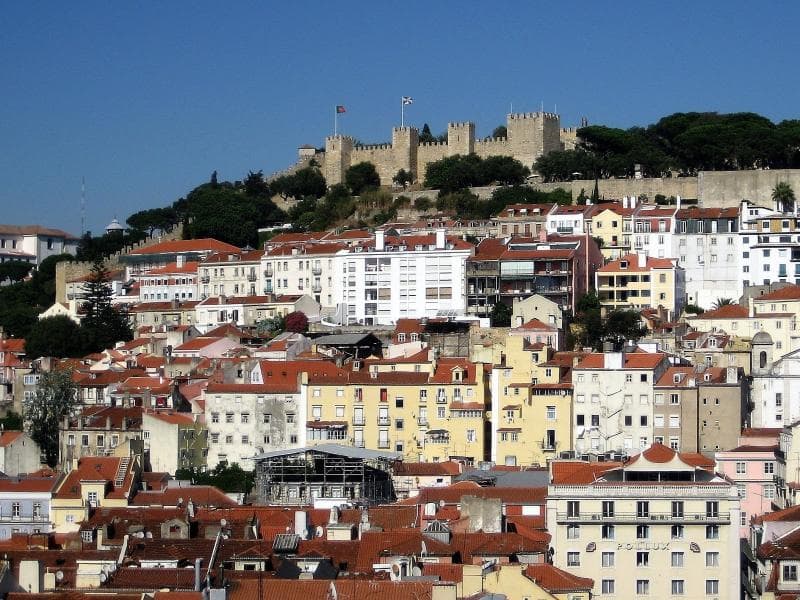
Discover São Jorge Castle in Lisbon, Portugal, a historic hilltop fortress in the Alfama District. Explore ancient walls, panoramic views, and rich history.
Overview
Perched majestically atop one of Lisbon's highest hills, São Jorge Castle, known locally as Castelo de São Jorge, stands as a timeless sentinel overlooking the vibrant Alfama District, the Tagus River, and the cityscape of Lisbon, Portugal. This historic fortification is more than just a castle; it is a profound testament to Lisbon's layered past, a site continuously occupied for over 2,500 years by various civilizations. Today, it serves as a cherished national monument and a captivating open-air museum, inviting visitors to journey through centuries of conquests, cultural evolution, and royal grandeur. Its commanding position offers unparalleled panoramic vistas, making it a must-visit for anyone seeking to understand the soul of this ancient city.
History & Cultural Background
The history of São Jorge Castle is a rich tapestry woven from diverse cultures and significant events that shaped Lisbon. The hill on which it proudly stands has been a strategic location since at least the 8th century BC, with archaeological evidence revealing the presence of Phoenicians, Carthaginians, Romans, Visigoths, and Moors. The earliest known fortifications date back to the 2nd century BC, likely Roman in origin. However, it was the Moors, during their occupation of the Iberian Peninsula, who significantly developed the fortress in the 10th and 11th centuries, building what was then known as the Castle of Alcáçova, serving as a defensive stronghold and residential complex.
A pivotal moment in the castle's history occurred in 1147 when Christian forces, led by the first King of Portugal, Afonso Henriques, captured it during the Siege of Lisbon. This conquest marked a turning point, integrating the castle into the newly forming Portuguese realm. For over four centuries, from the 12th to the early 16th century, São Jorge Castle served as a royal palace for Portuguese monarchs, witnessing significant historical events and becoming a central hub of power. It was King João I who, in 1378, dedicated the castle to Saint George, the patron saint of England, solidifying the Anglo-Portuguese alliance. Following the construction of the Ribeira Palace in the 16th century, the castle gradually lost its importance as a royal residence. It suffered significant damage during the devastating 1755 Lisbon earthquake, after which it fell into disrepair for a long period. Extensive restoration efforts in the 20th century revived its former glory, transforming it into the cultural landmark seen today.
What Makes It Special
São Jorge Castle captivates with its blend of formidable architecture, archaeological richness, and breathtaking vistas. One of its most striking features is the opportunity to walk along its ancient ramparts and explore its eleven towers, gaining a tangible sense of medieval defense strategies. From these elevated walkways and numerous viewpoints, visitors are treated to magnificent panoramic views of Lisbon's characteristic red rooftops, the meandering Tagus River, and beyond.
Beneath the castle walls, an active archaeological site unveils layers of history, offering insights into the diverse cultures that once inhabited this hill, from Phoenician settlements to Moorish residential areas. Inside the Tower of Ulysses, a unique Camera Obscura provides a mesmerizing 360-degree real-time projection of the city, allowing a dynamic exploration of Lisbon's monuments and landscapes. Beyond the historical structures, the castle grounds are adorned with serene gardens where vibrant peacocks roam freely, adding an unexpected touch of natural beauty and charm to the ancient setting.
Stories, Fun Facts & Local Details
The stones of São Jorge Castle whisper tales from a bygone era. One enduring legend speaks of Martim Moniz, a Portuguese knight who, during the 1147 siege, is said to have heroically blocked a closing gate with his own body, allowing Christian forces to breach the defenses. Though historians debate the precise details, his bravery is commemorated by a gate named Porta de Martim Moniz. The castle was also a stage for grand historical moments; in 1499, King Manuel I received the renowned explorer Vasco da Gama here upon his return from discovering the maritime route to India. Even early Portuguese theater found its home within these walls, with Gil Vicente's first play staged here in 1502.
For centuries, one of its towers, the Torre do Tombo (now the Tower of Ulysses), served as the national archive, safeguarding Portugal's most crucial historical documents. The surrounding Alfama District, Lisbon's oldest neighborhood, is a living relic itself. Its name, 'Alfama', derives from the Arabic 'Al-hamma', meaning 'hot springs', a legacy of Moorish influence. The district's labyrinthine, narrow streets and alleyways, often winding uphill, are a testament to ancient urban planning, designed by the Moors to provide shade and coolness during hot summers.
Visitor Perspective
Visiting São Jorge Castle is an immersive experience best savored with ample time. Most travelers find that dedicating two to three hours allows for a comprehensive exploration of its ramparts, courtyards, and museum. For an unforgettable experience, consider timing your visit for the late afternoon to witness the golden hour as the sun dips below the horizon, casting a magical glow over the city. The castle is nestled within the charming, historic Alfama District, making it an ideal starting point for a leisurely stroll through its ancient streets afterward. While the uphill climb can be steep, the castle is accessible via various routes, including a pleasant walk through Alfama's atmospheric alleys or by using Lisbon's iconic trams.
The castle is open daily throughout most of the year, though it observes closures on certain public holidays like January 1st, May 1st, and December 24th, 25th, and 31st. Access to wall walks and towers may have varying closing times for safety, especially closer to dusk. São Jorge Castle offers a journey through time, blending historical significance with stunning natural beauty, making it an essential stop for any traveler to Lisbon.
Coordinates: -9.13361, 38.71389
View on Google Maps💬 How Travelers Describe This Place
Based on community votes
Beautiful
710Must See
156Interesting
102Photogenic
102Unique
87
Traveler Stories
Discover memorable experiences shared by travelers who have visited this place.
No traveler stories yet.
Be the first traveler to share what made this place memorable.

Tour
By
Spot
Discover amazing places around the world. Your journey starts here.
Explore
© 2026 TourBySpot. All rights reserved.