Santa Maria Della Salute
Venice, Italy
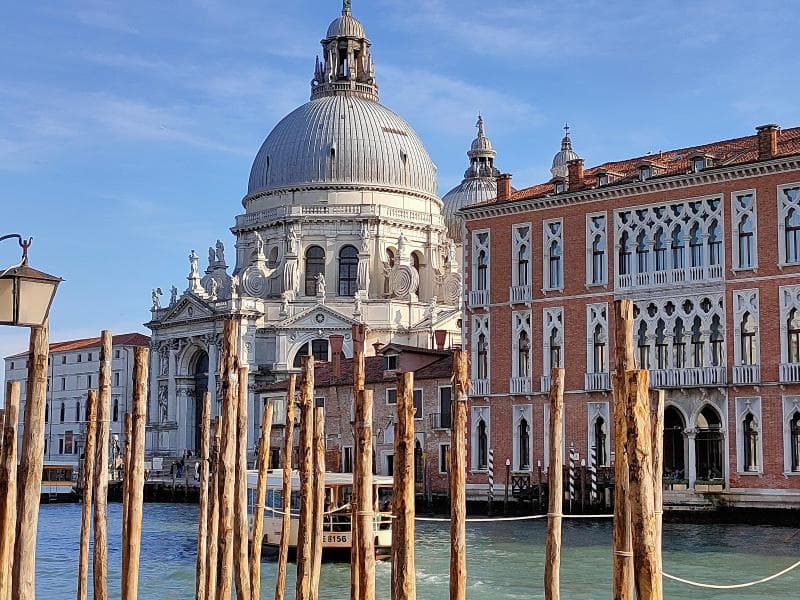
Explore Santa Maria della Salute, a stunning Baroque basilica on Venice's Grand Canal, built to commemorate the end of the 1630 plague.
Overview
Perched majestically at the confluence of the Grand Canal and the Giudecca Canal, the Basilica di Santa Maria della Salute, affectionately known as 'La Salute', is an iconic landmark of Venice, Italy. Its distinctive dome and Baroque grandeur make it one of the most recognizable structures in the city's celebrated skyline, a vision captured by countless artists throughout history. This Roman Catholic church and minor basilica stands proudly at Punta della Dogana, within the Dorsoduro sestiere, marking a dramatic and picturesque entrance to the Grand Canal.
As you approach Venice from the water, particularly from the Bacino di San Marco, the Salute's elegant silhouette immediately draws the eye, symbolizing the city's enduring spirit and rich cultural tapestry. It is not merely a church but a testament to Venetian history and resilience, offering a profound sense of place for any curious traveler.
History & Cultural Background
The story of Santa Maria della Salute is deeply intertwined with a devastating period in Venetian history: the plague of 1630. This virulent epidemic tragically claimed the lives of nearly a third of the city's population, an estimated 46,000 people. In a desperate plea for deliverance, the Venetian Senate made a solemn vow to the Virgin Mary: if the contagion ceased, they would erect a church of unparalleled beauty in her honor.
When the plague finally subsided in 1631, Venice kept its promise. An architectural competition was held, and the ambitious design by Baldassare Longhena, then only 26 years old, was chosen. Longhena envisioned a grand Baroque structure, incorporating an unusual octagonal floor plan as an offering to the 'Queen of Heaven'. Construction began in 1631 and was an immense undertaking, requiring over a million wooden piles to be driven into the lagoon's unstable ground to support the massive building. Though Longhena passed away in 1681, just a year before its consecration in 1687, his masterpiece stands as a powerful symbol of faith and gratitude, marking the end of the devastating pestilence.
What Makes It Special
What truly sets Santa Maria della Salute apart is its audacious Baroque architecture and its profound symbolic significance. Longhena's design created a vast, octagonal structure crowned by two domes of unequal size and two picturesque bell towers. The larger main dome, often seen as representing the Virgin's crown, dominates the exterior. The church's construction utilized durable Istrian stone and 'marmorino', a brick covered with marble dust, which gives it its distinctive radiant white appearance.
The interior, while outwardly restrained with white marble walls, is a masterclass in Baroque design, guiding the visitor's gaze towards the high altar. This altar features a dramatic sculptural group by Josse de Corte, depicting 'The Queen of Heaven Expelling the Plague', a direct reference to the church's votive origin. The octagonal layout, with its radiating side chapels, is rich in Marian symbolism; the eight sides refer to the 'Stella Maris' (Star of the Sea), a title for the Virgin Mary, and the number eight also symbolizes hope and health.
Stories, Fun Facts & Local Details
One of the most enduring traditions associated with Santa Maria della Salute is the annual Festa della Salute. Every November 21st, Venetians celebrate this feast day, commemorating the city's deliverance from the plague of 1630. It's a deeply cherished event, during which a temporary pontoon bridge is constructed across the Grand Canal, allowing thousands of locals to walk from San Marco directly to the Basilica. Here, they light candles and offer prayers of thanks, a tradition that has continued unbroken for centuries.
The basilica's art collection includes significant works, particularly in its sacristy, with pieces by renowned masters like Titian and Tintoretto. The engineering marvel of its foundation, resting on over a million wooden piles driven into the lagoon, is a testament to Venetian ingenuity and determination. The prominent position and unique silhouette of the Salute made it a favored subject for many artists, including Canaletto, Turner, and Monet, further cementing its status as an iconic symbol of Venice.
Visitor Perspective
Visiting Santa Maria della Salute offers a unique blend of historical immersion, architectural appreciation, and a tangible connection to Venetian culture. Standing on the steps of the basilica, with the Grand Canal unfolding before you, provides one of the most breathtaking panoramic views of the city. While entry to the main rotunda is typically free, providing a striking sense of the octagonal space, there is a small fee to access the sacristy, where some of the more important artworks are housed.
For those seeking to avoid crowds and experience the church's serene grandeur, a morning visit, when the light filters beautifully through the dome, is highly recommended. Witnessing the Festa della Salute on November 21st offers an unparalleled insight into the living traditions of Venice, a heartfelt expression of gratitude that echoes through the centuries. Whether you arrive by vaporetto, stepping off at the 'Salute' stop, or simply admire its imposing presence from a gondola, the Basilica di Santa Maria della Salute is an unmissable destination that encapsulates the soul of Venice.
Coordinates: 12.334, 45.4252
View on Google Maps💬 How Travelers Describe This Place
Based on community votes
Photogenic
958Unique
743Interesting
719Must See
629Beautiful
176
Traveler Stories
Discover memorable experiences shared by travelers who have visited this place.
No traveler stories yet.
Be the first traveler to share what made this place memorable.

Tour
By
Spot
Discover amazing places around the world. Your journey starts here.
Explore
© 2026 TourBySpot. All rights reserved.