Samson Fountain
Kiev, Ukraine
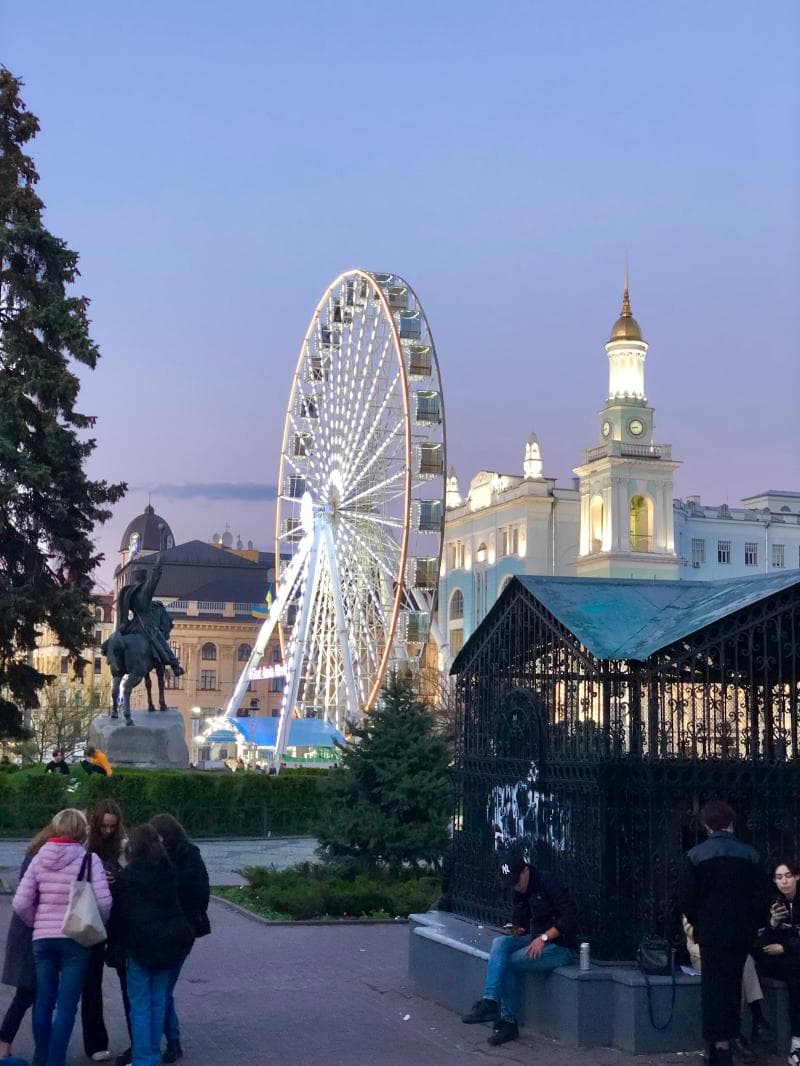
Discover Samson Fountain, a historic Baroque landmark in Kyiv, Ukraine. Learn its rich history, cultural significance, and local legends in Podil.
Overview
The Samson Fountain, or Felitsiyal as it's also known, stands as a magnificent example of Ukrainian Baroque architecture in the heart of Kyiv's historic Podil district. Situated prominently on Kontraktova Square, this fountain is more than just a decorative element; it's a profound symbol of the city's enduring spirit and resilience. Its central feature is a compelling sculpture of the biblical hero Samson, depicted dramatically tearing open the jaws of a lion, from which water gracefully cascades. Originally constructed in the 18th century, the fountain has a rich and tumultuous history, having been demolished in the 1930s and meticulously rebuilt in 1981, restoring its iconic presence to the vibrant Kontraktova Square.
History & Cultural Background
The genesis of the Samson Fountain dates back to 1748-1749, when the Podil magistrate commissioned the repair of the district's vital water distribution system. The celebrated Ukrainian Baroque architect, Ivan Hryhorovych-Barskyi, a distinguished graduate of the Kyiv Mohyla Academy, was entrusted with its design. The original structure was a striking circular rotunda, capped by a cupola and adorned with Corinthian columns. Initially, a gilded copper statue of St. Andrew crowned the dome, while an angel holding a chalice dispensed water inside. By 1809, this angel was replaced by an almost life-sized wooden sculpture of Samson, actively rending the lion's jaws, a scene that gave the fountain its enduring name. This Samson sculpture is believed to have been inspired by Mikhail Kozlovsky's renowned statue at the Peterhof Palace Grand Cascade, which itself symbolized Russia's victory over Sweden at the Battle of Poltava.
The fountain faced significant challenges throughout its existence. While it survived the devastating Podil fire of 1811, albeit heavily sooted, its ultimate destruction came in 1934 or 1935 during the Soviet era. Historical accounts suggest it was dismantled under vague instructions to 'clean up immediately,' with the 'kiosk' being mistakenly identified as the fountain. Fortunately, the original statues of St. Andrew and Samson had been removed for storage before World War I, sparing them from this fate, and they are now preserved in the National Art Museum of Ukraine. Decades later, as part of an initiative to revitalize Podil and develop it as a tourist hub, the fountain was faithfully reconstructed, concluding in 1981 (though often cited as 1982 for Kyiv's 1500th anniversary). The rebuilding was based on designs by Ukrainian architect V. P. Shevchenko, and the current sculptures are concrete replicas of the originals.
What Makes It Special
The Samson Fountain holds a unique place among Kyiv's historical landmarks. It is recognized as one of the city's oldest fountains, showcasing the distinctive Ukrainian Baroque style that characterized much of Kyiv's architectural landscape in the 18th century. Its survival, demolition, and subsequent reconstruction underscore its profound cultural importance and the city's commitment to preserving its heritage. The intricate design, featuring a rotunda supported by Corinthian columns and topped by a cupola, makes it an architectural marvel. The dramatic sculpture of Samson wrestling the lion is not merely aesthetic; it carries deep symbolic meaning, reflecting historical triumphs and local folklore. Furthermore, the fountain's inclusion of sundial clocks on its columns adds another layer of historical and scientific interest, designed by the French scientist Bruillon.
Stories, Fun Facts & Local Details
The Samson Fountain is steeped in local legends and fascinating anecdotes that add to its allure. Perhaps the most cherished belief among Kyiv residents is that 'as long as water continues to flow here, the city itself will stand,' making the fountain a powerful symbol of Kyiv's resilience. Another popular tale suggests that visitors who drink from its waters are destined to remain in Kyiv forever, a delightful local detail that encourages engagement with the landmark. A curious historical incident occurred after the great Podil fire of 1811; the fountain, though structurally sound, was heavily stained by soot. This darkening led locals to perceive the figure as a 'black negro tearing a black cat's mouth,' contributing to an air of mysticism around the site. The symbolic connection of the Samson figure to the Russian victory over Sweden at Poltava, where the lion represents the Swedish coat of arms, offers a glimpse into the complex historical narratives associated with the fountain's inspiration. It's also noteworthy that the original wooden sculptures of Samson and St. Andrew are now preserved in the National Art Museum of Ukraine, replaced by concrete copies at the fountain itself.
Visitor Perspective
For any traveler exploring Kyiv, the Samson Fountain serves as an excellent starting point for an immersive journey into the Podil district. Its central location on Kontraktova Square makes it easily accessible and a natural hub for further exploration of the surrounding historic streets, ancient churches, and vibrant local life. Visitors are encouraged to take a moment to appreciate the detailed Baroque craftsmanship and the powerful narrative conveyed by the Samson and lion sculpture. It's a prime spot for photography, capturing a piece of Kyiv's soul. Engaging with the local legends, such as the belief in the fountain's connection to the city's fate or the promise of an eternal return to Kyiv for those who drink its water, enhances the visitor experience, transforming a simple sightseeing stop into a meaningful cultural encounter. The fountain offers a tangible link to Kyiv's past, inviting contemplation on its enduring history and artistic legacy.
Coordinates: 30.51694, 50.46417
View on Google Maps💬 How Travelers Describe This Place
Based on community votes
Beautiful
556Interesting
470Photogenic
410Unique
254Must See
145
Traveler Stories
Discover memorable experiences shared by travelers who have visited this place.
No traveler stories yet.
Be the first traveler to share what made this place memorable.

Tour
By
Spot
Discover amazing places around the world. Your journey starts here.
Explore
© 2026 TourBySpot. All rights reserved.