Salle Des Pas Perdus
Geneva, Switzerland
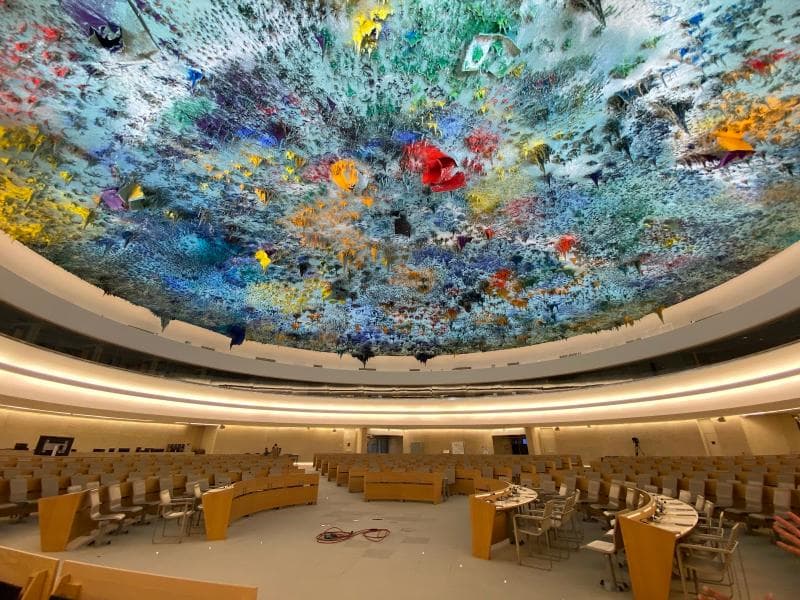
Explore the historic Salle Des Pas Perdus in Geneva, Switzerland's Palais des Nations. Discover the 'Hall of Lost Steps,' its Art Nouveau design, and rich diplomatic history.
Overview
Deep within the heart of Geneva, Switzerland, lies the magnificent Palais des Nations, a global symbol of peace and diplomacy. Amongst its many significant chambers and halls, the Salle Des Pas Perdus stands as an imposing gallery, serving as the main concourse between the grand Assembly Hall and the Palais's principal facade. This space is more than just a passageway; it is a historical crossroads where delegates, diplomats, and visitors have traversed for decades, absorbing the atmosphere of international cooperation and negotiation.
Its name, 'Salle Des Pas Perdus,' translates evocatively to 'Hall of Lost Steps,' hinting at the countless paces taken by individuals awaiting critical discussions or reflecting on momentous decisions within these hallowed walls. Today, it remains a vibrant, bustling area, continuously adapting to its modern role while preserving the profound legacy of its past.
History & Cultural Background
The Palais des Nations, which houses the Salle Des Pas Perdus, was originally constructed between 1929 and 1938 to serve as the headquarters for the League of Nations, the precursor to the United Nations. The architectural vision for the complex was to create a space that would allow various international bodies to work, preside, and hold discussions 'independently and easily in the calm atmosphere which should prevail when dealing with problems of an international dimension.'
Following the dissolution of the League of Nations, the Palais was transferred to the newly formed United Nations Organization in 1946, becoming the European headquarters and the second-largest UN centre globally, after New York. The Salle Des Pas Perdus thus witnessed the transition from one era of international governance to another, inheriting the echoes of its founding ideals and the hopes placed upon it for a more peaceful world.
What Makes It Special
The Salle Des Pas Perdus is particularly notable for its stately proportions and grand architectural design, reflecting the monumental aspirations of its original purpose. Natural light filters dramatically through high vertical windows, creating a 'mottled light' that shifts with the day and adds to the hall's contemplative mood.
Adding to its unique character are the towering, monumental Art Nouveau grille doors found at each end of the gallery. These artistic ironwork masterpieces were crafted by the renowned Geneva firm, Wanner and Company. Intricately worked into their design are the monograms of the League of Nations, 'LON' and 'SDS' (Société des Nations), serving as a subtle yet powerful reminder of the hall's origins and its enduring connection to the quest for global peace.
From its vast windows, visitors are treated to expansive views that stretch across the stately Court of Honour, encompassing the Library and Council wings, with the sparkling Lake Geneva in the mid-ground. On clear days, the majestic Mont Blanc, Europe's highest peak, can be seen gracing the distant horizon, adding a breathtaking backdrop to this hub of international activity.
Stories, Fun Facts & Local Details
The very name 'Salle Des Pas Perdus' carries a rich cultural connotation. Literally meaning 'Hall of Lost Steps,' it refers to a waiting area, often in French civic buildings like courthouses, where individuals pace back and forth, their steps seemingly 'lost' as they await significant events or decisions. This perfectly encapsulates the historical role of the hall, where, particularly in the late 1930s, as 'war clouds gathered over Europe and Asia,' delegates from the dwindling League of Nations member states would huddle and reflect during breaks from intense Assembly debates on international crises.
It is a space where countless 'famous feet' have walked, carrying the weight of nations and the hopes for a better future. While the mood might have been sombre during the League's final years, today the hall buzzes with a brighter energy, serving as a main thoroughfare for the thousands of delegates and staff who work within the United Nations Office at Geneva. It is also frequently utilized as an ideal venue for various exhibitions and displays, showcasing the UN's ongoing work and global initiatives.
Visitor Perspective
For any curious traveler to Geneva, a visit to the Salle Des Pas Perdus within the Palais des Nations offers a unique opportunity to step into the currents of international history. Guided tours of the Palais provide access to this impressive gallery, allowing visitors to experience its grandeur firsthand and gain insight into its profound historical and ongoing significance.
As you stand in the Hall of Lost Steps, take a moment to absorb the atmosphere. Reflect on the momentous decisions and discussions that have taken place here and the countless individuals who have passed through, each contributing to the narrative of global diplomacy. Even on a quiet day, there's an undeniable feeling of being at the very 'heart of the Palais,' connecting you directly to the continuous efforts for peace and cooperation worldwide.
Coordinates: 6.14056, 46.22667
View on Google Maps💬 How Travelers Describe This Place
Based on community votes
Interesting
998Photogenic
481Beautiful
472Must See
399Unique
92
Traveler Stories
Discover memorable experiences shared by travelers who have visited this place.
No traveler stories yet.
Be the first traveler to share what made this place memorable.

Tour
By
Spot
Discover amazing places around the world. Your journey starts here.
Explore
© 2026 TourBySpot. All rights reserved.