Sake Barrels
Tokyo, Japan
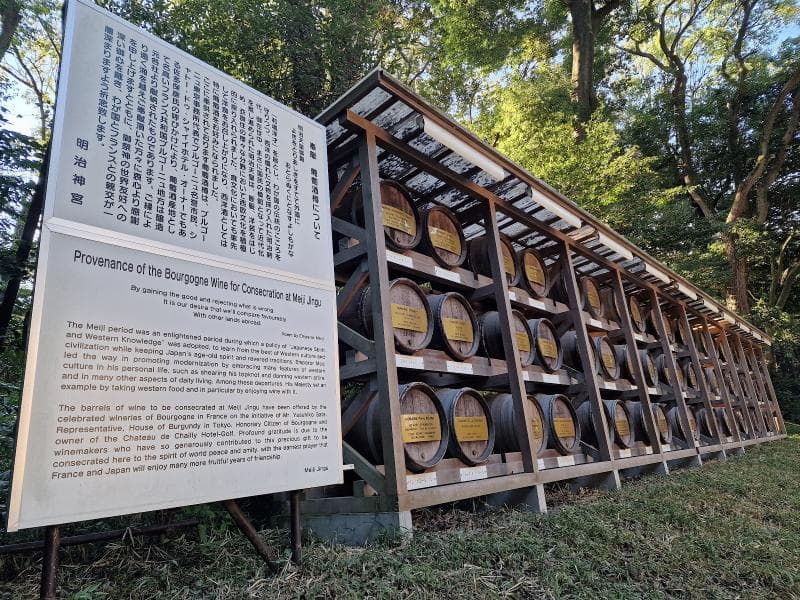
Discover the vibrant sake barrels at Meiji Shrine in Tokyo, Japan. Explore their cultural significance, history, and why they symbolize a unique blend of tradition and modernity.
Overview
As you approach the serene grounds of Meiji Jingu Shrine in Tokyo, a striking display greets visitors along the path: a long, artful arrangement of sake barrels. These are known as 'kazaridaru', or decorative barrels, and they are a vibrant testament to Japan's rich cultural and spiritual heritage. These aren't just ordinary barrels; they are offerings from sake breweries across Japan, each meticulously adorned with unique crests and calligraphy that represent the donating brewery. While they may appear to be full, these barrels are symbolically empty, serving a ceremonial rather than a storage purpose. They stand as a colorful and photogenic landmark, inviting travelers to pause and appreciate the deep connection between sake, Shinto traditions, and the venerated spirits of Emperor Meiji and Empress Shoken.
Intriguingly, directly opposite this traditional sake display, you'll discover a collection of French wine barrels. This dual exhibition of East and West highlights a fascinating aspect of Emperor Meiji's reign, showcasing his embrace of global influences alongside his support for domestic industries. The sake barrels, with their elaborate straw wrappings and artistic designs, create a powerful visual narrative that speaks volumes about Japan's reverence for its traditions and its deities.
History & Cultural Background
The Meiji Jingu Shrine itself is dedicated to the deified spirits of Emperor Meiji and his consort, Empress Shoken, who played pivotal roles in modernizing Japan during the late 19th and early 20th centuries. The tradition of offering sake to shrines is deeply rooted in Shinto, Japan's indigenous religion. Sake, often referred to as 'miki' (神酒) or 'sacred ritual wine', has long been considered a divine beverage that bridges the gap between humans and the gods (kami). It is an essential element in Shinto purification rituals, festivals, and ceremonies.
The sake barrels displayed at Meiji Jingu are donated annually by the Meiji Jingu Nationwide Sake Brewers Association and other breweries throughout Japan. This practice ensures a continuous supply of sake for the shrine's many rituals and festivals held throughout the year, honoring the enshrined deities. Over time, as the volume of donated sake surpassed the practical needs for consumption at the shrine, the tradition evolved to include these decorative barrels. These 'kazaridaru' are a symbolic gesture, representing the actual offerings and the brewers' deep respect for Emperor Meiji and Empress Shoken.
The presence of French wine barrels offers a historical footnote. Emperor Meiji was known for his progressive outlook, encouraging industrial growth and embracing aspects of Western culture, including cuisine and wine. This display of Burgundy wine barrels, donated by French producers since 2006, serves as a tribute to Emperor Meiji's forward-thinking vision and his appreciation for international exchange. It symbolizes peace and amity between nations, reflecting the Emperor's desire for Japan to compare favorably with other lands abroad.
What Makes It Special
The sake barrel display at Meiji Jingu is special not only for its visual impact but also for its profound cultural layers. Each barrel, meticulously wrapped in straw ('komo') and adorned with vibrant labels, showcases the distinct identity and artistry of its donating brewery. This collection becomes a living exhibition of Japan's diverse sake-producing regions, highlighting regional craftsmanship and the pride of sake makers.
Beyond aesthetics, the barrels embody a spiritual connection. They are a tangible representation of the nationwide support for Meiji Shrine and a continuous cycle of devotion, linking communities and industries to the sacred space. The juxtaposition of sake barrels and wine barrels creates a unique cultural dialogue, celebrating both Japan's ancient traditions and its historical openness to the world, making it a compelling spot that is distinct from other shrines.
Stories, Fun Facts & Local Details
While the 'kazaridaru' barrels themselves are typically empty, the spiritual essence of the donated sake remains. The actual sake that fills these barrels, if you will, is consumed during various Shinto ceremonies and festivals throughout the year. It's a common misconception that the displayed barrels contain sake for public consumption; their purpose is purely symbolic and ceremonial.
A fascinating detail is the inclusion of the French wine barrels. This gesture traces back to Emperor Meiji's personal fondness for Western goods, particularly wine, and his efforts to introduce new ideas and industries to Japan. It illustrates his role as a modernizer who believed in selectively adopting 'the good from other lands' while rejecting what was 'wrong.' This dual display visually narrates Japan's journey through the Meiji Restoration – a period of rapid modernization that respected tradition while embracing change.
Visitors often note the intricate designs and vibrant colors on the barrel labels. These designs are not merely decorative but often carry the specific crests and marks of established sake breweries, some with centuries of history. It's a testament to the enduring relationship between these family-run businesses and the nation's spiritual heart.
Visitor Perspective
For many travelers to Tokyo, the sake barrel display at Meiji Jingu is a memorable and highly photographed sight. It offers a wonderful opportunity to capture the essence of Japanese culture in a single frame. The colorful barrels, set against the backdrop of the shrine's tranquil forest, create a striking contrast and a picturesque scene.
Stepping along the path past these majestic barrels, visitors often feel a sense of reverence and wonder, preparing them for the solemnity of the main shrine complex. It's a moment to appreciate the blend of history, devotion, and artistry that defines this sacred space. To fully enjoy the display and capture unobstructed photographs, many advise visiting early in the morning or later in the afternoon to avoid peak crowd times. The display provides a tangible, colorful introduction to the profound cultural significance of sake in Japan and the visionary legacy of Emperor Meiji.
Coordinates: 139.69917, 35.67611
View on Google Maps💬 How Travelers Describe This Place
Based on community votes
Must See
910Unique
658Interesting
589Beautiful
374Photogenic
90
Traveler Stories
Discover memorable experiences shared by travelers who have visited this place.
No traveler stories yet.
Be the first traveler to share what made this place memorable.

Tour
By
Spot
Discover amazing places around the world. Your journey starts here.
Explore
© 2026 TourBySpot. All rights reserved.