Rue Saint-Jean
Lyon, France
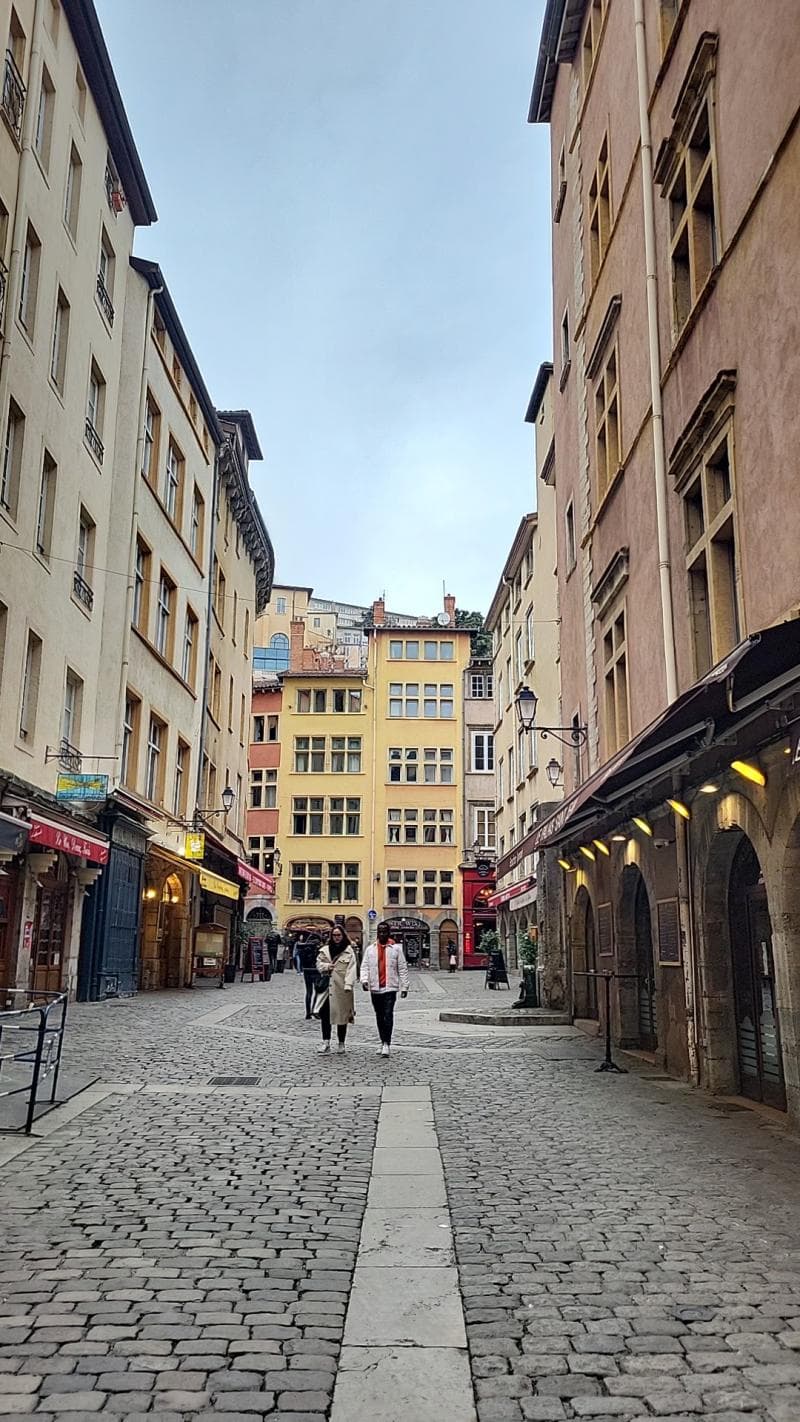
Explore Rue Saint-Jean in Vieux Lyon, France. Discover Renaissance architecture, historic traboules, and the iconic Saint-Jean Cathedral in this UNESCO site.
Overview
Stepping onto Rue Saint-Jean in Lyon's historic Vieux Lyon district is like walking through a living postcard. This pedestrian street, often considered the main artery of the Saint-Jean quarter, winds its way through one of Europe's largest Renaissance neighborhoods, nestled between the majestic Fourvière hill and the tranquil Saône River. It's a place where every cobblestone whispers tales of centuries past, a vibrant canvas of pastel-colored buildings, inviting boutiques, and charming cafes.
Vieux Lyon, encompassing the distinct sections of Saint-Jean, Saint-Paul, and Saint-Georges, earned its prestigious UNESCO World Heritage status in 1998, a testament to its remarkable preservation and historical significance. The entire area was notably the first in France to be protected under the Malraux law in 1964, safeguarding its unique architectural heritage for future generations.
History & Cultural Background
The origins of Rue Saint-Jean stretch back to the late 3rd century, laying the foundation for what would become a pivotal center of power. During the Middle Ages, the Saint-Jean quarter served as the political and religious heart of Lyon, a city that has played a significant role in Europe's development for over two millennia.
The Renaissance ushered in a 'golden age' for Lyon, attracting wealthy merchants and bankers from Italy, Germany, and Flanders. These affluent families invested in transforming medieval structures into lavish residences, contributing to the distinct architectural character seen today. The narrow, tall buildings of Vieux Lyon are a direct result of limited urban space, a fascinating testament to historical development.
At the core of the Saint-Jean quarter stands the magnificent Cathédrale Saint-Jean-Baptiste, the seat of the Archbishop of Lyon. Construction began around 1180 on the ruins of a 6th-century church and was finally completed in 1476, resulting in a captivating blend of Romanesque and Gothic architectural styles. Its historical importance is underscored by the fact that the Archbishop of Lyon holds the ancient title of 'Primate of All the Gauls'. Adjacent to the cathedral is the Manécanterie, one of Lyon's few remaining Romanesque buildings, which once housed a choir school and now displays the cathedral's treasures.
What Makes It Special
What truly sets Rue Saint-Jean and its surroundings apart are the 'traboules' – a network of secret covered passageways that weave through buildings and courtyards, connecting one street to another. These architectural marvels were initially conceived for practical reasons: to provide quick access to the Saône River when medieval streets were few and the terrain was steep.
The buildings themselves, with their warm, colorful facades and intricate details, tell stories of the city's mercantile past and its Italian influences. The unique urban fabric, characterized by the dense clustering of Renaissance structures and the ingenious system of traboules, is a primary reason for Vieux Lyon's UNESCO recognition.
Stories, Fun Facts & Local Details
The traboules are much more than just shortcuts; they are steeped in history and local lore. In the 19th century, Lyon's famous silk workers, known as Canuts, utilized these hidden passages to transport delicate rolls of silk, protecting them from the elements. Later, during World War II, the traboules provided clandestine routes and safe havens for members of the French Resistance, adding a layer of intrigue to their already fascinating history.
One of the most famous and longest traboules in Vieux Lyon begins discreetly at number 54 Rue Saint-Jean. Navigating its hidden courtyards and passages feels like a journey through time, a genuine local secret revealed. Another notable feature is the Cathédrale Saint-Jean-Baptiste's impressive 14th-century astronomical clock, a mechanical marvel that has entertained visitors for over 600 years with its automatons.
Visitor Perspective
Rue Saint-Jean is not merely a historical relic; it's a living, breathing neighborhood that invites curious travelers to slow down and immerse themselves. As you wander, you'll discover architectural gems like the Palais de Justice Historique de Lyon, with its striking 24-column facade, located towards the southern end of the street.
The atmosphere is a delightful mix of vibrant activity and peaceful discovery. It's a place to admire the intricate details of Renaissance courtyards, perhaps catch a glimpse into a hidden garden, and truly feel the pulse of Lyon's rich heritage. It offers an authentic glimpse into the city's soul, proving that history in Lyon is not confined to museums but alive within its very walls and passages.
Coordinates: 4.82731, 45.7618
View on Google Maps💬 How Travelers Describe This Place
Based on community votes
Unique
998Photogenic
903Interesting
481Must See
472Beautiful
92
Traveler Stories
Discover memorable experiences shared by travelers who have visited this place.
No traveler stories yet.
Be the first traveler to share what made this place memorable.

Tour
By
Spot
Discover amazing places around the world. Your journey starts here.
Explore
© 2026 TourBySpot. All rights reserved.