Royal Tombs
Baku, Azerbaijan
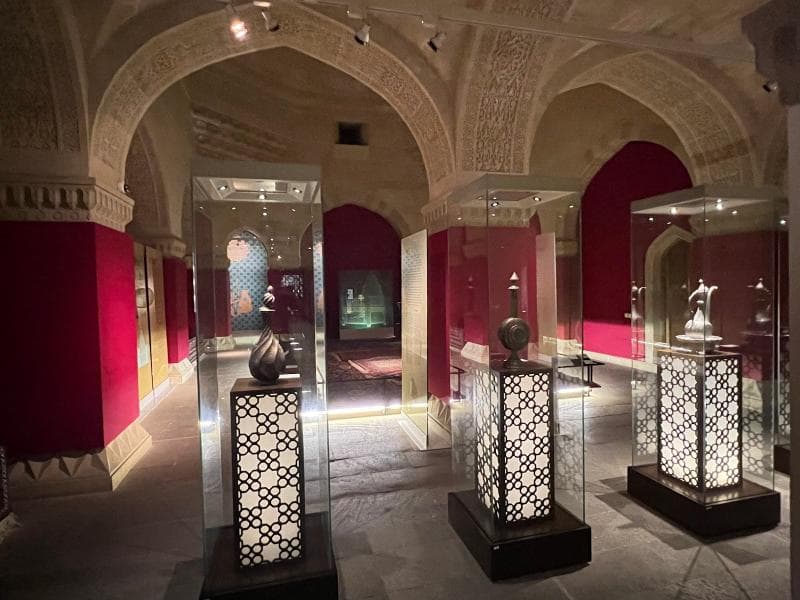
Explore the Royal Tombs within Baku's Palace of the Shirvanshahs, Azerbaijan. Discover 15th-century royal mausoleum with stunning architecture and historical insights.
Overview
The Royal Tombs, also known as the Shirvanshahs' Palace Mausoleum, is an integral and deeply significant part of the larger Palace of the Shirvanshahs complex, nestled within the ancient walls of Icherisheher, Baku's Old City, in Azerbaijan. This remarkable 15th-century structure was commissioned by Shirvanshah Khalilullah I, serving as the revered final resting place for members of the Shirvanshah dynasty. A prominent example of medieval Azerbaijani architecture, the mausoleum captivates with its distinctive octagonal stone exterior, cruciform interior hall, and an elegant domed roof. It stands as a profound testament to the dynasty's historical importance and artistic legacy. Positioned within a lower courtyard of the sprawling palace complex, the Royal Tombs form a crucial element of the UNESCO World Heritage Site, 'Walled City of Baku with the Shirvanshah's Palace and Maiden Tower,' inviting visitors to step back in time and connect with Azerbaijan's rich past.
History & Cultural Background
The history of the Royal Tombs is intertwined with the Shirvanshah dynasty, a powerful ruling family that governed the Shirvan region from the 9th to the 16th centuries. The mausoleum itself was constructed between 1435 and 1436 under the direct patronage of Shirvanshah Khalilullah I. Historical records and inscriptions indicate that the Shah intended this sacred space as the burial site for his mother, Bika Khanim, and his young son, Farrukh Yamin, who tragically passed away at the tender age of seven. Over time, other esteemed members of the Shirvanshah family also found their eternal repose within these walls. The decision to construct such an elaborate burial vault within the palace complex underscores the dynasty's shift of its capital to Baku in the 15th century, following a destructive earthquake in their former capital, Shemakha. The Royal Tombs therefore reflect a period of great architectural and cultural flourishing under the Shirvanshah rulers, symbolizing their enduring power and spiritual devotion. Archaeological excavations conducted in 1947 brought to light several burial chambers beneath the main level, revealing seven graves and precious personal items such as a gold earring and a comb, offering intimate glimpses into the burial customs and daily lives of the ruling class of that era.
What Makes It Special
The Royal Tombs stand out as a masterpiece of the Shirvan-Absheron architectural school, showcasing a unique blend of Persian, Turkish, and indigenous Azerbaijani design elements. Its distinct octagonal exterior, crowned by a subtly pointed dome, leads to an interior cruciform hall, a sophisticated layout that distinguishes it from other contemporary structures. The intricate stone carvings adorning the mausoleum are particularly captivating, featuring delicate geometric patterns, arabesque motifs, and profound calligraphic inscriptions. These artistic details are not merely decorative; they serve to emphasize the spiritual and regal significance of the site. The entrance portal, in particular, is a highlight, adorned with decorative medallions and religious verses that speak to the deep Islamic faith of the Shirvanshahs. Originally, the dome's star-shaped mortises were embellished with vibrant turquoise glazed tiles, adding a splash of color and luxury to its majestic form. The architect's skill is evident in every detail, with the careful balance of austere grandeur and intricate ornamentation making it one of the finest examples of medieval architecture not just in Azerbaijan, but across the broader Middle East.
Stories, Fun Facts & Local Details
Beyond its architectural grandeur, the Royal Tombs hold fascinating stories and details that bring its history to life. It is said that the architect responsible for this intricate design, known as 'Me'mar Ali,' ingeniously carved his name onto the portal in reverse, a subtle signature hidden within the artwork, almost as if reflected in a mirror. The inscription above the entrance prominently features the name of Shirvanshah Khalilullah I, commemorating his patronage. Within the decorative inscriptions on the portal, phrases like 'God, architect Ali, Mohammad' can be deciphered, further cementing the site's religious and artistic connections. A remarkable discovery during excavations was the skeleton of a person measuring 2.1 meters tall, found directly opposite the entrance. This imposing figure is widely believed to be the remains of Shirvanshah Khalilullah I himself, adding a very personal and awe-inspiring connection to the historical ruler. The uncovering of personal artifacts like a gold earring and a comb alongside other burial items provides rare insights into the lives and funerary rituals of the Shirvanshah royal family, painting a vivid picture of their world centuries ago.
Visitor Perspective
A visit to the Royal Tombs offers a profoundly immersive experience for anyone curious about Azerbaijan's past. Located conveniently within the UNESCO-listed Old City of Baku, the mausoleum is easily accessible as part of the broader Palace of the Shirvanshahs museum complex. As travelers step into this historical space, they are met with an atmosphere of solemnity and serenity, a stark contrast to the bustling modern city outside its ancient walls. Exploring the interior chambers allows for a close appreciation of the intricate stone carvings and the thoughtful architectural design that defines this royal burial site. The Royal Tombs serve as a powerful reminder of the Shirvanshah dynasty's enduring legacy and their significant contributions to the region's cultural and architectural heritage. It provides an unparalleled opportunity to connect with medieval history, understand ancient traditions, and witness the skilled craftsmanship of a bygone era, making it a truly enriching and memorable stop on any traveler's journey through Baku.
Coordinates: 49.83308, 40.36615
View on Google Maps💬 How Travelers Describe This Place
Based on community votes
Photogenic
869Beautiful
445Unique
416Must See
141Interesting
33
Traveler Stories
Discover memorable experiences shared by travelers who have visited this place.
No traveler stories yet.
Be the first traveler to share what made this place memorable.

Tour
By
Spot
Discover amazing places around the world. Your journey starts here.
Explore
© 2026 TourBySpot. All rights reserved.