Royal Foundations
Hanoi, Vietnam
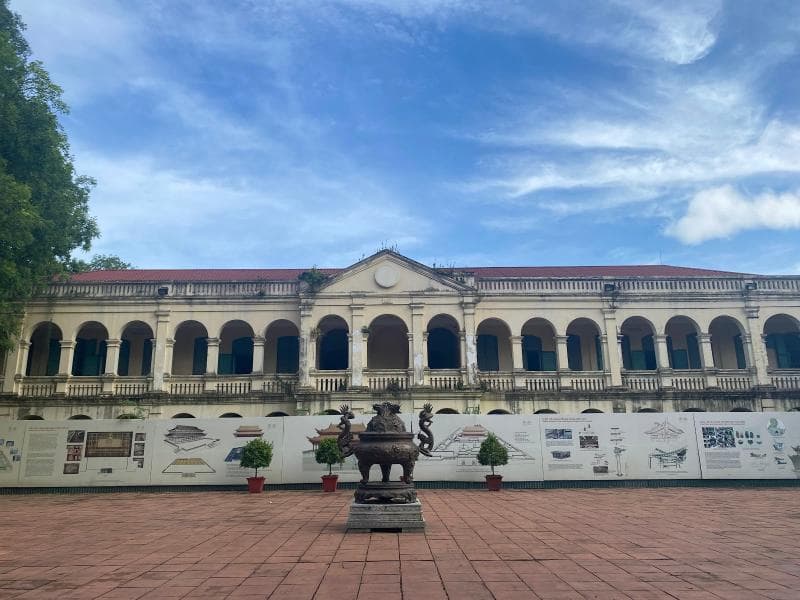
Explore the Royal Foundations at Thang Long Imperial Citadel in Hanoi, Vietnam, a UNESCO World Heritage site revealing over a millennium of history. Discover ancient palace layers and artifacts.
Overview
Deep within the bustling heart of Hanoi lies the Thang Long Imperial Citadel, a UNESCO World Heritage Site that served as the political center of Vietnam for nearly 13 centuries. While much of its original grandeur has faded with time and conflict, what remains—especially its profound archaeological layers, often referred to as the 'Royal Foundations'—offers an unparalleled journey through Vietnam's imperial past. These foundations are not merely ruins; they represent a continuous testament to the nation's resilience and enduring cultural identity, spanning from the 7th century to the 19th.
Visitors to this sacred ground can explore the unearthed vestiges of ancient palaces, roads, and artifacts that lie stacked layer upon layer, providing a tangible link to the dynasties that shaped Vietnam. The site truly stands as a living museum, where every excavated stone and foundation speaks volumes about a thousand years of history.
History & Cultural Background
The story of the Thang Long Imperial Citadel, and its underlying royal foundations, began long before its formal establishment. The site was originally home to a 7th-century Chinese fortress, which provided a strategic base in the Red River Delta. In 1010, Emperor Ly Thai To, seeing the strategic and geomantic significance of the location, made the fateful decision to move his capital from Hoa Lu to this fertile plain. He named the new capital Thang Long, meaning 'Rising Dragon,' after a legend says he saw a golden dragon ascend into the sky as his royal boat approached the site, a divine omen for an enduring empire.
For centuries, the Imperial Citadel served as the epicenter of Vietnamese political power, with successive dynasties—including the Ly, Tran, and Le—expanding and renovating its structures. Despite periods of destruction, particularly during French colonial rule, the citadel's historical significance remained profound. It wasn't until extensive archaeological excavations began in 2002 that the true depth and value of these submerged 'Royal Foundations' came to light. These discoveries revealed an unbroken history of human settlement and power, leading to the site's inscription as a UNESCO World Heritage Site in 2010, coinciding with Hanoi's 1,000th anniversary.
What Makes It Special
The true uniqueness of the Imperial Citadel's 'Royal Foundations' lies in its remarkable archaeological continuity. At the 18 Hoang Dieu archaeological site, visitors can witness literal layers of history excavated beneath the surface. These layers reveal the foundations of palaces from the Ly, Tran, and Le dynasties, built one atop the other over centuries, showcasing the architectural evolution and the continuous role of the site as a center of power.
This site stands as a rare example of a place that has maintained its central political function for over a millennium, a continuity that is seldom found elsewhere in the world. Beyond structural remains, millions of artifacts—including pottery, ceramics, ornate roof tiles, and ancient wells—have been unearthed, providing invaluable insights into the daily lives, beliefs, and artistic achievements of past empires.
Even the seemingly sparse Kinh Thien Palace foundation, though the palace itself was largely destroyed, holds special significance. Its monumental stone platform and the famous 15th-century carved dragon stairways remain, offering a powerful symbol of imperial authority and artistry from the Le dynasty.
Stories, Fun Facts & Local Details
The legend of the 'Rising Dragon' (Thang Long) perfectly encapsulates the enduring spirit and importance of this ancient capital. It's a story that speaks to the divine mandate believed to have guided Emperor Ly Thai To, inspiring the construction of the citadel and setting the stage for a millennium of rule.
The meticulous layout and construction of the citadel were also deeply influenced by traditional geomantic principles (feng shui). The discovery of these foundational layers reveals how ancient Vietnamese architects adapted to the challenging natural terrain of the Red River Delta, showcasing significant technical advancements in construction to support such grand structures.
Walking through the archaeological areas, one can imagine the vibrant court life that once thrived here. The excavated tiles decorated with chrysanthemums, for example, offer a glimpse into the royal embellishments that once adorned these magnificent palaces, telling silent stories of beauty and power.
Visitor Perspective
For a curious traveler, visiting the 'Royal Foundations' at the Thang Long Imperial Citadel is a profoundly immersive experience. It's an opportunity to literally walk through the cross-section of time at the 18 Hoang Dieu archaeological site, gaining a palpable sense of the layers of history that underpin Hanoi.
Unlike fully reconstructed sites, the raw, excavated foundations offer an authentic connection to the past. Observing the exposed remnants of ancient palaces and artifacts allows for reflection on the ebb and flow of dynasties and the enduring spirit of Vietnam. It's a journey that provides a deeper understanding of how Hanoi evolved into the vibrant capital it is today, offering context beyond its modern facade. This site is not just a collection of historical objects; it is the very backbone of Hanoi's thousand-year story, waiting to be explored.
Coordinates: 105.83722, 21.03944
View on Google Maps💬 How Travelers Describe This Place
Based on community votes
Unique
981Interesting
617Must See
565Photogenic
357Beautiful
28
Traveler Stories
Discover memorable experiences shared by travelers who have visited this place.
No traveler stories yet.
Be the first traveler to share what made this place memorable.

Tour
By
Spot
Discover amazing places around the world. Your journey starts here.
Explore
© 2026 TourBySpot. All rights reserved.