Royal Crypt
Prague, Czech Republic
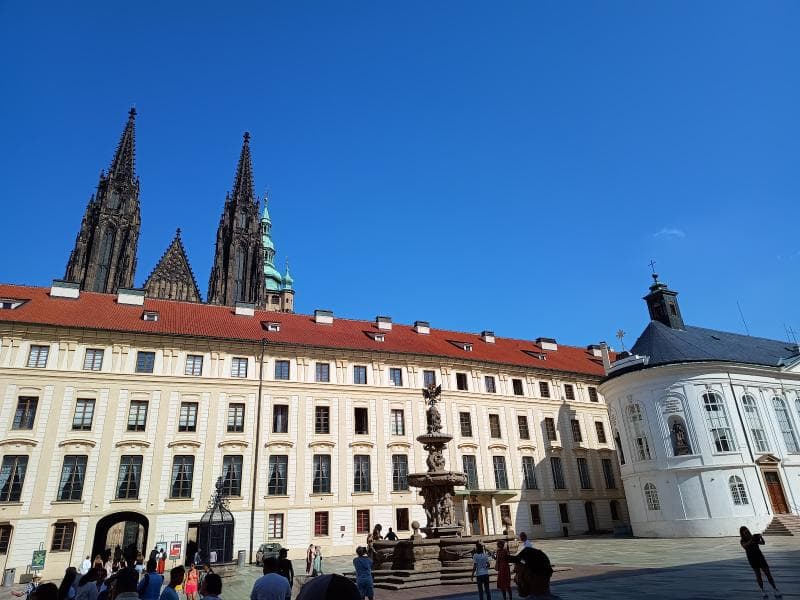
Explore the Royal Crypt within St. Vitus Cathedral in Prague, Czech Republic, the final resting place of Bohemian kings and queens. Discover centuries of royal history.
Overview
Deep within the foundations of the magnificent St. Vitus Cathedral in Prague, Czech Republic, lies the solemn and historically significant Royal Crypt. This underground burial chamber serves as the final resting place for many Bohemian kings, queens, and other prominent figures who shaped the nation's destiny. Descending into its cool, hushed depths offers a profound journey back in time, revealing centuries of royal history beneath the grandeur of the main cathedral. It is a place of quiet reverence, where the physical remains of powerful rulers are interred, connecting visitors directly to the rich, layered past of Central Europe.
Situated beneath the Royal Mausoleum, which stands before the high altar in the cathedral's chancel, the Royal Crypt provides a striking contrast to the luminous Gothic architecture above. The space is characterized by its historical authenticity, offering a glimpse into ancient burial traditions and the enduring legacy of the Bohemian monarchy. Visitors navigate through dimly lit passages to encounter the sarcophagi of those who once held sway over the Czech lands, making it an essential stop for anyone seeking a deeper understanding of Prague's imperial heritage.
History & Cultural Background
The history of the Royal Crypt is intricately woven with the construction and evolution of St. Vitus Cathedral itself. The desire for a central royal burial site was a key motivation for the cathedral's founder, Emperor Charles IV, who envisioned it as a coronation church, a treasury for relics, and a family crypt. While the current Royal Crypt largely came into its definitive form later, the tradition of royal burials on this site dates back much further, even to the original 10th-century Romanesque rotunda founded by Wenceslaus I.
The concept of a dedicated royal burial chamber beneath the main altar solidified over centuries. Notably, Emperor Rudolf II, in the late 16th century, ordered the construction of a new royal burial chamber. This involved the transfer of remains from older crypts, centralizing the burial traditions of the Bohemian royal dynasty. Archaeological discoveries in the cathedral's underground have revealed even older burial chambers, including the original 14th-century chamber of Charles IV, which was rediscovered during restoration work. These findings highlight the continuous use of the site as a sacred necropolis for rulers throughout various epochs of Bohemian history.
What Makes It Special
The Royal Crypt's unique appeal lies in its tangible connection to centuries of Bohemian sovereignty. It is not merely an underground space, but a repository of national memory, containing the remains of some of the most influential figures in Czech history. Among those interred here are King Charles IV, one of Bohemia's most revered rulers and Holy Roman Emperor; his four wives; Wenceslas IV; George of Podebrady; Ladislas the Posthumous; and Emperor Rudolf II.
The visual elements within the crypt contribute significantly to its special atmosphere. Visitors encounter fourteen separate crypts with marble floors and vaulted ceilings, some adorned with golden mosaics, creating a sense of enduring majesty despite the underground setting. The sarcophagi themselves are works of historical art, particularly Charles IV's bronze sarcophagus, centrally located, and Rudolf II's tin Renaissance coffin, which features national emblems and six carved angels, reflecting the artistic styles and power of their respective eras.
Stories, Fun Facts & Local Details
One fascinating detail associated with the Royal Crypt is the story of Charles IV's original burial chamber. For a long time, the exact location of his initial interment following his death in 1378 was uncertain. During restoration efforts in the early 21st century, archaeologists made a remarkable discovery, unearthing his 14th-century burial chamber. This find, hidden for over 130 years after an earlier exploration by architect Josef Mocker, offered a direct link to the emperor's initial resting place before his remains were moved to the current Royal Crypt.
The transition from the grand cathedral above to the intimate, low-ceilinged crypt below is a palpable experience. The distinct chill in the air and the faint earthy scent create an immediate connection to the ancient nature of the space. It is a stark reminder of mortality and the passage of time, yet also a powerful testament to the continuity of the Bohemian lineage. The Royal Crypt also houses remnants of the earlier 10th-century rotunda of St. Wenceslas, providing a glimpse into the very earliest structures on this sacred site.
Visitor Perspective
Visiting the Royal Crypt is an experience that resonates deeply with many travelers. To access this subterranean world, visitors typically descend a short staircase, usually located near the third pier of the cathedral. The transition from the vast, soaring nave of the cathedral to the more confined, atmospheric crypt is quite striking. The dim lighting and the historical setting are carefully preserved, enhancing the sense of solemnity and reflection. It is advisable to be aware of the tight spaces and lower ceilings, which contribute to the authentic historical ambiance.
While entrance to certain parts of St. Vitus Cathedral might be free, accessing the historical areas, including the Royal Crypt, usually requires a ticket to the broader Prague Castle complex. Guides often provide invaluable context, helping to interpret the stories behind the sarcophagi and the archaeological finds that enrich the visitor's understanding. It's a place where the echoes of history are almost audible, offering a unique opportunity to stand in the presence of Bohemian royalty and reflect on their enduring impact.
Coordinates: 14.40056, 50.09083
View on Google Maps💬 How Travelers Describe This Place
Based on community votes
Must See
996Unique
673Photogenic
186Beautiful
143Interesting
80
Traveler Stories
Discover memorable experiences shared by travelers who have visited this place.
No traveler stories yet.
Be the first traveler to share what made this place memorable.

Tour
By
Spot
Discover amazing places around the world. Your journey starts here.
Explore
© 2026 TourBySpot. All rights reserved.