Royal Chapel
Versailles, France
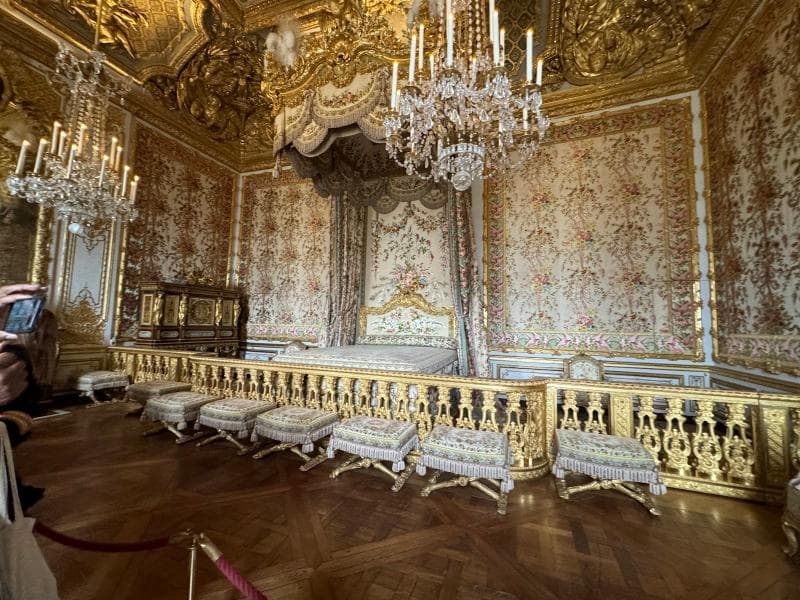
Explore the Royal Chapel at the Palace of Versailles, France. Discover its Baroque architecture, royal history, stunning frescoes, and unique two-story design.
Overview
The Royal Chapel, nestled within the magnificent Palace of Versailles in Versailles, France, stands as a breathtaking testament to French Baroque art and a spiritual cornerstone of the former royal residence. As the last grand architectural endeavor commissioned by King Louis XIV, its completion in 1710 marked a significant moment in the palace's history, embodying the Sun King's devotion and vision. This sacred space is not merely a chapel but a jewel, showcasing a unique blend of classical and Gothic architectural elements and serving as a powerful symbol of divine authority.
History & Cultural Background
The current Royal Chapel is the fifth and final chapel to be constructed within the Palace of Versailles since the reign of Louis XIII. Its journey to fruition was extensive, with earlier projects left unfinished before Louis XIV commissioned Jules Hardouin-Mansart in 1699 to design this definitive structure. Sadly, Hardouin-Mansart passed away in 1708, and his brother-in-law, Robert de Cotte, saw the project through to its completion in 1710.
Culturally, the Royal Chapel was the vibrant heart of the French court's religious life. Daily Mass was held here, typically at 10 AM, with the court attending, often turning to face the king in the royal gallery. It was also the solemn setting for pivotal royal events, including weddings, baptisms, and other significant religious ceremonies, symbolizing the profound intertwining of church and state during Louis XIV's reign. Its elevated position, towering above other palace buildings at 40 meters high, was a deliberate architectural statement, evoking the principle of divine right monarchy and reminding all of the spiritual source of the king's temporal power.
What Makes It Special
The Royal Chapel's distinctive architecture immediately captivates. It masterfully combines the grandeur of classical Roman colonnades with the soaring verticality and large windows reminiscent of Gothic cathedrals, drawing inspiration from Sainte-Chapelle in Paris. The interior is divided into two distinct levels: a lower arcaded ground level for the public and members of the court, and a high, colonnaded first story, accessible directly from the royal apartments, where the king and his family would sit in the royal tribune.
Within this awe-inspiring space, art and devotion merge. The vaulted ceiling features magnificent frescoes dedicated to the Holy Trinity: Antoine Coypel's 'God the Father in his Glory' centrally, Charles de La Fosse's 'The Resurrection' in the apse, and Jean Jouvenet's 'The Descent of the Holy Ghost' above the royal tribune. The chapel is also adorned with intricate carvings, gilded details, and magnificent polychrome marble paving, with over 110 sculptors contributing to its lavish decoration. A historic organ, designed by Clicquot, further enhances its splendor and acoustic richness, with a history of hosting renowned organists such as François Couperin.
Stories, Fun Facts & Local Details
The Royal Chapel holds many intriguing stories. Perhaps one of the most famous is that of the wedding of the 14-year-old Marie Antoinette to the future Louis XVI, which took place within these very walls on May 16, 1770. An interesting detail of court etiquette was that during daily Mass, many courtiers in the lower nave would actually turn their backs to the altar to face the king and his family in the upper gallery, underscoring the king's central role in the court's life.
Despite the turmoil of the French Revolution, the chapel's historic 1710 Clicquot organ remarkably survived because it was used for patriotic civic songs, sparing it from destruction. Today, the chapel continues its musical legacy, hosting numerous concerts of sacred and secular music, allowing visitors to experience its exceptional acoustics, which have resonated for over 300 years. Its construction involved considerable deliberation, with no fewer than five different locations considered before its final site was chosen, a testament to Louis XIV's desire for a chapel truly worthy of Versailles.
Visitor Perspective
Visiting the Royal Chapel offers a profound glimpse into the spiritual and ceremonial life of the French monarchy. As you enter the nave, prepare to be awestruck by the soaring vaulted ceilings and the intricate interplay of light from the large windows. The altar, richly decorated, draws the eye upward to the detailed frescoes. Don't miss the opportunity, if available, to view the upper gallery, which provides a unique perspective and a closer look at the stunning ceiling paintings, imagining where the royal family once sat.
Access to the Royal Chapel is often part of guided tours or special openings within the Palace of Versailles, as it is not always open for independent entry. It's advisable to check the official Château de Versailles website for current visiting conditions. Tips for a memorable visit include arriving early to avoid crowds, wearing comfortable shoes for exploring the vast palace, and considering a guided tour to fully appreciate its rich history and artistic nuances. While photography is generally permitted, flash is prohibited to protect the delicate interiors. Dressing modestly is also a respectful gesture when visiting this historic sacred space.
Coordinates: 2.1203, 48.8047
View on Google Maps💬 How Travelers Describe This Place
Based on community votes
Photogenic
872Interesting
846Must See
201Beautiful
121Unique
87
Traveler Stories
Discover memorable experiences shared by travelers who have visited this place.
No traveler stories yet.
Be the first traveler to share what made this place memorable.

Tour
By
Spot
Discover amazing places around the world. Your journey starts here.
Explore
© 2026 TourBySpot. All rights reserved.