Royal Artifacts
Ulaanbaatar, Mongolia
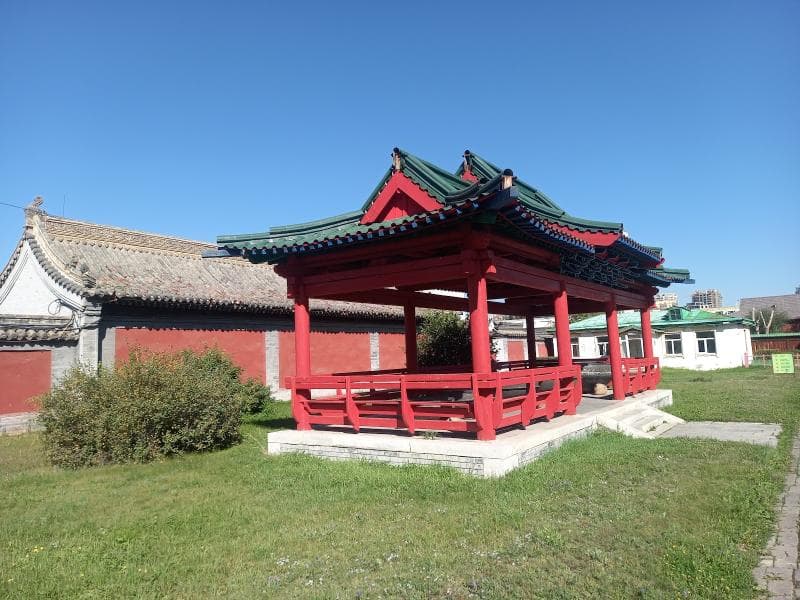
Overview
Stepping into the Bogd Khan Palace Museum in Ulaanbaatar, Mongolia, is like journeying back in time to the opulent world of Mongolia's last theocratic ruler, Bogd Khaan VIII. Within this historical complex lies a treasure trove known as the 'Royal Artifacts' collection, offering an unparalleled glimpse into the nation's rich imperial and religious past. This remarkable sub-spot is housed primarily within the Winter Palace, the only one of Bogd Khaan's four royal residences to survive to this day, alongside several beautifully preserved temple structures. It acts as a bridge between the 17th and early 20th centuries, showcasing the extraordinary convergence of politics, religion, and art that defined an era.
The Royal Artifacts collection at the Bogd Khan Palace Museum is a testament to the grandeur and unique cultural identity of Mongolia during a pivotal period. It serves not just as a display of historical objects but as a narrative of leadership, faith, and daily life within the royal court. For curious travelers, it's an opportunity to connect directly with the personal world of the Bogd Khaan and Queen Dondogdulam, surrounded by items that once held immense significance and now stand as enduring symbols of Mongolian heritage.
History & Cultural Background
The Bogd Khan Palace Museum complex, often referred to as 'the Green Palace', holds profound historical significance. It was built between 1893 and 1903, with the European-style Winter Palace completed around 1905, serving as the primary residence for the 8th Bogd Javzandamba Khutagt, Mongolia's theocratic ruler. The Bogd Khaan was not only a spiritual leader but also the monarch of the first independent Mongolian state proclaimed in 1911, following the collapse of the Qing Dynasty in China. This dual role meant his life and possessions were imbued with both religious sanctity and political authority.
After the Bogd Khaan's passing in 1924, his Winter Palace was transformed into a museum in 1926. This conversion was crucial for the preservation of these royal artifacts, allowing them to largely escape the widespread destruction of religious and cultural sites during the communist era. The museum complex thus stands as a rare and invaluable relic, embodying the spirit of an independent Mongolia and the artistic renaissance that flourished under the Bogd Khaan's rule. Its survival offers a direct link to the cultural, political, and artistic history of 17th to early 20th century Mongolia, making it a truly unique institution.
What Makes It Special
What truly distinguishes the 'Royal Artifacts' is the incredible diversity and personal nature of its exhibits. Visitors are not merely observing historical objects, but rather the intimate possessions of a living Buddha and his queen. The collection encompasses over 8,000 items, ranging from the opulent ceremonial robes and crowns worn by the Bogd Khaan and Queen Dondogdulam to an extensive array of religious iconography.
Among the most compelling displays are the priceless idols and thangkas, including 21 exquisite sculptures of Taras and other Buddhist deities crafted by Undur Gegeen Zanabazar, Mongolia's renowned 17th-century sculptor and spiritual leader. These artistic masterpieces reflect the pinnacle of Mongolian Buddhist art. Beyond the sacred, the museum houses state gifts from various nations and dignitaries, personal furniture, and even an extraordinary collection of over 200 stuffed animals that belonged to the Khaan. These items collectively paint a vivid picture of royal life, spiritual devotion, and the diplomatic ties of the era.
Stories, Fun Facts & Local Details
The Royal Artifacts are steeped in fascinating stories and intriguing details. Imagine the Bogd Khaan's lavish ceremonial ger, famously lined with the skins of 150 snow leopards, a true display of imperial wealth and exotic taste. Another remarkable artifact is the jeweled regalia worn by the Bogd Khaan's pet elephant, which he specially imported – a testament to his eccentric interests and vast resources.
Among the personal effects, one can find a pearl-patterned jacket, intricately sewn with thousands of tiny pearls, and a golden robe adorned with the Soyombo symbol, a national emblem that signified Mongolia's independence. Gifts from foreign powers include a pair of ceremonial boots believed to have been presented by Russian Tsar Nicholas II. The museum also displays a unique mural by the artist B. Sharav, which humorously and ironically depicts scenes from Mongolian daily life at the turn of the 20th century, offering a glimpse into society beyond the palace walls. These items provide not just historical context but emotional depth, allowing visitors to imagine the personalities and lives of those who once resided in this grand palace.
Visitor Perspective
For any traveler, exploring the Royal Artifacts is an immersive experience that goes beyond mere observation. It's an opportunity to walk through the preserved chambers of the Bogd Khaan, imagining the daily life and ceremonial splendor that unfolded within these walls. The museum is designed to evoke a sense of reverence and wonder, showcasing items that carry centuries of history and cultural significance. The contrast between the elaborate royal possessions and the simpler life of ordinary Mongolians of the time adds a layer of poignant reflection.
Visitors are encouraged to take their time, absorbing the intricate details of the silk embroideries, the serene expressions of Zanabazar's sculptures, and the stories embedded in every artifact. It is a place that fosters a deep appreciation for Mongolia's enduring cultural identity and its rich past, making it an essential stop for anyone seeking to understand the heart of Ulaanbaatar and the spirit of the Mongolian people. The atmosphere is one of quiet dignity, inviting contemplation on a unique chapter in world history.
Coordinates: 106.90667, 47.8975
View on Google Maps💬 How Travelers Describe This Place
Based on community votes
Unique
804Interesting
733Beautiful
563Photogenic
404Must See
63
Traveler Stories
Discover memorable experiences shared by travelers who have visited this place.
No traveler stories yet.
Be the first traveler to share what made this place memorable.

Tour
By
Spot
Discover amazing places around the world. Your journey starts here.
Explore
© 2026 TourBySpot. All rights reserved.