Royal Apartments
Munich, Germany
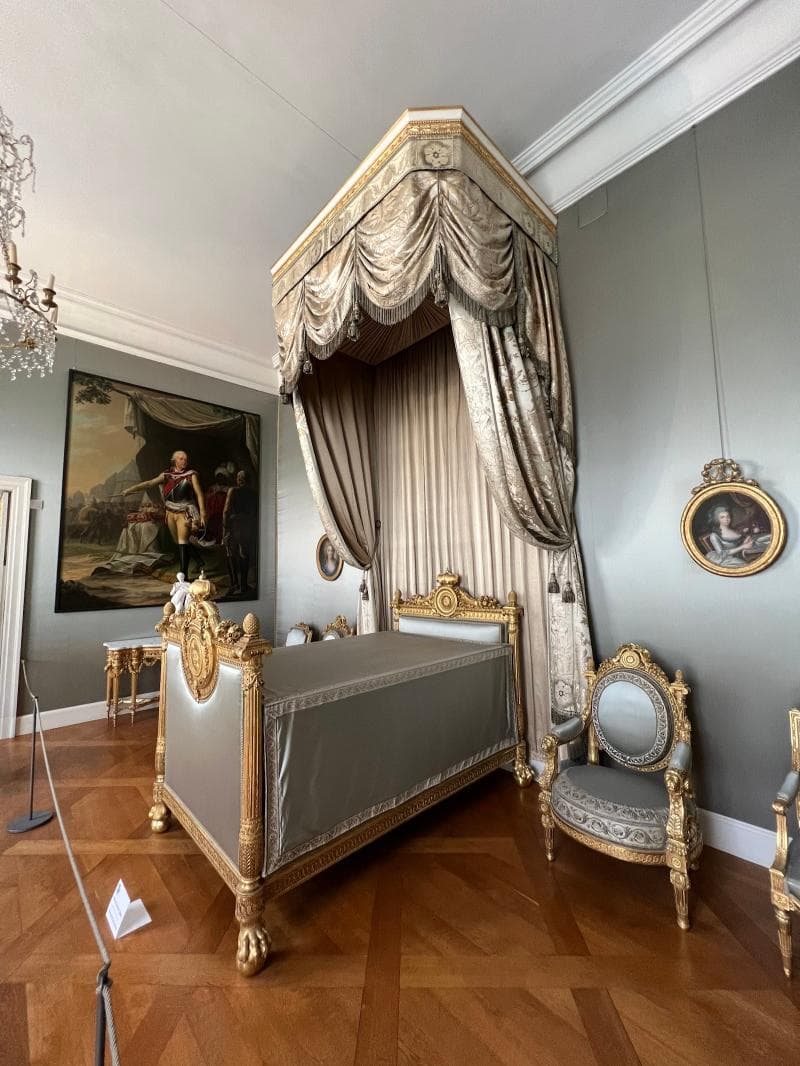
Explore the Royal Apartments in Munich Residenz, Germany. Discover the Neoclassical grandeur of King Ludwig I's chambers, their history, and unique artistry.
Overview
Deep within the sprawling grandeur of the Munich Residenz, a jewel of Bavarian history and artistry awaits: the Royal Apartments. These magnificent suites, primarily housed within the Königsbau (King's Building), offer a captivating glimpse into the private and public lives of Bavaria's monarchs, most notably King Ludwig I and his queen, Therese of Saxony-Hildburghausen. The Residenz itself is Germany's largest city palace, a monumental complex that evolved over centuries, and the Royal Apartments represent a significant chapter in its storied past, showcasing the opulent Neoclassical style of the early 19th century.
Today, these apartments are part of the extensive Residenz Museum, inviting curious travelers to walk through rooms where royalty once lived, governed, and entertained. They stand as a testament to the Wittelsbach dynasty's self-image and their enduring influence on Bavarian culture and architecture. While the entire Residenz complex boasts an incredible 130 rooms open to the public, the Royal Apartments are a particular highlight, distinguished by their cohesive design and historical significance.
History & Cultural Background
The story of the Royal Apartments begins with King Ludwig I, who ascended to the throne in 1825. Driven by a passion for classical antiquity and a desire to elevate Munich to a cultural capital, Ludwig I embarked on an ambitious expansion of the Residenz.
He commissioned his leading architect, Leo von Klenze, a master of Neoclassicism, to design the Königsbau, which would house the new royal living quarters. Construction of the Königsbau took place between 1826 and 1835. Klenze's design drew inspiration from Italian Renaissance palaces, such as the Palazzo Pitti in Florence, giving the façade on Max-Joseph-Platz a distinctly classical appearance.
These apartments were innovative for their time. Unlike previous royal residences, Ludwig I intended for his private chambers to be viewed by the public, by appointment, when the royal couple was not in residence. This bold move reflected a changing relationship between monarch and subject, hinting at a more accessible, yet still idealized, image of royalty.
Tragically, the Royal Apartments, like much of the Residenz, suffered severe damage during World War II bombings in 1944. However, through dedicated restoration efforts, many of the rooms were meticulously reconstructed and refurnished to their original 1835 appearance by the 1980s, allowing visitors today to experience their grandeur almost as it was intended.
What Makes It Special
What truly sets the Royal Apartments apart is their exceptional uniformity of design. Every detail, from the walls to the furniture, was conceived in a cohesive Neoclassical style by Leo von Klenze. This wasn't merely a collection of rooms; it was a meticulously planned, integrated artistic statement. All the furniture, crafted by Munich's finest cabinetmakers and sculptors between 1834 and 1835, contributed to this unified aesthetic.
The apartments are a living canvas for Ludwig I's intellectual and artistic inclinations. His personal suite, for instance, features themes drawn from ancient Greek poetry, while the queen's rooms are adorned with scenes inspired by the works of great German authors. This deliberate choice of subject matter transformed the living spaces into educational and inspiring environments, reflecting the monarch's commitment to culture and the arts.
Furthermore, the Royal Apartments offered an unprecedented level of public access for their era. The fact that citizens could visit these royal chambers during the monarch's absence underscores a fascinating aspect of Ludwig I's reign – a blend of traditional regality with a burgeoning sense of public engagement. This accessibility made the apartments not just a residence, but a public statement of taste and governance.
Stories, Fun Facts & Local Details
King Ludwig I was known for his strong sense of history and his desire to surround himself with exemplary figures. In his private apartment, this manifested in historical pictures depicting deeds of admirable rulers and busts of influential statesmen and philosophers. He wasn't just living in luxury; he was living amidst constant reminders of historical greatness and philosophical thought, shaping his environment to inspire his rule.
A lesser-known, yet intriguing, part of the Königsbau are the Nibelungen Halls. These rooms were decorated with frescoes illustrating scenes from the 'Nibelungenlied,' a medieval German epic poem, showcasing Ludwig I's deep interest in German mythology and national identity. While not strictly part of the private apartments, their inclusion in the same building highlights the king's broad cultural vision.
A poignant detail about the reconstruction is that, despite the devastation of WWII, many of the movable artifacts were salvaged. This foresight allowed for a more authentic restoration, where much of the original decoration and furnishing could be returned to its intended place, preserving the artistic and historical integrity of these magnificent rooms. The meticulous process involved refurnishing the rooms based on an inventory from 1835, restoring Munich's unique Neoclassical ensemble.
Visitor Perspective
Exploring the Royal Apartments is an immersive journey through time, allowing visitors to step into the elegant world of Bavarian royalty. The sheer scale of the Residenz can be daunting, with numerous interconnected wings and courtyards, but the Royal Apartments offer a focused and deeply rewarding experience.
As you wander through the grand halls and intimate chambers, you'll encounter a rich tapestry of art and history. The inlaid wood floors, each with different ornate patterns, are a testament to the craftsmanship of the era. The vastness of the complex, with its 130 rooms, means you should allocate ample time to fully appreciate the details, perhaps using an audio guide to enhance your understanding of the historical context and the stories behind the elaborate decorations.
The meticulous reconstruction after the war is often imperceptible, a testament to the dedication of those who painstakingly brought these rooms back to life. While some areas of the Residenz were rebuilt in a simplified manner, the Royal Apartments in the Königsbau were restored with an emphasis on historical accuracy. You'll gain a profound appreciation for the artistic legacy of the Wittelsbach monarchs and the enduring spirit of Munich.
Coordinates: 11.58026, 48.14158
View on Google Maps💬 How Travelers Describe This Place
Based on community votes
Interesting
953Beautiful
695Photogenic
658Must See
396Unique
22
Traveler Stories
Discover memorable experiences shared by travelers who have visited this place.
No traveler stories yet.
Be the first traveler to share what made this place memorable.

Tour
By
Spot
Discover amazing places around the world. Your journey starts here.
Explore
© 2026 TourBySpot. All rights reserved.