Rose Window
Paris, France
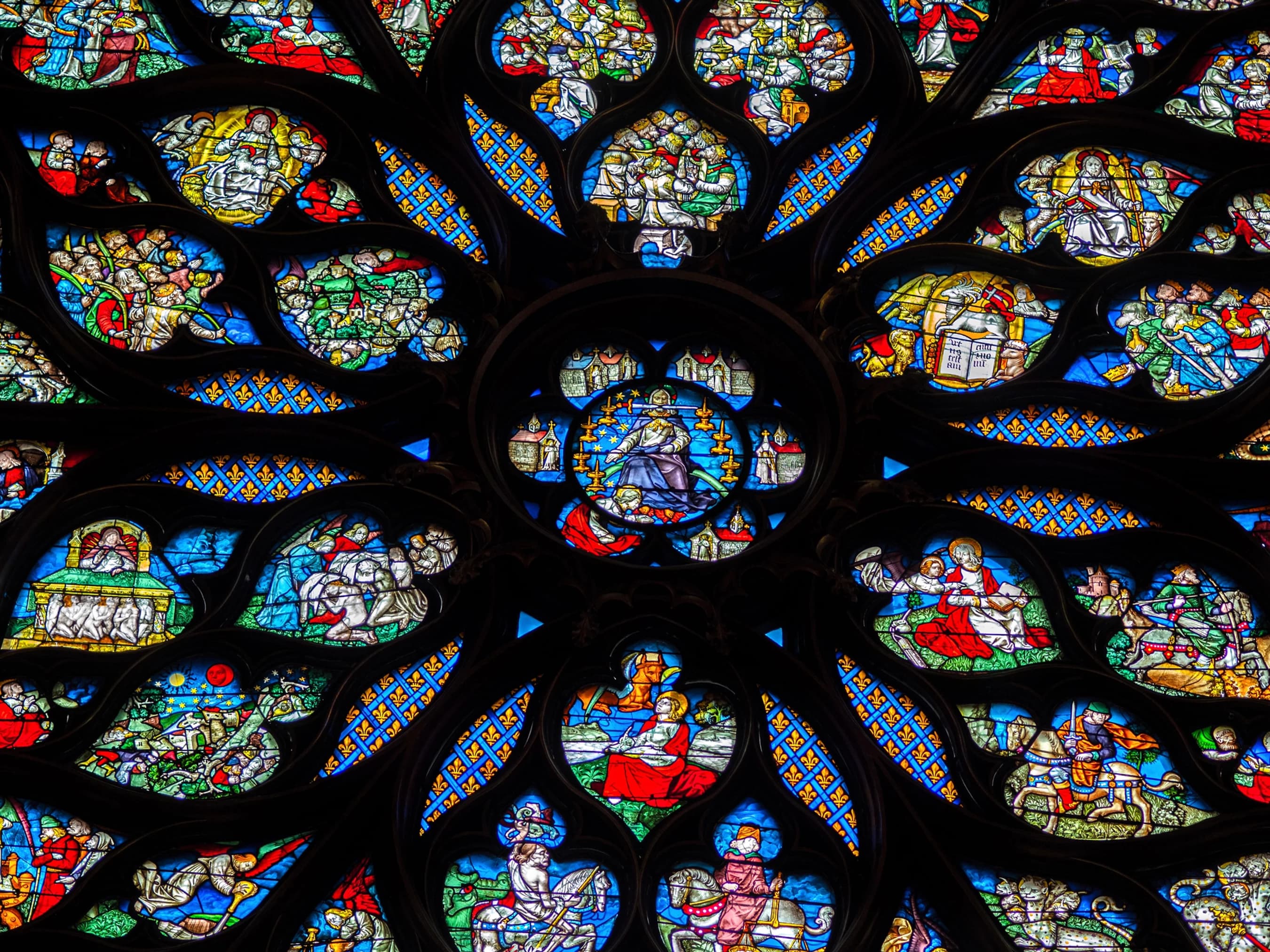
Discover the breathtaking Rose Window of Sainte-Chapelle in Paris, France, a masterpiece of Flamboyant Gothic art depicting the Apocalypse.
Overview
Within the breathtaking Sainte-Chapelle in Paris, France, the magnificent Rose Window on the western facade of the upper chapel stands as a crowning artistic achievement. This spectacular circular window, often referred to as the 'Rose of the Apocalypse,' immediately captivates visitors with its intricate design and vibrant portrayal of biblical narratives. It represents a pinnacle of Flamboyant Gothic artistry, distinct from the earlier stained-glass panels that adorn the chapel's sides.
As sunlight streams through its meticulously crafted panels, the Rose Window transforms the interior of the chapel into a dazzling display of color, serving as a powerful visual centerpiece in a space already renowned for its unparalleled stained glass. Its sheer size and the complexity of its tracery demand attention, offering a profound aesthetic and spiritual experience.
History & Cultural Background
While the majority of Sainte-Chapelle's stained-glass windows date back to the mid-13th century, coinciding with the chapel's construction under King Louis IX, the current Rose Window is a later addition. It was installed in the late 15th century, specifically between 1485 and 1498, during the reign of King Charles VIII. This makes it a prime example of the Flamboyant Gothic style, which evolved from the earlier Rayonnant Gothic architecture that defines much of Sainte-Chapelle.
The original 13th-century rose window, whose theme was also the Apocalypse, was replaced to reflect the contemporary artistic trends of the 15th century. The artisans of this period utilized advanced techniques, such as silver stain, allowing for a broader spectrum of colors and finer details to be painted directly onto the glass. Sainte-Chapelle itself was consecrated in 1248, built by Louis IX to house his collection of Passion relics, most notably the Crown of Thorns, elevating the chapel to a sacred reliquary and a symbol of Capetian monarchy.
What Makes It Special
The Rose Window of Sainte-Chapelle is remarkable for several reasons. It measures nine meters in diameter and is composed of eighty-nine separate panels, though some sources state eighty-six or eighty-seven, all depicting scenes from the Book of Revelation, or the Apocalypse. Unlike the predominant deep blues and reds of the earlier 13th-century windows, the Rose Window features a striking shift to dominant yellows and greens, a testament to the new glassmaking techniques, particularly the systematic use of silver yellow.
Its intricate flamboyant tracery, characterized by 'flamelike curling designs,' sets it apart stylistically from the rest of the chapel's glass. This artistic evolution contributed to the chapel's overall reputation as a 'wall of glass,' with the stone structure reduced to a delicate framework that allows light to pour in, creating an ethereal atmosphere. The Rose Window is exceptionally well-preserved, with only a small number of its panels having undergone restoration in the 19th century.
Stories, Fun Facts & Local Details
The Rose of the Apocalypse vividly illustrates the prophecy of the end of the world, with Christ enthroned in glory at its center, surrounded by elements like the Four Horsemen, the Whore of Babylon, the New Jerusalem, and the Last Judgment. It is an intricate narrative, meant to be 'read' from the center outwards.
A fascinating detail within the window is the subtle inclusion of a crowned 'K' (for Karolus), symbolizing King Charles VIII, under whose patronage this magnificent artwork was created. This personal touch links the sacred narrative directly to the royal commissioner. Poetically, its placement on the western facade means it is the last part of the building to receive light each day. As the sun sets, especially on a sunny afternoon, the window is said to 'ignite,' transforming the chapel's interior with a dazzling glow. This daily spectacle was seen as a symbolic 'rehearsal for the end of time,' offering both a promise of renewal for the righteous and a warning to the monarch.
Visitor Perspective
To fully appreciate the Rose Window, visitors must ascend to the upper chapel of Sainte-Chapelle. The experience of walking into this upper level, surrounded by towering walls of stained glass, is often described as overwhelming and profoundly moving. The Rose Window itself is best viewed in the afternoon, particularly on a sunny day, when the sun illuminates its western-facing panels, making the colors and details glow with unparalleled intensity.
Visitors are encouraged to take their time to observe the myriad scenes and the distinct change in color palette compared to the chapel's earlier windows. The sheer scale and delicate beauty of the Rose Window, combined with the solemn yet radiant atmosphere of the upper chapel, offer a truly unforgettable moment for any traveler exploring the historical and artistic treasures of Paris.
Coordinates: 2.345, 48.85528
View on Google Maps💬 How Travelers Describe This Place
Based on community votes
Beautiful
995Interesting
839Must See
603Unique
388Photogenic
289
Traveler Stories
Discover memorable experiences shared by travelers who have visited this place.
No traveler stories yet.
Be the first traveler to share what made this place memorable.

Tour
By
Spot
Discover amazing places around the world. Your journey starts here.
Explore
© 2026 TourBySpot. All rights reserved.