Römer City Hall
Frankfurt, Germany
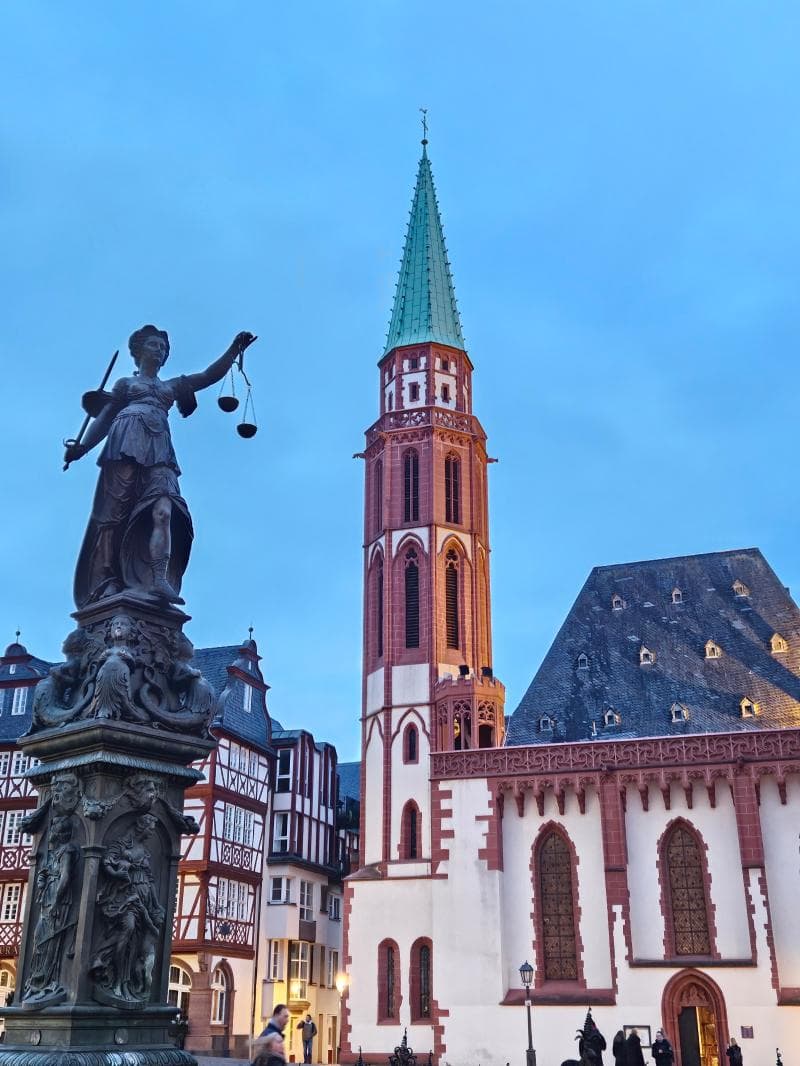
Explore Römer City Hall in Frankfurt, Germany, a historic landmark on Römerberg square. Discover its imperial past, unique architecture, and cultural significance.
Overview
The Römer City Hall stands as an enduring symbol of Frankfurt am Main, Germany, serving as the city's municipal heart for over 600 years. More than just a single building, the Römer is a captivating complex of medieval structures situated at the historic Römerberg square, a place that has witnessed centuries of significant events. Its distinctive three-gabled facade, a quintessential image of Frankfurt, greets visitors from around the globe. This architectural ensemble began its life not as a purpose-built city hall, but as two private merchant houses, 'Zum Römer' and 'Goldener Schwan', acquired by the city council in 1405. Over time, further acquisitions and expansions transformed these into the sprawling complex seen today. While it once buzzed as a center for trade and commerce, the Römer now primarily functions as the official seat of the mayor and city administration, a venue for important civic ceremonies, and a popular site for weddings, continuing its legacy as a vibrant civic hub.
History & Cultural Background
The journey of the Römer as Frankfurt's city hall began on March 11, 1405, when the city council purchased the two aforementioned houses, 'Zum Römer' and 'Goldener Schwan'. This marked a pivotal moment, establishing a permanent administrative center in the Altstadt, or Old Town. The origin of its intriguing name, 'Römer' (German for 'Roman'), is steeped in various historical theories. Some suggest it might stem from Italian merchants who frequented the original building during trade fairs, while others link it to the city's deep connections with the Holy Roman Empire.
Historically, the Römer played a crucial role in the Holy Roman Empire. Its grand Kaisersaal, or Emperor's Hall, famously hosted the coronation banquets of newly elected Holy Roman Emperors, a tradition that began in 1612. These lavish celebrations transformed the area into a focal point of European power and politics. However, the city's rich history also includes periods of immense challenge. On March 22, 1944, during the heaviest Allied bombing raids of World War II, the Römer and much of Frankfurt's historic center suffered extensive destruction. Following the war, a painstaking process of reconstruction commenced, largely preserving its medieval character and architectural essence. The complex was meticulously rebuilt between the 1950s and 1980s, with a re-inauguration in 1955, symbolizing Frankfurt's resilience and rebirth. The Römer's architecture itself is a testament to its long and eventful past, featuring an impressive blend of Gothic and Renaissance elements that reflect centuries of modifications and restorations.
What Makes It Special
What truly sets the Römer apart is its unique blend of historical significance and distinctive architecture. The iconic three-gabled facade, adorned with statues of four Holy Roman Emperors and the city's coat of arms, is instantly recognizable and often photographed. Inside, the Kaisersaal is a highlight, featuring an awe-inspiring gallery of 52 portraits depicting every Holy Roman Emperor from Charlemagne to Francis II.
Beyond its interior, the Römer's balcony holds a special place in the hearts of locals. It serves as a public stage where jubilant celebrations unfold, from receiving dignitaries to honoring successful sports teams. The building is seamlessly integrated into the picturesque Römerberg square, which itself is considered one of Germany's most beautiful historic squares. This vibrant square is also famous for hosting Frankfurt's traditional and immensely popular Christmas market, drawing millions of visitors annually. Adding to its visitor-friendly aspects, the Tourist Information Office is conveniently located within the Salzhaus, part of the larger Römer complex. This office features a striking phoenix mosaic on its facade, a poignant symbol of Frankfurt's dramatic post-war reconstruction and enduring spirit.
Stories, Fun Facts & Local Details
The name 'Römer', meaning 'Roman', hints at deeper historical connections, possibly with ancient Roman settlements or medieval Italian traders. During imperial coronations, the Römerberg square would transform into a grand stage for public festivals, with stories even suggesting the Fountain of Justice, located in the square, once flowed with wine during the coronation of Matthias in 1612. The facade itself tells stories; observe the 'Frankfurtia', the female embodiment of the city, proudly holding Charlemagne's sword and the spire of the city's main church.
The Römer complex expanded significantly from its initial two houses to encompass nine, spanning an impressive 10,000 square meters. Today, the balcony is not only for dignitaries but also a cherished spot where local football heroes, like those from Eintracht Frankfurt, celebrate their hard-won victories with their fans. Despite its historical grandeur, the Römer remains a functional part of Frankfurt's civic life, continuing to host city administration and even civil registration services, such as weddings, adding a personal touch to its enduring legacy.
Visitor Perspective
For the curious traveler, the exterior of the Römer City Hall and the charming Römerberg square are freely accessible around the clock, offering ample opportunities for photographs and leisurely exploration. Stepping inside, particularly to visit the famous Kaisersaal, typically requires checking specific opening hours, as access can vary depending on official events or guided tour schedules. Visitors often find that setting aside approximately one to two hours allows sufficient time to admire the facade, explore the square, and potentially experience the interior highlights like the Kaisersaal. For personalized advice, maps, and information on city tours, the Tourist Information Office in the Salzhaus is a valuable resource. Conveniently located, the Römer is easily reached via public transport, with the 'Dom/Römer' stop just a short walk away, making it an accessible and essential stop on any Frankfurt itinerary.
Coordinates: 8.68167, 50.11028
View on Google Maps💬 How Travelers Describe This Place
Based on community votes
Interesting
995Must See
989Unique
603Beautiful
581Photogenic
388
Traveler Stories
Discover memorable experiences shared by travelers who have visited this place.
No traveler stories yet.
Be the first traveler to share what made this place memorable.

Tour
By
Spot
Discover amazing places around the world. Your journey starts here.
Explore
© 2026 TourBySpot. All rights reserved.