Roman Sculptures
Copenhagen, Denmark
Explore magnificent Roman Sculptures at Ny Carlsberg Glyptotek in Copenhagen, Denmark. Discover imperial portraits and ancient artistry.
Overview
Step into the grandeur of the Roman Empire right in the heart of Copenhagen, Denmark, at the Ny Carlsberg Glyptotek. This distinguished art museum houses an internationally renowned collection of Roman sculptures, a testament to the passionate vision of its founder, Carl Jacobsen. As you wander through the elegant halls, you'll encounter a vast array of ancient art, with the Roman collection forming a significant and captivating part of the museum's historical narrative. The Glyptotek's impressive holdings offer a profound journey into the artistic and cultural expressions of one of history's most influential civilizations.
History & Cultural Background
The foundation of the Ny Carlsberg Glyptotek is rooted in the remarkable private collection of Carl Jacobsen, the son of the founder of Carlsberg Breweries. His profound love for art, especially ancient sculpture, led him to amass an extraordinary number of artifacts. In the late 19th century, Jacobsen donated his extensive collection to the Danish State and the City of Copenhagen, under the condition that a suitable building be provided to house it. The museum, initially opening in 1897 with Jacobsen's modern collection, saw a significant expansion in 1906, specifically designed to accommodate his growing collection of Ancient art, including the Greek and Roman treasures. The name 'Glyptotek' itself, chosen by Jacobsen, is derived from the Greek words 'glyphein' (to carve) and 'theke' (storing place), perfectly encapsulating its primary focus as a repository for sculpture.
What Makes It Special
The Roman sculpture collection at the Ny Carlsberg Glyptotek stands out for its exceptional scope and quality, particularly its extensive array of Roman portraits. This collection is considered one of Europe's most important assemblages of ancient sculpture, offering more than 400 portraits from the ancient Greek and Roman world. Carl Jacobsen's ambition was to acquire at least one portrait of every Roman emperor, and the museum today presents a unique and nearly complete series of imperial busts, allowing visitors to come face to face with figures like Augustus and the infamous Caligula. Furthermore, many of the Roman works are valuable imitations of famous Greek original sculptures from the 5th and 4th centuries BCE. These Roman copies often serve as crucial insights into Greek art, as many of the original Greek masterpieces are now lost. The Glyptotek's dedication to research, including ongoing studies into the original polychromy (coloration) of ancient statues, continually enriches our understanding of these historical objects.
Stories, Fun Facts & Local Details
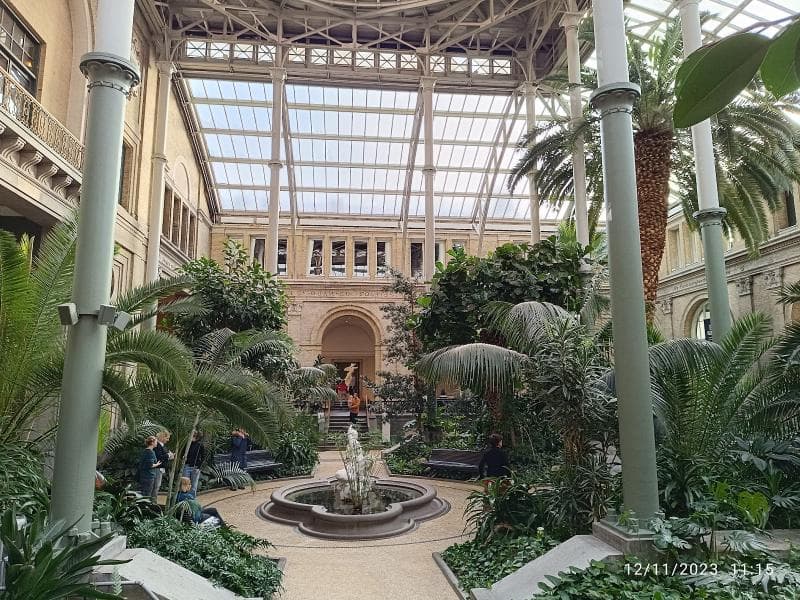
One of the most compelling aspects of the Roman collection is Carl Jacobsen's relentless pursuit of documenting the Roman emperors through their likenesses. Imagine standing amidst a lineage of rulers, each marble face telling a story of power, intrigue, and the weight of an empire. The museum's collection includes rare and fine portraits, such as that of Caligula, which offer a vivid connection to the personalities of ancient Rome. Beyond the imperial portraits, the collection also features a significant array of Palmyrene portraits, providing a glimpse into the diverse cultures that thrived under Roman influence. The Glyptotek's captivating blend of historical artistry is housed within a stunning architectural setting, famously featuring a sub-tropical winter garden with towering palm trees and a peaceful fountain, which connects the museum's different wings and offers a tranquil respite.
Visitor Perspective
Exploring the Roman Sculptures at Ny Carlsberg Glyptotek is an immersive experience. The sheer volume and quality of the collection mean that every visit can uncover new details and perspectives. When planning your visit, it is important to note that the museum's collection of Greek and Roman Sculpture is undergoing rearrangement until October 2026. This means that some artworks may be temporarily unavailable, and certain galleries might be closed to the public. Despite these temporary changes, the opportunity to witness humanity's eternal dialogue with perfection, captured in stone over centuries, remains unparalleled. Allow ample time, perhaps two to three hours, to fully appreciate the extensive collections. The Glyptotek is conveniently located at Dantes Plads 7, a short walk from Copenhagen Central Station and Tivoli Gardens, making it easily accessible for curious travelers.
Coordinates: 12.571944444444, 55.6725
View on Google Maps💬 How Travelers Describe This Place
Based on community votes
Beautiful
995Interesting
839Must See
603Unique
388Photogenic
289
Traveler Stories
Discover memorable experiences shared by travelers who have visited this place.
No traveler stories yet.
Be the first traveler to share what made this place memorable.

Tour
By
Spot
Discover amazing places around the world. Your journey starts here.
Explore
© 2026 TourBySpot. All rights reserved.