Roman Sculpture Hall
Split, Croatia
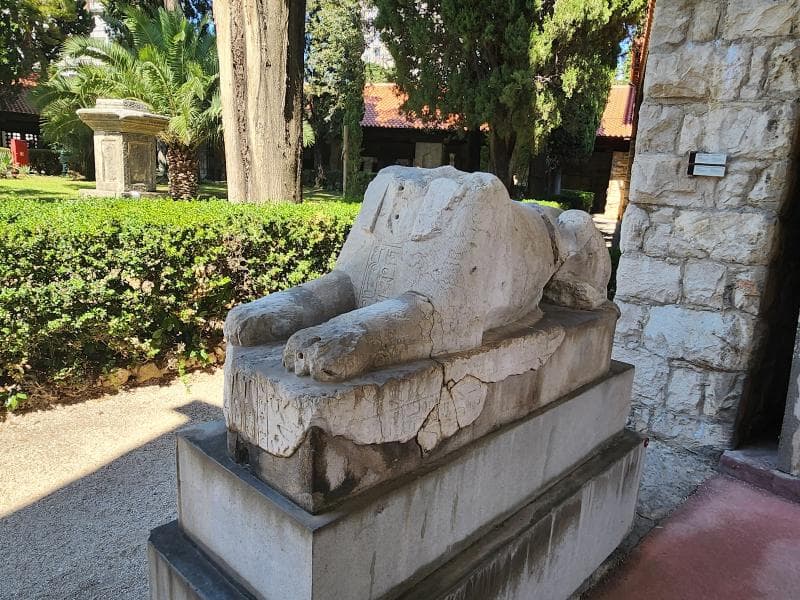
Discover the Roman Sculpture Hall at Split Archaeological Museum, Croatia's oldest museum. Explore ancient Roman artifacts, sarcophagi, and imperial busts from Salona, Split, Croatia.
Overview
Step into the rich tapestry of ancient history at the Roman Sculpture Hall, a significant part of the Archaeological Museum in Split, Croatia. As Croatia's oldest museum, founded in 1820, this esteemed institution safeguards a remarkable collection of approximately 150,000 artifacts, spanning epochs from prehistoric times through Greek colonization, the Roman Provincial era, Early Christian period, and the early Middle Ages. The Roman Sculpture Hall itself is primarily encompassed within the museum's Roman Provincial Collection, which showcases monumental stone sculptures, intricate reliefs, and epigraphic monuments that tell the story of Roman life in Dalmatia. Most of these invaluable finds originate from the nearby ancient Roman city of Salona, once the capital of the Roman province of Dalmatia, as well as from other significant sites like Narona, Asseria, and Issa.
The museum building, an architectural marvel itself, was constructed between 1912 and 1914, providing a grand setting for these historical treasures. Visitors will discover a captivating array of Roman statuary displayed both within the museum's Great Hall and in its serene outdoor lapidarium, an arcaded garden where stone monuments are thoughtfully arranged. Located conveniently at Zrinsko-Frankopanska 25, the museum offers a profound journey into the past, just a short walk from Split's bustling city center and Diocletian's Palace.
History & Cultural Background
The genesis of the Split Archaeological Museum dates back to 1820, following an inspiring visit by Emperor Francis I in 1818. During his tour, the Emperor was captivated by the remnants of Diocletian's Palace and the wealth of Roman monuments in Solin, which spurred the establishment of this vital cultural institution. The museum's core mission has always revolved around extensive archaeological research, particularly focused on Salona, which served as the Roman administrative and cultural heart of the region.
The Roman Provincial Collection, which forms the heart of the Roman Sculpture Hall, was officially established as an independent unit in 1984 and received its current designation in 1993. This collection vividly illustrates the period when Dalmatia was firmly integrated into the Roman Empire, a process solidified after the Great Illyrian Revolt was suppressed in the 1st century. The region's deep Roman roots are further highlighted by figures like Emperor Diocletian, who was himself an ethnic Illyrian from Dalmatia and ruled from 284 to 305 AD. These sculptures and artifacts offer tangible connections to the lives, beliefs, and artistic expressions of people during a pivotal era of Roman dominance in this part of the Adriatic.
What Makes It Special
The Roman Sculpture Hall stands out for its exceptional display of Roman artistry and engineering. Among its most compelling features are the thousands of stone inscriptions from Salona, a collection of immense historical value. These stone records, alongside the many sculptures, offer intimate glimpses into the daily lives, societal structures, religious practices, and even the leisure activities of the Roman inhabitants of Dalmatia.
Highlights of the collection include meticulously crafted busts of Roman emperors, such as a striking bust of Emperor Trajan that was famously remade from an earlier bust of Emperor Domitian, showcasing the practice of damnatio memoriae and artistic repurposing in the Roman world. Visitors can also admire grand sarcophagi depicting mythological scenes, like the Calydonian boar hunt, or poignant memorials to individuals like the spouses Attia Valeria and Valerius Dinens. Monumental statues, such as that of the goddess Minerva, further underscore the artistic prowess and religious devotion of the time.
A particularly atmospheric aspect of the museum is its lapidarium – an outdoor, arcaded gallery that wraps around the main building. This space provides a sheltered environment for large stone items, including sarcophagi, tomb headstones, and architectural fragments, creating a uniquely immersive experience. The current 'Medusa Gaze' exhibition further enriches the experience, featuring monumental Roman works and the largest sarcophagus ever found on the eastern Adriatic coast, all presented in an inclusive way for blind and visually impaired visitors.
Stories, Fun Facts & Local Details
The history of the museum itself is rich with local flavor. As early as the 16th century, the Split humanist Dominik Papalic began to gather ancient writing tablets from the ruins of Salona in his own home, essentially establishing a precursor to the modern museum. Later, the dedicated Catholic priest and archaeologist Frane Bulić served as the museum's director for over fifty years, starting in 1884, and was instrumental in its development and global recognition. His passion for archaeology helped uncover much of the Roman heritage we see today.
The Roman Provincial Collection alone boasts over seventeen thousand objects, each with its own story waiting to be discovered. Imagine studying Roman-era tomb headstones, some over 2,000 years old, that bear the carved portraits of families from Salona – weathered by time, yet still conveying a sense of individual identity and ancient lives. A delightful local detail that captures the heart of Split's connection to the sea is a quirky tradition: some visitors gently press the tesserae of a battered 3rd-century ship mosaic, believing it brings good luck to fishermen. These small touches connect the grand narratives of empire to the everyday hopes and customs of the local people.
Visitor Perspective
Visiting the Roman Sculpture Hall and the broader Archaeological Museum in Split typically takes between one to two hours, allowing ample time to appreciate its extensive collections. The museum's proximity to Diocletian's Palace and Split's Old Town makes it an easily accessible and rewarding stop for any traveler interested in history. The outdoor lapidarium, with its arcaded design, not only provides a stunning display of sculptures but also offers a welcome respite from the summer heat or unexpected rain showers.
The museum is particularly appealing to history buffs and archaeology enthusiasts, providing clear bilingual labels (Croatian and English) for many of its exhibits to enhance understanding. While photography might not be permitted inside all exhibition halls, the outdoor displays offer fantastic opportunities for capturing memories. Visitors are encouraged to consider the profound connection between the museum's artifacts and the nearby Diocletian's Palace, understanding how these individual pieces contribute to the larger story of Roman Split and Dalmatia. The museum offers a deep dive into the region's Roman past, complementing any exploration of the city's ancient core.
Coordinates: 16.434876, 43.515809
View on Google Maps💬 How Travelers Describe This Place
Based on community votes
Must See
684Beautiful
363Photogenic
302Unique
250Interesting
88
Traveler Stories
Discover memorable experiences shared by travelers who have visited this place.
No traveler stories yet.
Be the first traveler to share what made this place memorable.

Tour
By
Spot
Discover amazing places around the world. Your journey starts here.
Explore
© 2026 TourBySpot. All rights reserved.