Rizal Monument
Manila, Philippines
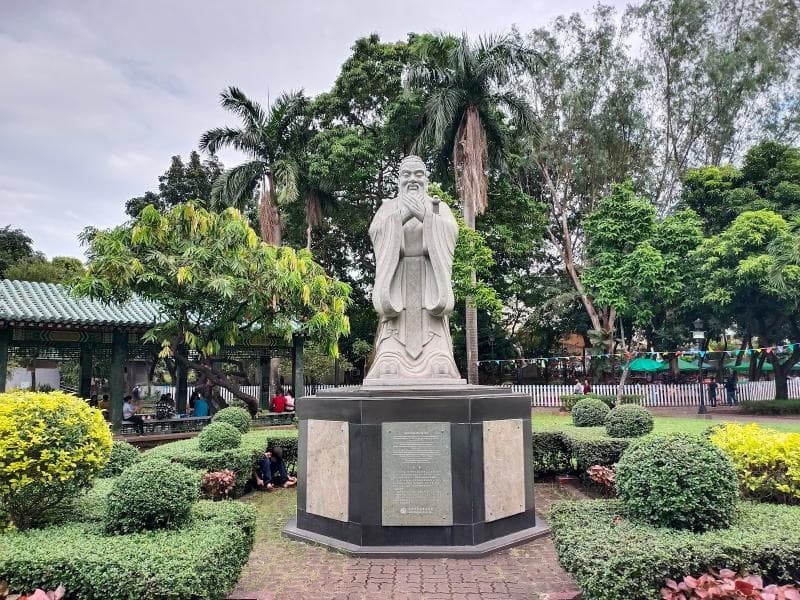
Explore the Rizal Monument in Manila, Philippines, a powerful symbol honoring national hero Dr. José Rizal. Discover its history, symbolism, and cultural impact.
Overview
The Rizal Monument, originally known as 'Motto Stella' (Latin for 'guiding star'), is a profound symbol of Philippine nationalism located within Rizal Park (also known as Luneta Park) in Manila, Philippines. This iconic memorial stands as a tribute to Dr. José Rizal, the country's national hero, patriot, writer, and martyr. It features a bronze sculpture of Rizal, set before a towering granite obelisk, atop a stone base that enshrines his remains.
Situated in the heart of Manila, near the site of Rizal's execution, the monument is continuously guarded by members of the Philippine Marine Corps, a tradition that includes a daily changing of the guard ceremony. It serves as a central point for national ceremonies, including wreath-laying by visiting dignitaries, and marks the Philippines' Kilometer Zero, the reference point for all road distances across the country.
History & Cultural Background
The story of the Rizal Monument began on September 28, 1901, when the United States Philippine Commission approved Act No. 243, authorizing the use of public land in Luneta for a monument to José Rizal. An international design competition was launched between 1905 and 1907, attracting sculptors from Europe and the United States. While Italian sculptor Carlo Nicoli's design initially won first prize, the contract was eventually awarded to Swiss sculptor Richard Kissling for his 'Motto Stella' design.
Rizal was executed by a firing squad at Bagumbayan Field (the area now known as Rizal Park) on December 30, 1896, following his conviction by Spanish authorities for rebellion, sedition, and conspiracy. After his execution, his body was secretly buried in an unmarked grave at Paco Cemetery. His sister, Narcisa, later located and marked his grave with his initials in reverse. His remains were exhumed in 1898 and eventually reinterred within the monument's base on December 30, 1912, ahead of its official unveiling on December 30, 1913, on the 17th anniversary of his death.
The monument was declared a National Cultural Treasure by the National Museum of the Philippines and a National Monument by the National Historical Commission of the Philippines during its centenary in 2013.
What Makes It Special
The Rizal Monument is more than just a statue; it's a mausoleum holding the remains of a national hero, making it a sacred site for Filipinos. The monument's design by Richard Kissling features Rizal in an overcoat, holding a book, commonly understood to represent his influential novels, 'Noli Me Tángere' and 'El filibusterismo', which galvanized the Philippine revolution against Spanish rule. The obelisk behind him is often seen as a nod to Rizal's Masonic background, while the three stars on it symbolize Luzon, Visayas, and Mindanao, representing the Philippines' main island groups.
Allegorical figures on the base, such as a mother rearing her child and two young boys reading, emphasize the importance of family and education—values central to Rizal's teachings and vision for his country. Other figures, like leaves and a pot, are said to symbolize the nation's natural resources.
Stories, Fun Facts & Local Details
Interestingly, the monument has seen some changes over time. In 1961, during Rizal's birth centenary, a stainless steel pylon was superimposed over the granite obelisk, increasing its height. This modification, however, faced widespread criticism for being incompatible with the original design and was later removed in 1963.
The Rizal Monument's significance is such that replicas exist in other parts of the world, including Madrid, Spain, and Jinjiang City, China, further highlighting Rizal's global legacy and the deep ties between the Philippines and these nations. The exact spot of Rizal's execution, approximately 100 meters north-northwest of the monument, is marked by life-size dioramas depicting his final moments, offering a poignant visual narrative of his martyrdom. A black granite wall inscribed with Rizal's 'Mi Último Adiós' (My Last Farewell), the poem he wrote before his execution, also stands at the execution site.
Visitor Perspective
Visiting the Rizal Monument offers a deeply moving experience, allowing one to connect with Philippine history and the enduring legacy of its national hero. The monument stands proudly within Rizal Park, a sprawling urban oasis that provides a serene environment for reflection and remembrance.
Travelers often express a sense of national pride and reverence when standing before this landmark. The park itself is a vibrant public space where locals and tourists alike gather, relax, and learn. The grandeur of the monument, its historical context, and the solemnity of the guard add to the profound impact of a visit. It's an opportunity to walk in the footsteps of history and understand the sacrifices made for Philippine independence.
Coordinates: 120.976694, 14.581669
View on Google Maps💬 How Travelers Describe This Place
Based on community votes
Unique
847Beautiful
685Interesting
513Photogenic
482Must See
433
Traveler Stories
Discover memorable experiences shared by travelers who have visited this place.
No traveler stories yet.
Be the first traveler to share what made this place memorable.

Tour
By
Spot
Discover amazing places around the world. Your journey starts here.
Explore
© 2026 TourBySpot. All rights reserved.