Riverside Walkways
Skopje, North Macedonia
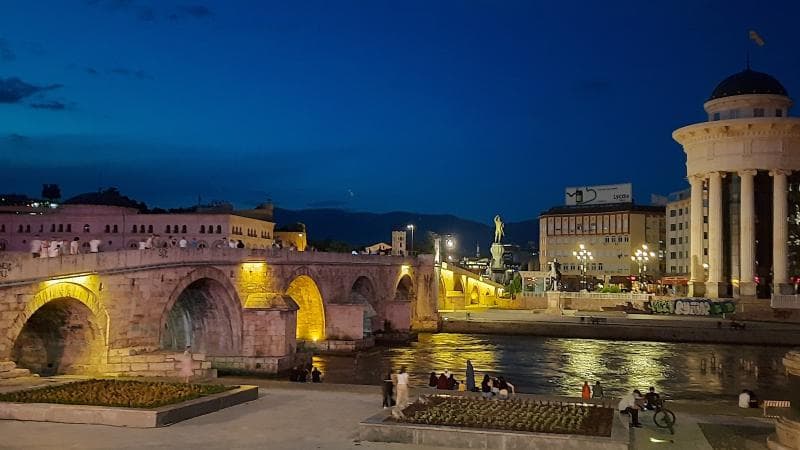
Explore the Riverside Walkways and iconic Stone Bridge in Skopje, North Macedonia. Discover centuries of history, cultural significance, and stunning Vardar River views.
Overview
The Riverside Walkways of Skopje offer a captivating journey along the Vardar River, seamlessly integrated with the grandeur of the historic Stone Bridge. These promenades are not merely paths but a vibrant artery of the city, connecting the bustling modern Macedonia Square with the ancient charm of the Old Bazaar. As you stroll along the stone-paved banks, you are enveloped in a unique atmosphere where centuries of history converge with contemporary urban life. It's a place where locals gather, artists perform, and visitors immerse themselves in the heart of North Macedonia's capital, all while enjoying picturesque views of the river and its iconic crossings. These walkways serve as a central public space, inviting exploration, relaxation, and a deeper understanding of Skopje's multifaceted character.
History & Cultural Background
The story of Skopje's Riverside Walkways is inextricably linked to the venerable Stone Bridge, or 'Kamen Most', which proudly spans the Vardar River. While the walkways themselves are a more modern development facilitating urban enjoyment, they stand on the historical foundations shaped by this enduring landmark. The Stone Bridge, a potent symbol found on Skopje's coat of arms and flag, traces its origins to Roman foundations, though its current form largely dates to the Ottoman period. It was constructed under the patronage of Sultan Mehmed II the Conqueror between 1451 and 1469, featuring sturdy stone blocks and 12 semicircular arches. Over the centuries, the bridge has bravely withstood numerous trials, including a devastating earthquake in 1555 that heavily damaged its pillars, only to be meticulously repaired within the same year. It has also witnessed significant historical events, such as the execution of the rebel leader Karposh in 1689. Remarkably, it was saved from planned destruction by retreating German forces at the close of World War II, a testament to its profound local significance. The walkways, therefore, inherit this rich tapestry of resilience and historical narrative, enhancing the visitor's connection to Skopje's past while experiencing its present vitality.
What Makes It Special
What truly distinguishes the Riverside Walkways is their unique position as a cultural and visual nexus within Skopje. They offer unparalleled perspectives of the Stone Bridge, allowing visitors to admire its robust Ottoman architecture and the flow of the Vardar River beneath. The promenades are beautifully landscaped and lined with cafes, parks, and spots ideal for outdoor enjoyment. From these vantage points, one can gaze upon the modern Macedonia Square on one bank and the historic Old Bazaar and Kale Fortress on the other, observing the striking contrasts that define Skopje's urban fabric. At night, the walkways and the Stone Bridge transform into an enchanting spectacle, illuminated with lights that reflect dramatically on the river's surface, creating a magical atmosphere for evening strolls. Furthermore, the promenades provide a crucial pedestrian link, allowing easy access between these distinct districts, essentially bridging the 'Ottoman' and 'modern' sides of the city.
Stories, Fun Facts & Local Details
The Riverside Walkways and the Stone Bridge are steeped in local lore and fascinating details that add depth to their appeal. The bridge itself is often seen as a powerful metaphor for Skopje's complex identity, symbolizing the division and connection between its diverse historical and cultural components – 'Ottoman' and 'modern', 'historic' and 'socialist', even 'Albanian' and 'Macedonian'. This duality is palpable as one crosses from the Ottoman-era Old Bazaar to the more contemporary European-style square. The recent 'Skopje 2014' project dramatically reshaped the riverfront, introducing numerous statues and monumental architecture, which while controversial, certainly add to the unique visual character of the walkways. Locals frequently use these walkways for their daily routines, from morning jogs to evening coffee breaks at the riverside cafes. The area around the Stone Bridge also becomes a focal point for cultural events, notably during the Skopje Summer Festival, when performances and gatherings enliven the banks of the Vardar, making it a vibrant meeting place for both residents and tourists.
Visitor Perspective
For any curious traveler, the Riverside Walkways around the Stone Bridge offer a quintessential Skopje experience. The pedestrian-only nature of the bridge and the adjacent promenades ensures a relaxed and enjoyable exploration, free from vehicular traffic. It is an accessible and central location, making it easy to combine a stroll with visits to other major attractions like Macedonia Square, the Old Bazaar, and nearby museums. Many visitors find the best times for a leisurely walk are during sunset or in the evening, when the bridge and surrounding monuments are beautifully illuminated, creating exceptional photo opportunities. Taking a moment to pause mid-bridge offers panoramic views upstream towards Mount Vodno and downstream towards the city center, providing a comprehensive visual understanding of Skopje's layout. The gentle hum of city life, coupled with the historical resonance of the bridge and the flowing river, makes for a truly immersive and memorable encounter with the soul of Skopje.
Coordinates: 21.433071, 41.996992
View on Google Maps💬 How Travelers Describe This Place
Based on community votes
Must See
873Photogenic
521Unique
477Beautiful
422Interesting
157
Traveler Stories
Discover memorable experiences shared by travelers who have visited this place.
No traveler stories yet.
Be the first traveler to share what made this place memorable.

Tour
By
Spot
Discover amazing places around the world. Your journey starts here.
Explore
© 2026 TourBySpot. All rights reserved.