Riverfront Exterior
Skopje, North Macedonia
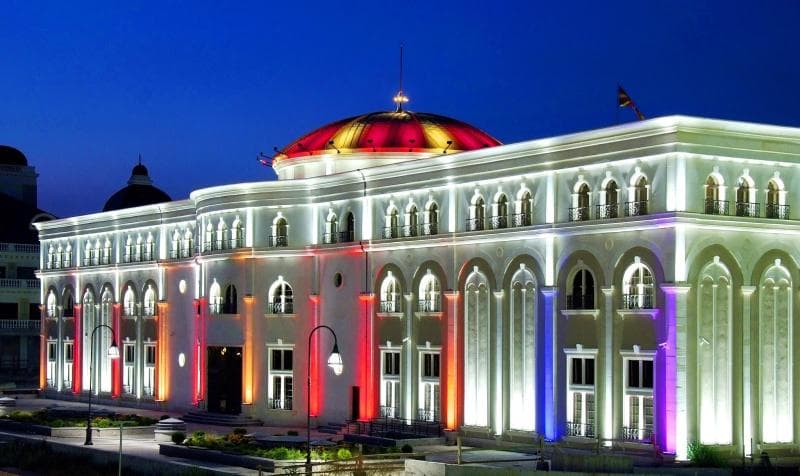
Explore the majestic Riverfront Exterior of the Museum of the Macedonian Struggle in Skopje, North Macedonia. Discover its Neo-Baroque architecture along the Vardar River.
Overview
The Riverfront Exterior of the Museum of the Macedonian Struggle in Skopje, North Macedonia, offers a striking visual introduction to this significant national institution. Situated prominently along the Vardar River, the museum's exterior is a testament to the city's architectural ambitions and its deep connection to national identity. Its Neo-Baroque facade, part of the broader 'Skopje 2014' urban redesign project, immediately draws the eye, standing as a monumental presence in the heart of the capital. The building's design, characterized by classical elements, intricate detailing, and a distinctive dome, positions it as a key landmark amidst Skopje's revitalized riverfront landscape. It is not merely a structure but a visual narrative, embodying the spirit of the Macedonian struggle for independence and statehood that its interior chronicles.
As visitors approach the museum from the riverbanks or cross the nearby Stone Bridge, they are greeted by an edifice that evokes historical grandeur, though it is a relatively modern construction. The museum's strategic location ensures its visibility and symbolic importance, anchoring a cultural cluster that includes the Archaeological Museum of North Macedonia and the Holocaust Memorial Center.
History & Cultural Background
The Museum of the Macedonian Struggle officially opened its doors on September 8, 2011, coinciding with the 20th anniversary of North Macedonia's declaration of independence from Yugoslavia. Construction of the museum began in 2008, as a central component of the controversial yet transformative 'Skopje 2014' project. This urban development initiative aimed to re-sculpt Skopje's city center with new monuments, neoclassical facades, and statues, fostering a sense of national pride and historical continuity.
The Riverfront Exterior is a prime example of this architectural philosophy. Designed by architect Zoran Jordanovski, the building consciously employs a Neo-Baroque style, characterized by its elaborate ornamentation, grand scale, and classical proportions. This choice of architecture was intended to project a timeless and venerable image, linking contemporary Skopje to a perceived historical European aesthetic. The exterior, therefore, serves a dual purpose: it houses a profound historical narrative within and acts as a significant part of the city's own evolving story and visual identity. The intention was to create a 'new building dressed in the language of old power,' reflecting the intense national struggle for statehood that the museum represents.
What Makes It Special
What makes the Riverfront Exterior particularly special is its dramatic architectural statement and its contextual relationship with the Vardar River. The museum's facade, with its stately columns, ornate carvings, and central dome, reflects in the river's waters, creating a picturesque and imposing tableau. This deliberate design choice transforms the building from a mere museum into an integral part of Skopje's urban fabric and riverside panorama.
The exterior's grandeur is accentuated by its illumination at night, making it a prominent feature of the Skopje skyline and contributing to the city's nocturnal beauty. It is surrounded by other monumental structures, including the Stone Bridge, further cementing its role in a concentrated area of cultural and historical significance. The blend of newly constructed classical revival architecture along the riverfront presents a unique and somewhat surreal urban experience, where history and contemporary design converge in a bold declaration of national heritage.
Stories, Fun Facts & Local Details
The creation of the museum's exterior, as part of the 'Skopje 2014' project, has generated much discussion and debate among locals and international observers alike. The project transformed the city center, adding numerous statues, fountains, and buildings in classical styles. While some embrace this architectural renaissance as a powerful symbol of national identity and pride, others view it with a critical eye, sparking conversations about historical representation and urban development.
A fun fact is that the museum's building, despite its historic appearance, was constructed in the 21st century, creating a deliberate anachronism that invites visitors to ponder the relationship between past and present. The exterior's intricate details, from the sculptures adorning its facade to the design of its windows, are carefully crafted to evoke a sense of the historical periods and figures celebrated within its walls. This careful attention to external aesthetics ensures that the museum tells a part of its story even before visitors step inside, engaging them with the narrative of Macedonia's arduous journey to independence.
Visitor Perspective
For visitors, the Riverfront Exterior offers an unforgettable first impression of the Museum of the Macedonian Struggle. Approaching it, particularly by walking along the Vardar River or across the Stone Bridge, provides a majestic view that underscores its importance. The building is a popular spot for photography, with its grand facade and river setting offering numerous picturesque angles.
The exterior's imposing presence prepares visitors for the immersive historical experience awaiting them inside, where 13 permanent exhibitions chronicle the period from Ottoman rule to the declaration of independence. It encourages contemplation of the nation's past and present, serving as a gateway to understanding the complex tapestry of Macedonian history. The museum's accessibility and its integration into a walkable cultural zone make viewing its riverfront exterior a natural and rewarding part of exploring Skopje's vibrant city center.
Coordinates: 21.43306, 41.99806
View on Google Maps💬 How Travelers Describe This Place
Based on community votes
Interesting
799Must See
639Beautiful
526Unique
181Photogenic
30
Traveler Stories
Discover memorable experiences shared by travelers who have visited this place.
No traveler stories yet.
Be the first traveler to share what made this place memorable.

Tour
By
Spot
Discover amazing places around the world. Your journey starts here.
Explore
© 2026 TourBySpot. All rights reserved.