Rialto Bridge
Venice, Italy
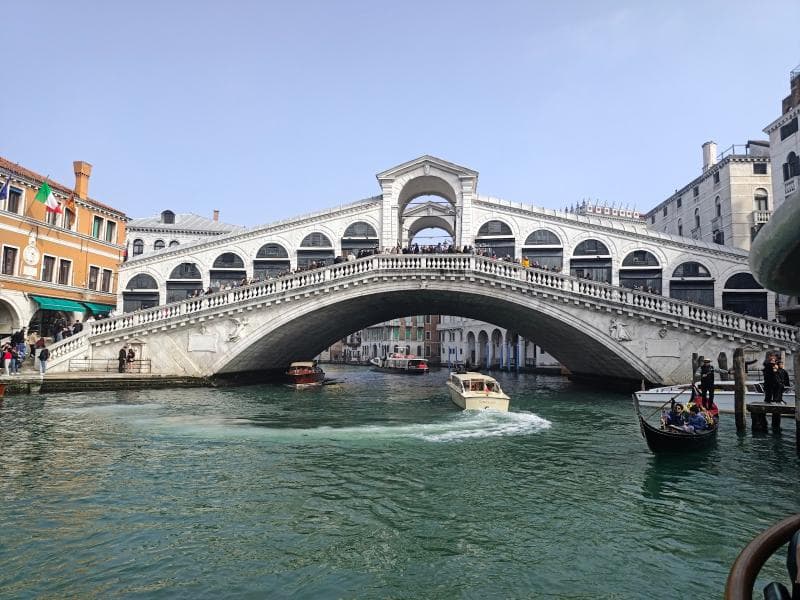
Explore Venice's iconic Rialto Bridge, the oldest and most famous bridge spanning the Grand Canal. Discover its rich history, unique Renaissance architecture, and bustling marketplace in Italy.
Overview
The Rialto Bridge, or Ponte di Rialto as it's known locally, stands as a magnificent stone archway gracefully spanning the Grand Canal in Venice, Italy. As the oldest of the four bridges to cross Venice's primary waterway, it connects the bustling districts of San Marco and San Polo, serving not only as a vital pedestrian link but also as an enduring symbol of the city's rich history and architectural prowess.
More than just a crossing, the Rialto Bridge is a destination in itself. Its unique design incorporates two inclined ramps lined with shops, leading to a central portico. This design transforms the bridge into a vibrant marketplace, offering visitors a chance to browse local goods while taking in picturesque views of gondolas and vaporettos navigating the Grand Canal below.
History & Cultural Background
The story of the Rialto Bridge is one of evolution and resilience. The first crossing at this narrow point of the Grand Canal was a pontoon bridge built in 1173, initially known as the Ponte della Moneta. As Venice's commercial heart, the Rialto market, grew in importance, a more substantial connection was needed. This led to the construction of a wooden bridge in 1255, which could be raised to allow tall ships to pass.
However, these earlier wooden structures proved susceptible to the ravages of time, fire, and crowds. The wooden bridge collapsed multiple times, famously in 1444 under the weight of onlookers during a boat parade, and again in 1524. The need for a permanent, durable solution became clear. In the late 16th century, after years of debate and even rejecting proposals from renowned architects like Michelangelo and Andrea Palladio, the Venetian Republic commissioned Antonio da Ponte to design a stone bridge. Construction began in 1588 and was completed in a remarkably swift three years, in 1591. For over 250 years, until 1854, this architectural marvel was the only fixed crossing point over the Grand Canal.
What Makes It Special
The Rialto Bridge is celebrated as an extraordinary achievement of Renaissance architecture and engineering. Its single stone arch, spanning approximately 28 to 31.8 meters (92 to 104.3 feet) and rising about 7 meters (23 feet) high, was considered audacious for its time. To support this massive structure in Venice's soft, alluvial soil, an extensive foundation of 6,000 to 12,000 timber piles was driven deep into the lagoon bed beneath each abutment.
Its most distinctive feature, beyond its impressive span, is the integration of commercial spaces directly onto the bridge. Two rows of shops line the ascending ramps, with a wider central passage between them. This design not only made the bridge a bustling hub of commerce but also generated rental income that contributed to its maintenance. Adorned with stone reliefs depicting figures like St. Mark and St. Theodore, and the Annunciation, the bridge is itself a work of art, defying early critics who predicted its collapse.
Stories, Fun Facts & Local Details
Beyond its tangible structure, the Rialto Bridge is steeped in fascinating lore and history. Soon after its completion, in 1594, it was hailed as the 'eighth wonder of the world,' a testament to its grandeur and the engineering feat it represented. It has inspired countless artists and writers, famously appearing in Vittore Carpaccio's painting 'Miracle of the Relic of the Cross at the Ponte di Rialto.'
One popular legend recounts a 'devil's pact' during its construction. The story suggests that architect Antonio da Ponte, facing repeated challenges, made a deal with the devil: the bridge would be completed if the devil could claim the soul of the first living being to cross it. Da Ponte, in a clever trick, reportedly sent a rooster across first. However, other versions of the tale claim the devil outsmarted him, ensuring the first to cross was da Ponte's pregnant wife, whose unborn child's spirit is said to still haunt the bridge.
Historically, the bridge was not merely a crossing but the very heart of Venetian trade, lined with stalls selling everything from spices and cloth to jewelry, embodying the city's mercantile spirit for centuries.
Visitor Perspective
Today, the Rialto Bridge remains one of Venice's most sought-after attractions. Its central location makes it a natural focal point for exploring the city. From the bridge's panoramic viewpoints, visitors can capture iconic photographs of the Grand Canal, with gondolas gliding under the arch and historic palaces lining the banks.
Be prepared for crowds, especially during peak hours and tourist seasons, as many seek to experience its charm and soak in the views. For a more serene experience and clearer photographic opportunities, consider visiting shortly after sunrise or in the late evening after dinner. The bridge is also a major stop for the city's vaporettos, making it easily accessible. Remember to explore the nearby Rialto Market, a vibrant hub of fresh produce and local life, offering a deeper dive into Venetian culture just steps away from the bridge.
Coordinates: 12.3359, 45.438
View on Google Maps💬 How Travelers Describe This Place
Based on community votes
Photogenic
836Must See
287Interesting
255Beautiful
231Unique
86
Traveler Stories
Discover memorable experiences shared by travelers who have visited this place.
No traveler stories yet.
Be the first traveler to share what made this place memorable.

Tour
By
Spot
Discover amazing places around the world. Your journey starts here.
Explore
© 2026 TourBySpot. All rights reserved.