Renaissance paintings
Milan, Italy
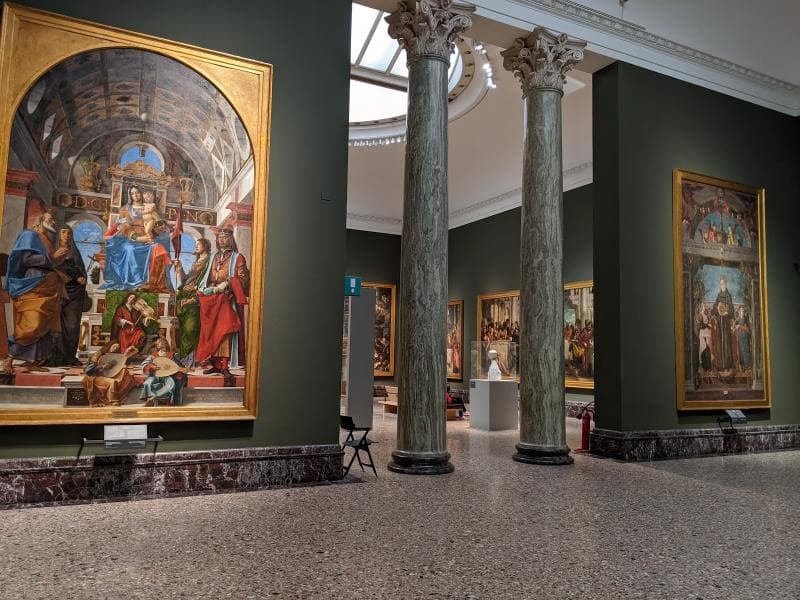
Discover exquisite Renaissance paintings at the Pinacoteca di Brera in Milan, Italy. Explore masterpieces by Mantegna, Raphael, Bellini, and Piero della Francesca.
Overview
Nestled in the heart of Milan, Italy, the Pinacoteca di Brera is a world-renowned art gallery, home to an exceptional collection of Italian masterpieces spanning from the 13th to the 20th century. While its entire collection is vast, the Renaissance paintings section stands as a magnificent testament to Italy's artistic golden age, offering a profound journey through the period's iconic styles and narratives.
This celebrated institution, housed within the grand Palazzo Brera, serves not only as a museum but also as a cultural beacon, sharing its historic premises with the esteemed Brera Academy of Fine Arts. A visit here allows one to immerse themselves in a curated world of beauty, showcasing artworks originally intended for churches and convents across central and northern Italy.
History & Cultural Background
The story of the Pinacoteca di Brera is deeply intertwined with Milan's rich history. The impressive building itself began its life as a 14th-century monastery for the Humiliati religious order. It later transformed into a Jesuit college in the 16th and 17th centuries, undergoing significant architectural development.
The seeds of the Pinacoteca were sown in 1776, when Maria Theresa of Austria established an academy of fine arts on the site, accumulating a collection for educational purposes. However, it was Napoleon I, in 1809, who officially founded the Pinacoteca di Brera as a public museum. Under his decree, artworks from suppressed churches and convents across Northern Italy were gathered, forming the core of the museum's initial collection and transforming it into a major repository of Italian art.
What Makes It Special
The Renaissance paintings at the Pinacoteca di Brera are celebrated for their extraordinary quality and significant historical value. The museum boasts an especially rich collection of Venetian and Lombard paintings from this era, offering a comprehensive look at the diverse artistic currents that flourished across Italy.
Among the many treasures, visitors are particularly drawn to Andrea Mantegna's haunting 'Lamentation over the Dead Christ', renowned for its innovative use of foreshortening and intense emotional impact. Another masterpiece is Raphael's 'The Marriage of the Virgin', a pivotal work from his early career, admired for its perspective and harmony. Piero della Francesca's 'Madonna and Child with Saints, Angels and Federico da Montefeltro', also known as the 'Montefeltro Altarpiece', captivates with its geometric precision and ethereal quality. Giovanni Bellini's 'Pietà' and 'St. Mark Preaching in Alexandria' further enrich the Renaissance display, showcasing the Venetian School's vibrant storytelling and mastery of color.
What also makes the Brera special is its unique approach to art preservation; visitors can sometimes observe art restoration work through glass-walled laboratories, offering a rare glimpse into the meticulous care given to these ancient artworks.
Stories, Fun Facts & Local Details
Walking through the Brera's Renaissance rooms feels like stepping into a storybook of Italian art. The museum's origins, born from Napoleon's ambition to create a museum rivaling the Louvre, add a layer of imperial grandeur to its narrative. Indeed, a prominent statue of Napoleon by Antonio Canova stands proudly in the central courtyard, welcoming visitors.
Many of the Renaissance works on display were originally created as altarpieces for religious institutions. Imagine these paintings, once vibrant focal points in dim churches, now conserved and presented for public admiration, allowing a direct connection to the spiritual and cultural life of centuries past. The chronological and geographical arrangement of the collection across 38 rooms guides you naturally through the evolution of Italian art, making the viewing experience both educational and engaging.
The Brera district itself, where the Pinacoteca resides, takes its name from the Old Lombardic word 'braida', meaning a cleared land expanse, reflecting its historical transformation from open space to a bustling cultural hub. Beyond the paintings, don't miss the tranquil botanical garden adjacent to the museum, a peaceful oasis that offers a moment of reflection amidst the artistic splendor.
Visitor Perspective
For the curious traveler, the Renaissance paintings at the Pinacoteca di Brera offer an experience that is both intellectually stimulating and deeply moving. Unlike some of Europe's more crowded museums, the Brera often allows for a more intimate engagement with the artworks, enabling you to linger and absorb the details without feeling rushed.
The carefully curated layout provides a clear narrative, guiding you through the developments and regional nuances of Renaissance art. Spending at least two to three hours here is recommended to truly appreciate the breadth and depth of the collection. It is an opportunity to have a 'quiet conversation' with some of the greatest artistic minds in history, fostering an appreciation that transcends mere viewing. The sheer quality of the masterpieces, coupled with the historical context, makes this section of the Pinacoteca an unforgettable highlight of any visit to Milan.
Coordinates: 9.18806, 45.47194
View on Google Maps💬 How Travelers Describe This Place
Based on community votes
Interesting
494Must See
242Photogenic
193Unique
125Beautiful
82
Traveler Stories
Discover memorable experiences shared by travelers who have visited this place.
No traveler stories yet.
Be the first traveler to share what made this place memorable.

Tour
By
Spot
Discover amazing places around the world. Your journey starts here.
Explore
© 2026 TourBySpot. All rights reserved.