Relief “La Marseillaise”
Paris, France
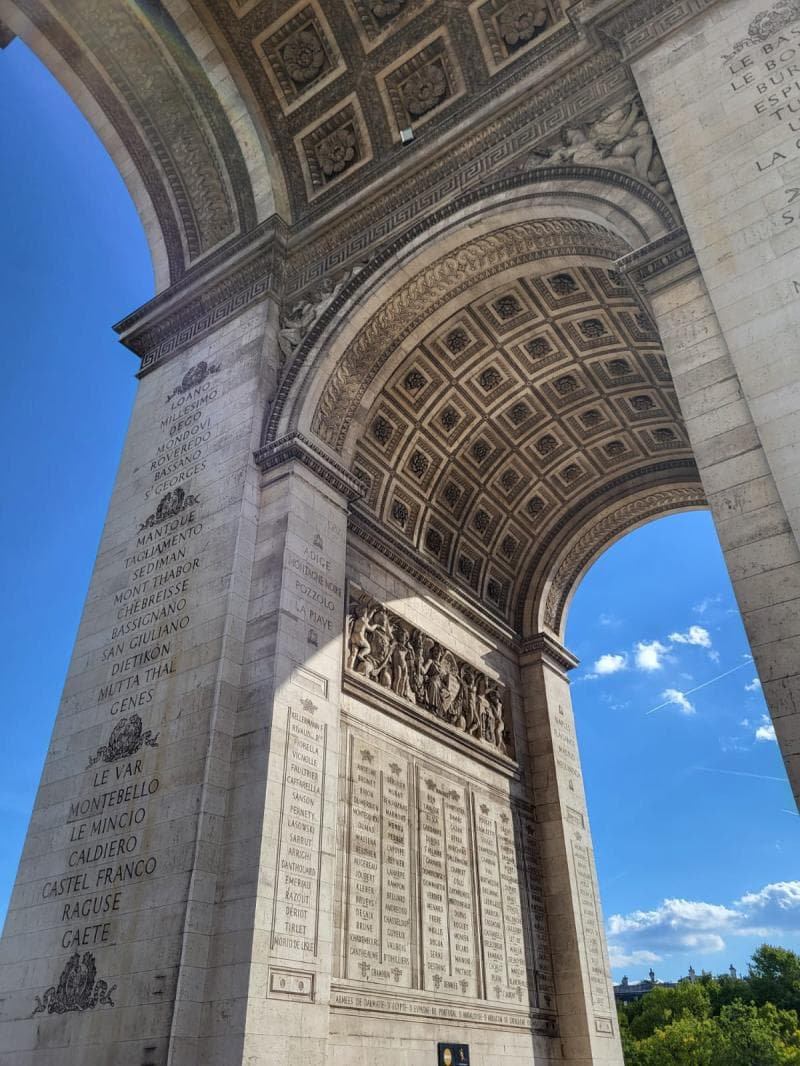
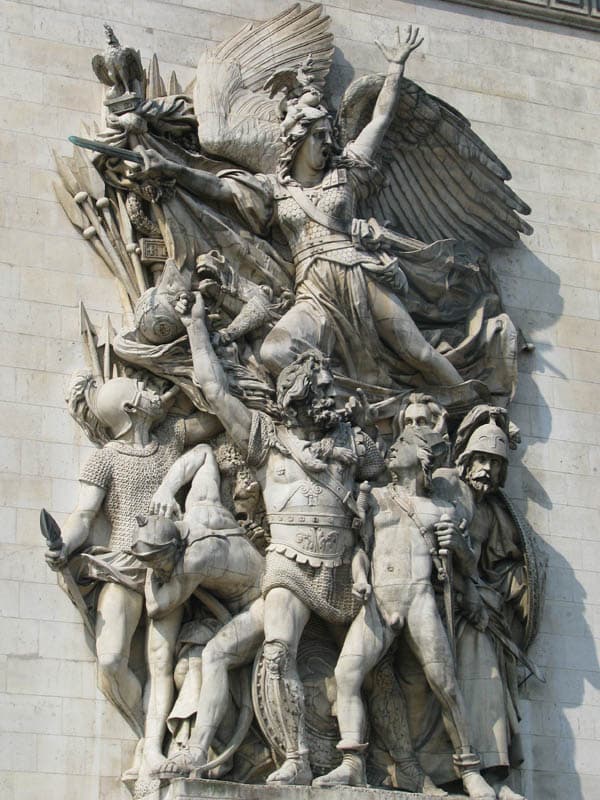
Discover 'La Marseillaise' relief by François Rude on Paris's Arc de Triomphe, a powerful sculpture symbolizing French patriotism and liberty.
Overview
Gracing the iconic Arc de Triomphe in Paris, France, the monumental relief known as ‘La Marseillaise’ is a powerful testament to French patriotism and artistic passion. Officially titled ‘The Departure of the Volunteers of 1792’, this colossal sculpture by François Rude captures a pivotal moment in French history, immortalizing the spirit of the nation's defense. Standing proudly on the east-facing side of the Arc's northern pillar, facing the bustling Champs-Élysées, it is arguably the most famous and dramatically dynamic of the monument's four principal sculptural groups. Its impressive scale, measuring approximately 11.6 meters high, ensures its prominence and enduring impact on all who gaze upon it. More than just a decorative element, ‘La Marseillaise’ serves as a profound visual anthem, embodying the fervor and sacrifice of the French people.
History & Cultural Background
The story of ‘La Marseillaise’ is deeply intertwined with the tumultuous history of 19th-century France. The Arc de Triomphe itself was commissioned by Napoleon in 1806 to commemorate his military victories, but its construction faced interruptions and was finally completed in 1836 under King Louis-Philippe. It was during this period, between 1833 and 1836, that François Rude created this masterpiece.
Rude's relief commemorates the national volunteers who rallied to defend France against the invading forces of the First Coalition in 1792, a critical juncture during the French Revolutionary Wars. This event, which included the significant Battle of Valmy, saw ordinary citizens rise to protect their nascent Republic. The sculpture was commissioned following the July Revolution of 1830, a time when France was navigating the aftermath of political upheaval and seeking symbols of national unity and resilience. Rude chose an allegorical vision, avoiding contemporary costumes and weapons, to give his work a universal dimension, symbolizing the struggle of any people to defend their homeland. Its powerful message resonated so strongly with the revolutionary song 'La Marseillaise' that the relief quickly adopted the nickname, a testament to its emotional connection with the French identity.
What Makes It Special
What sets ‘La Marseillaise’ apart is its extraordinary blend of classical grandeur and fervent Romantic emotion. Unlike the calmer, more classical works of its time, Rude infused his sculpture with intense movement and dramatic expression, making it a hallmark of the Romantic style. The composition is a symphony of human figures, depicted in a heroic, almost antique manner, yet bursting with visceral passion. At its apex, the winged figure of Liberty, also known as the Genius of War or Fatherland, cries out, sword raised, urging the volunteers onward. Her powerful, commanding presence dominates the scene, a personification of the very ideals for which the volunteers fought. Beneath her, a diverse group of soldiers, young and old, some wearing Phrygian caps – an ancient symbol of freedom – surge forward with palpable determination.
The sheer scale of the relief, measuring over 42 feet wide and 26 feet high, amplifies its impact, creating an immersive experience for the viewer. It stands as a powerful narrative carved in stone, telling a story of collective courage and sacrifice that transcends its specific historical moment. The way Rude uses dramatic shadows and vigorous forms truly makes the stone come alive, portraying a 'cinematic surge of movement' that captures the raw energy of France's first citizen army.
Stories, Fun Facts & Local Details
One of the most captivating details of ‘La Marseillaise’ lies in the identity of its leading figure. The allegorical winged woman, so full of spirit and determination, was modeled after Sophie Rude, the sculptor François Rude's own wife. This personal connection adds an intimate layer to the monumental work, showing how a private inspiration could contribute to a public masterpiece embodying national ideals.
The relief's dramatic movement and expressive language were a deliberate departure from the prevailing Neoclassical style of the era, showcasing Rude's unique artistic vision. It was seen as so impactful that it essentially became a visual representation of the national anthem, the 'Marseillaise', solidifying its popular nickname. The artwork's ability to stir public interest and emotion cemented Rude's reputation and left an indelible mark on French art history. Today, a plaster model of the sculpture can be seen in Dijon, Rude's hometown, offering another perspective on this magnificent creation.
Visitor Perspective
Visitors to the Arc de Triomphe are immediately drawn to the commanding presence of ‘La Marseillaise’. Positioned on the east facade, it is one of the first major sculptural groups encountered when approaching from the Champs-Élysées. While the Arc itself is a magnificent tribute to French military history, ‘La Marseillaise’ stands out for its human drama and emotional intensity. To truly appreciate its intricate details and powerful expressions, a closer look from the base of the monument is highly recommended.
Standing before it, one can almost hear the rallying cry of the winged figure and feel the surge of the volunteers. The combination of ancient Roman-inspired architecture of the Arc with the passionate, romantic style of Rude's relief creates a striking contrast that is deeply moving. It serves as a profound reminder of the sacrifices made for liberty and nationhood, inviting contemplation on the enduring themes of courage and national identity. The sheer scale and dynamic composition can be difficult to fully grasp from a distance, making a direct viewing experience all the more rewarding and impactful.
Coordinates: 2.295028, 48.873792
View on Google Maps💬 How Travelers Describe This Place
Based on community votes
Interesting
791Photogenic
514Unique
457Beautiful
252Must See
19
Traveler Stories
Discover memorable experiences shared by travelers who have visited this place.
No traveler stories yet.
Be the first traveler to share what made this place memorable.

Tour
By
Spot
Discover amazing places around the world. Your journey starts here.
Explore
© 2026 TourBySpot. All rights reserved.