Reformation History Exhibits
Geneva, Switzerland
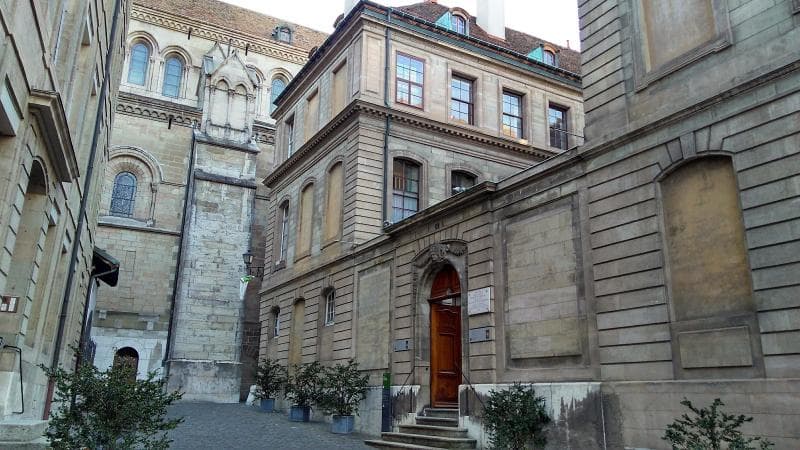
Explore Reformation history at St. Pierre Cathedral and the International Museum of the Reformation in Geneva, Switzerland. Discover Calvin's pulpit and key exhibits.
Overview
St. Pierre Cathedral, majestically perched atop Geneva's Old Town, is far more than just an architectural marvel; it stands as a profound symbol and a central stage for one of history's most transformative movements: the Protestant Reformation. While the cathedral itself bears the indelible marks of this era, serving as the pulpit from which John Calvin preached, the comprehensive 'Reformation History Exhibits' that delve into the broader narrative of Protestantism are primarily housed in the International Museum of the Reformation (MIR), situated just steps away. This museum and the cathedral form a symbiotic pair, offering visitors a holistic journey into Geneva's pivotal role in shaping Western religious and cultural landscapes. The cathedral's austere interior, a direct consequence of Reformation ideals, contrasts with the rich collections of the MIR, together providing an immersive experience of this pivotal historical period.
History & Cultural Background
The history of St. Pierre Cathedral dates back to the 12th century, with its construction beginning around 1160 in the Romanesque style and later incorporating Gothic elements. For centuries, it served as a Roman Catholic cathedral. However, its destiny dramatically shifted in 1535 when Geneva embraced the Protestant Reformation. This transformation was largely influenced by the arrival of Jean Calvin in 1536, who would preach from its pulpit for 23 years, turning Geneva into a key center of Protestant thought and a refuge for reformers across Europe.
The cultural impact of this shift was immediate and visible within the cathedral itself. The Reformers, seeking to strip away what they considered idolatrous Catholic adornments, famously 'purified' the interior. In 1535, a significant act of iconoclasm took place, leading to the destruction of altars, statues, and most religious paintings. This left the cathedral with the stark, minimalist interior seen today, a powerful testament to the Reformation's emphasis on simplicity and the spoken word over elaborate imagery. Fortunately, some elements, such as the stained glass and the main pulpit, were preserved, offering glimpses into its pre-Reformation grandeur and its post-Reformation function.
What Makes It Special
What makes St. Pierre Cathedral truly special for those interested in Reformation history is its direct, tangible connection to John Calvin. His 'chair' is still displayed next to the pulpit, serving as a powerful relic of his profound influence. Standing within the nave, visitors can almost hear the echoes of his sermons that resonated through the city, shaping not only religious doctrine but also Geneva's civic life.
Furthermore, the cathedral's preserved state as a Reformed church, with its deliberately unadorned interior, offers a striking architectural representation of Protestant theology. It stands in stark contrast to the ornate Catholic cathedrals found elsewhere in Europe, providing a unique insight into the Reformers' aesthetic and spiritual values. The adjacent International Museum of the Reformation (MIR) complements this experience by offering a rich collection of artifacts, manuscripts, paintings, and multimedia exhibits that narrate the full scope of the Reformation's history, its key figures, and its global spread from the 16th century to the present day.
Stories, Fun Facts & Local Details
Geneva's transformation during the Reformation led to it being dubbed the 'Protestant Rome'. This wasn't merely a religious title; it reflected Geneva's emergence as an intellectual and spiritual powerhouse that attracted scholars, theologians, and refugees fleeing religious persecution from across Europe. John Knox, the Scottish reformer, for example, sought refuge in Geneva and preached at the nearby Auditoire Church, translating the Bible into English there.
A fun fact that highlights the severity of Calvin's Geneva, albeit perhaps apocryphal, suggests that Calvin once decreed that every Genevan had to attend 17 services per week, with heavy fines for missed attendance. While the exact number might be exaggerated, it underscores the rigorous moral and religious discipline that characterized Calvinist Geneva. The stark interior of St. Pierre Cathedral today, a result of the 1535 purge, was not solely an act of destruction but a purposeful redefinition of sacred space, emphasizing purity and a direct relationship with God. The stained glass windows, however, were largely spared, retaining some of the building's earlier artistic beauty.
Visitor Perspective
For the curious traveler, a visit to St. Pierre Cathedral and its Reformation exhibits begins by stepping into the impressive nave, where the solemn atmosphere immediately evokes its storied past. You can sit in the pews, reflect on the historical sermons, and even see Calvin's wooden chair, offering a tangible link to one of history's most influential figures.
To gain a deeper understanding of the Reformation's intricate history and its broader impact, a short walk will lead you to the International Museum of the Reformation. The MIR provides a narrative rich with artifacts, including original manuscripts, portraits of reformers like Luther and Calvin, and interactive displays that trace the movement's origins, development, and enduring legacy. It explains how ideas born in Geneva rippled across the world. Together, the cathedral and the museum offer a compelling and comprehensive journey, allowing visitors to visualize and comprehend the profound spiritual and cultural shifts that emanated from this historic city.
Coordinates: 6.14861, 46.20111
View on Google Maps💬 How Travelers Describe This Place
Based on community votes
Photogenic
457Interesting
252Beautiful
147Must See
114Unique
19
Traveler Stories
Discover memorable experiences shared by travelers who have visited this place.
No traveler stories yet.
Be the first traveler to share what made this place memorable.

Tour
By
Spot
Discover amazing places around the world. Your journey starts here.
Explore
© 2026 TourBySpot. All rights reserved.