Reflective Water Pool
Istanbul, Turkey
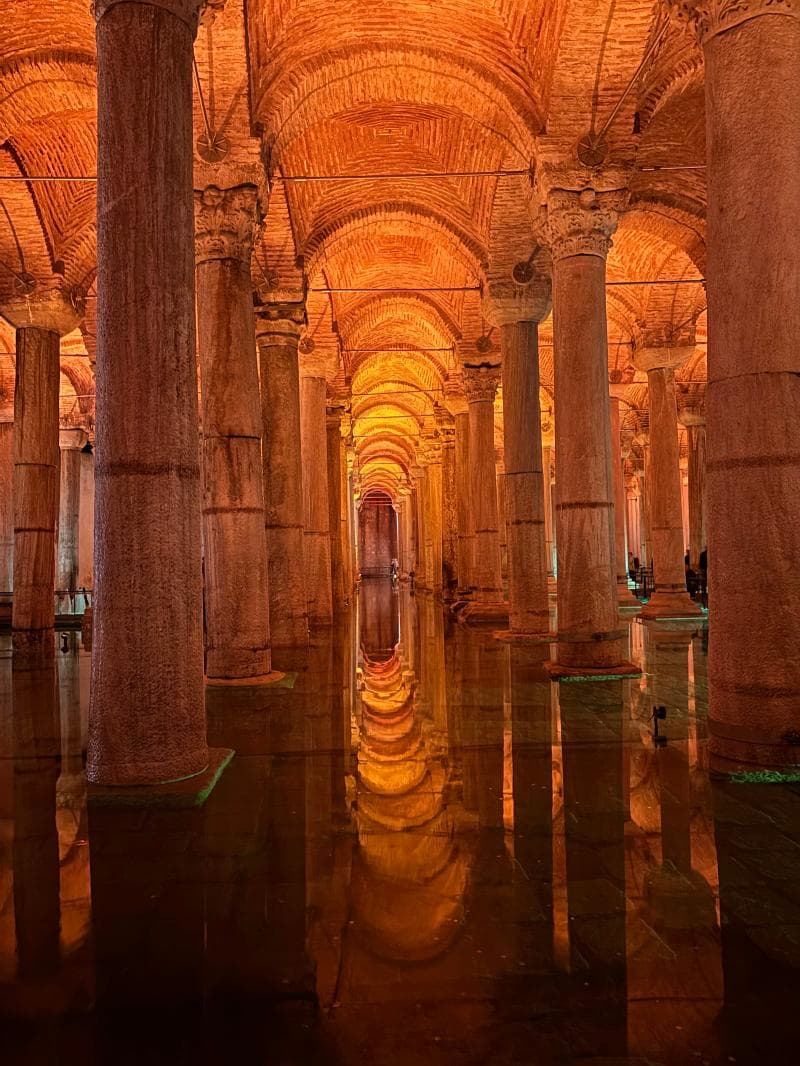

Discover the Reflective Water Pool within Istanbul's ancient Basilica Cistern, a mesmerizing underground marvel reflecting Byzantine history and myth.
Overview
Beneath the bustling streets of Istanbul, Turkey, lies a mesmerizing subterranean world known as the Basilica Cistern, or Yerebatan Sarnıcı, meaning 'Sunken Palace' in Turkish. This ancient marvel, often referred to for its enchanting Reflective Water Pool, offers a serene escape into history. As visitors descend into its cool, dimly lit chambers, they are greeted by a vast expanse of water where hundreds of ancient marble columns rise, creating an illusion of an otherworldly palace submerged beneath the city. The shallow water beneath the walkways dramatically reflects the columns, arches, and strategic lighting, enhancing the sense of scale and drama. The Basilica Cistern is the largest of several hundred ancient cisterns that exist beneath Istanbul, and it is a testament to the sophisticated engineering of the Byzantine Empire.
Today, the Reflective Water Pool and its surroundings serve as a museum and cultural venue, inviting curious travelers to walk along raised platforms, marvel at its architectural grandeur, and immerse themselves in an atmosphere where history and myth seamlessly intertwine.
History & Cultural Background
The history of the Basilica Cistern dates back to the 6th century, commissioned by Byzantine Emperor Justinian I, who reigned from 527 to 565 AD. Its primary purpose was to provide a stable water supply to the Great Palace of Constantinople and other prominent buildings in the imperial district. Constantinople, lacking a natural freshwater source, relied heavily on an intricate system of aqueducts that transported water from the Belgrade Forest, located approximately 19 kilometers away. The cistern acted as a crucial backup reservoir, ensuring water availability during droughts and sieges, making it a strategic asset for the city's survival.
The construction involved approximately 7,000 workers and showcased remarkable Byzantine engineering, utilizing thick brick walls, waterproof mortar, and robust columns and arches to support the ceiling. Many of the 336 marble columns, each about nine meters high, were repurposed from older Roman structures, which explains their varied styles and decorative capitals. After the Ottoman conquest in 1453, the cistern continued to supply water, initially for Topkapı Palace, but its use diminished over time as the Ottomans preferred flowing water systems. It was 'rediscovered' by French naturalist Petrus Gyllius in the 16th century, who noted locals drawing water and even catching fish from underground.
What Makes It Special
What truly sets the Basilica Cistern apart, particularly its Reflective Water Pool, is the unique blend of ancient engineering and ethereal ambiance. The shallow water, deliberately maintained for public access, acts as a gigantic mirror, creating breathtaking reflections of the 336 columns and vaulted ceilings. This interplay of water, light, and shadow transforms a functional water storage facility into an architectural masterpiece that feels more like a 'Sunken Palace' or 'Subterranean Palace.' The soft, artistic lighting design further enhances this mystical atmosphere, making the interior appear larger and more dramatic than it already is.
Beyond the visual spectacle, the cistern's advanced Byzantine engineering, designed to contain 80,000 cubic meters of water, speaks volumes about the ingenuity of its builders. The reuse of columns from various older Roman structures adds an eclectic charm, each telling a silent story of repurposed history. The unique underground setting provides a tranquil respite from the vibrant city above, offering a profound sense of stepping back in time.
Stories, Fun Facts & Local Details
The Basilica Cistern is steeped in intriguing stories and features. The most famous elements are the two enigmatic Medusa heads, used as column bases at the far end of the cistern. One is inverted, and the other is placed sideways, fueling various legends. While some speculate these positions were meant to neutralize Medusa's petrifying gaze, it's more likely they were positioned for structural convenience, utilizing existing blocks from older temples. These mythological figures add a layer of mystery and cultural depth to the site, connecting it to ancient Greek lore.
Another notable feature is the 'Weeping Column,' distinct with its raised circular, eye-shaped, and teardrop-like carvings. Popular folklore suggests these 'tears' commemorate the workers who suffered during the cistern's construction. Visitors often participate in a tradition of touching one of its circular patterns and making a wish. The cistern's unique acoustics have also made it a venue for art exhibitions and classical music concerts, enhancing its cultural significance beyond its historical role. It has even served as a backdrop for Hollywood films, including a James Bond movie, cementing its place in popular culture.
Visitor Perspective
Descending into the Basilica Cistern is a truly immersive experience that transports visitors to another era. The journey begins with a descent of 52 steps, leaving the sounds of modern Istanbul behind for a serene underground world. The cool, damp air and the echoing drip of water create an almost meditative atmosphere. The carefully designed lighting illuminates the rows of columns, casting long, dramatic shadows that dance on the water's surface, making the 'Reflective Water Pool' the star of the show. The walkways, built above the shallow water, allow visitors to navigate through the forest of columns, offering various perspectives of this architectural wonder.
While the visit typically lasts between 30 minutes to an hour, many find themselves lingering longer, captivated by the eerie beauty and historical weight of the place. The presence of large carp swimming in the shallow, glowing water adds another fascinating, almost surreal, element to the experience. It's a place that engages multiple senses, evoking a profound appreciation for Byzantine ingenuity and the enduring allure of Istanbul's hidden depths.
Coordinates: 28.97778, 41.00806
View on Google Maps💬 How Travelers Describe This Place
Based on community votes
Beautiful
623Interesting
545Unique
343Must See
302Photogenic
20
Traveler Stories
Discover memorable experiences shared by travelers who have visited this place.
No traveler stories yet.
Be the first traveler to share what made this place memorable.

Tour
By
Spot
Discover amazing places around the world. Your journey starts here.
Explore
© 2026 TourBySpot. All rights reserved.