Reflecting Pools
Dushanbe, Tajikistan
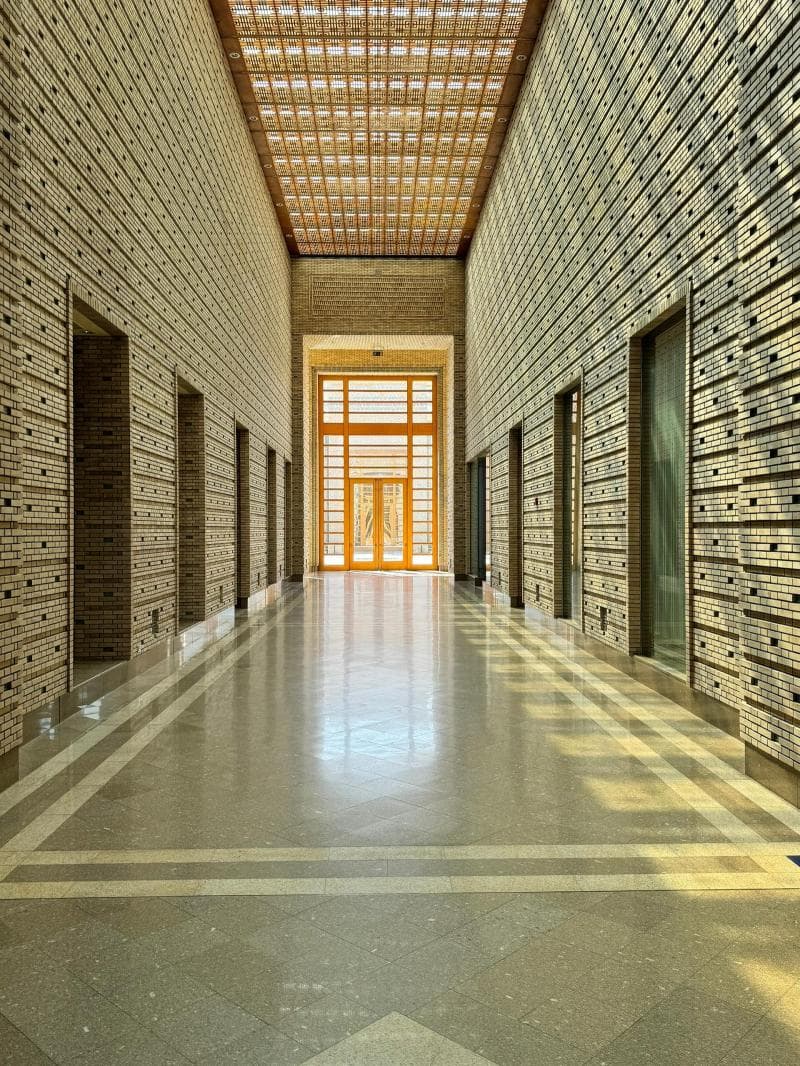
Discover the tranquil Reflecting Pools at the Ismaili Centre Dushanbe, Tajikistan. Explore architectural beauty and spiritual symbolism in this Central Asian gem.
Overview
Nestled in the heart of Dushanbe, Tajikistan, the Ismaili Centre Dushanbe stands as a beacon of cultural exchange and spiritual reflection. Within its meticulously planned grounds, the Reflecting Pools serve as a particularly captivating feature, offering visitors a profound sense of tranquility and a visual dialogue with the surrounding architecture. This Centre, the fifth purpose-built Ismaili Centre globally and the first in Central Asia, was conceived not merely as a place of worship but as a vibrant hub for intellectual engagement, cultural performances, and social gatherings.
The Reflecting Pools, integral to the Centre's design, are more than just decorative water features; they are a manifestation of centuries-old Islamic garden traditions and a contemporary expression of the Ismaili community's values. Their serene surfaces mirror the Centre's exquisite craftsmanship and the vast Central Asian sky, inviting introspection and quiet contemplation from all who visit.
History & Cultural Background
The foundation stone for the Ismaili Centre Dushanbe was laid in August 2003, with its official inauguration taking place in October 2009 by His Highness the Aga Khan and Tajikistan's President. This landmark project emerged from a deep appreciation for the region's rich Ismaili heritage, which spans over a thousand years in Central Asia.
The architecture, designed by Canadian architect Farouk Noormohamed, is a deliberate synthesis of historical memory and contemporary aspiration. It draws inspiration from renowned Central Asian monuments such as the 10th-century Samanid Mausoleum, the 12th-century Karakhanid Mausoleum, and the 14th-century Khwaja Ahmad Yasavi Mausoleum, along with the grand courtyards of legendary cities like Samarkand, Bukhara, and Khiva. The design skillfully incorporates local craft traditions, utilizing materials like sandstone baked brick, intricate woodcarvings, and plasterwork, accented with distinctive blue and turquoise glazed tiles. This blend ensures the Centre resonates deeply with the local culture while reflecting Shia Ismaili principles of humility, friendship, and social responsibility.
What Makes It Special
The Reflecting Pools are undoubtedly a highlight, celebrated for their aesthetic beauty and profound symbolism. Strategically placed within the landscaped gardens and courtyards, these pools are designed to create 'contemplative pools in serene corners of northern loggia' that 'focus the visitor inwards.' A soothing watercourse gracefully guides visitors toward the main entrance, establishing a sense of calm and anticipation.
The design of these water features is deeply rooted in the concept of the chahar bagh, or 'four gardens,' a classical Persian and Islamic garden layout that often symbolizes paradise on Earth, with its four quadrants typically separated by flowing water. This ancient metaphor, evoking the Quran's descriptions of gardens with streams, is beautifully realized through the Centre's interconnecting channels and bubbling fountains, shaded by Persian silk trees. The still surfaces of the pools perfectly mirror the Centre's intricate facades and the interplay of light and shadow, enhancing the overall aesthetic harmony.
Beyond their visual appeal, the water features contribute to the Centre's sustainability efforts. The Ismaili Centre Dushanbe notably employs an innovative water-source heating and cooling system, a testament to the blend of traditional design principles with modern ecological considerations.
Stories, Fun Facts & Local Details
The Ismaili Centre Dushanbe holds the distinction of being the first of its kind in Central Asia, marking a significant milestone for the Ismaili community in the region. Its construction involved the use of approximately three million clay bricks, many of which are punctuated with vibrant blue and turquoise glazes, echoing historical Central Asian architecture.
The Centre is prominently located on Ismoili Somoni Avenue, a name that itself carries historical weight, honoring Tajikistan's national hero and the founder of the 10th-century Samanid dynasty. Inside, details like the traditional Pamiri chorkhona — a skylight design of layered concentric squares — symbolically link the Centre to ancient philosophical concepts of earth, water, air, and fire, further underscoring the spiritual significance of water within the complex.
As an 'ambassadorial building,' the Centre is designed to promote dialogue and understanding between diverse communities. It serves as a space where spiritual insight and worldly knowledge are seen as complementary, fostering an environment of continuous learning and exchange.
Visitor Perspective
Approaching the Ismaili Centre, visitors are greeted by the gentle flow of water and the lushness of the gardens, immediately creating an atmosphere of peace. The Reflecting Pools, with their smooth, still surfaces, offer moments of quiet contemplation, allowing one to pause and absorb the architectural beauty and its deeper meanings. They act as natural focal points, drawing the eye and encouraging a meditative state.
The carefully curated landscape and the thoughtful integration of water throughout the complex create an experience that transcends mere sightseeing. It’s an interior journey that traverses aesthetic harmony and historical memory, fostering a spirit of openness, tolerance, and inspiration. The interplay of water, light, and traditional design elements provides an enlightened encounter with both the past and the present, leaving visitors with a lasting impression of serenity and cultural richness.
Coordinates: 68.7634, 38.58521
View on Google Maps💬 How Travelers Describe This Place
Based on community votes
Beautiful
839Photogenic
445Must See
388Unique
289Interesting
141
Traveler Stories
Discover memorable experiences shared by travelers who have visited this place.
No traveler stories yet.
Be the first traveler to share what made this place memorable.

Tour
By
Spot
Discover amazing places around the world. Your journey starts here.
Explore
© 2026 TourBySpot. All rights reserved.