Rare Bible Displays
Yerevan, Armenia
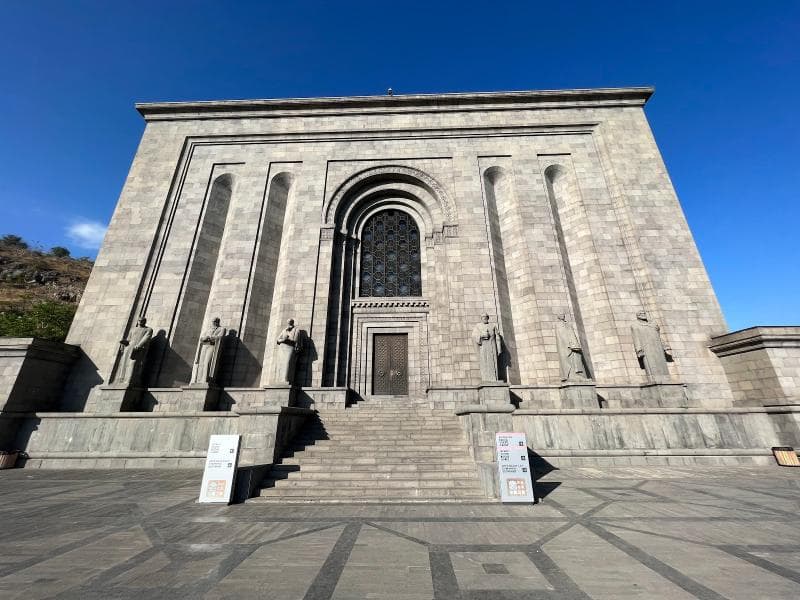
Explore rare Bible displays at Matenadaran in Yerevan, Armenia. Discover ancient manuscripts, the smallest Bible, and Armenian spiritual heritage.
Overview
Deep within the heart of Yerevan, Armenia, stands the Matenadaran, officially known as the Mesrop Mashtots Institute of Ancient Manuscripts. This iconic institution is far more than just a museum; it serves as a vital archive, a dynamic research institute, and a proud repository of Armenia's profound written heritage. Housing an extraordinary collection of approximately 23,000 manuscripts and fragments, it is celebrated globally as one of the richest depositories of ancient texts. Among its myriad treasures, the 'Rare Bible Displays' offer a captivating journey through centuries of spiritual devotion, artistic mastery, and the enduring power of the written word in Armenian culture. These displays showcase not only the antiquity of biblical texts but also the unique ways in which they were crafted, preserved, and revered.
History & Cultural Background
The story of the Matenadaran's collection stretches back to the very roots of Armenian Christianity and literacy. Its origins are deeply intertwined with the creation of the Armenian alphabet by Mesrop Mashtots in 405 AD, a pivotal moment that allowed Armenians to translate and preserve sacred texts in their own language. Armenia holds the distinction of being the first nation to officially adopt Christianity, making the preservation of biblical texts central to its national identity and spiritual life.
The core of the Matenadaran's vast holdings originated from the revered collection of the Armenian Church, historically housed at Etchmiadzin. This collection faced numerous challenges over centuries, including pillaging during conflicts like the Russo-Persian War in 1804. Despite these adversities, efforts were made to safeguard these invaluable manuscripts, with many being moved to Moscow for safekeeping during World War I and later returned to Armenia. In 1959, the Matenadaran was officially established in its current purpose-built structure in Yerevan, nationalizing the church's collection and continuing to expand it through tireless efforts and generous donations.
What Makes It Special
The Matenadaran's 'Rare Bible Displays' are a testament to the unparalleled dedication of Armenian scribes and artists. Visitors are introduced to some of the world's most significant biblical manuscripts. Among the most awe-inspiring is the so-called 'Smallest Bible', a miniature masterpiece meticulously handwritten on ultra-thin parchment. So tiny it fits in the palm of a hand, its script is so fine that it requires a magnifying glass to read, showcasing an almost superhuman level of precision and devotion from its medieval scribe.
The collection also features some of the earliest surviving Armenian biblical texts, including the Lazarian Gospel from the 9th century, the Echmiadzin Gospel from 989 AD—notable for its exquisite 6th-century, possibly Byzantine, carved ivory cover—and the richly illuminated Mughni Gospel from the 11th century. The Vehamor Gospel, dating back to the 5th century, holds the distinction of being the oldest-known complete Armenian manuscript. These ancient texts are not merely religious documents; they are vibrant works of art, often adorned with masterful miniatures, intricate decorations, and precious materials like gold and silver. Beyond handwritten treasures, the Matenadaran also proudly displays the first Armenian Bible ever printed, published in Amsterdam in 1666 by Voskan Yerevantsi, marking a significant milestone in Armenian typography.
Stories, Fun Facts & Local Details
The term 'Matenadaran' itself carries historical weight, translating from ancient Armenian as 'manuscript store' or 'library', perfectly encapsulating its function. Each Bible displayed tells a story not just of faith, but of survival. These manuscripts often bear the marks of tumultuous history—sword slashes, bloodstains, and fire damage—silent witnesses to the many struggles Armenians faced to preserve their spiritual and cultural heritage. They are tangible symbols of resilience, embodying a nation's unwavering commitment to its identity through centuries of upheaval.
Outside the grand building, visitors are greeted by a majestic statue of Mesrop Mashtots, the creator of the Armenian alphabet, alongside other revered figures of Armenian scholarship and art, setting the tone for the intellectual and spiritual journey within. Inside, the museum's commitment to accessibility is evident with tactile display cases designed for visually impaired visitors, allowing a broader appreciation of the unique characteristics of medieval manuscript art.
Visitor Perspective
Visiting the 'Rare Bible Displays' at the Matenadaran is an experience that transcends a typical museum visit. It is an immersive journey into the soul of Armenia, offering profound insights into its enduring Christian faith and its rich artistic legacy. As you gaze upon these ancient Bibles, you are not just observing historical artifacts; you are connecting with the hands of scribes and artists who, through meticulous effort and deep devotion, ensured the survival of these sacred texts. It is a powerful reminder of how deeply intertwined faith, art, and identity are in Armenian culture, leaving visitors with a sense of wonder and deep respect for the treasures preserved within these hallowed halls.
Coordinates: 44.52113, 40.19207
View on Google Maps💬 How Travelers Describe This Place
Based on community votes
Must See
539Unique
517Interesting
422Photogenic
394Beautiful
251
Traveler Stories
Discover memorable experiences shared by travelers who have visited this place.
No traveler stories yet.
Be the first traveler to share what made this place memorable.

Tour
By
Spot
Discover amazing places around the world. Your journey starts here.
Explore
© 2026 TourBySpot. All rights reserved.