Ramparts
Marseille, France
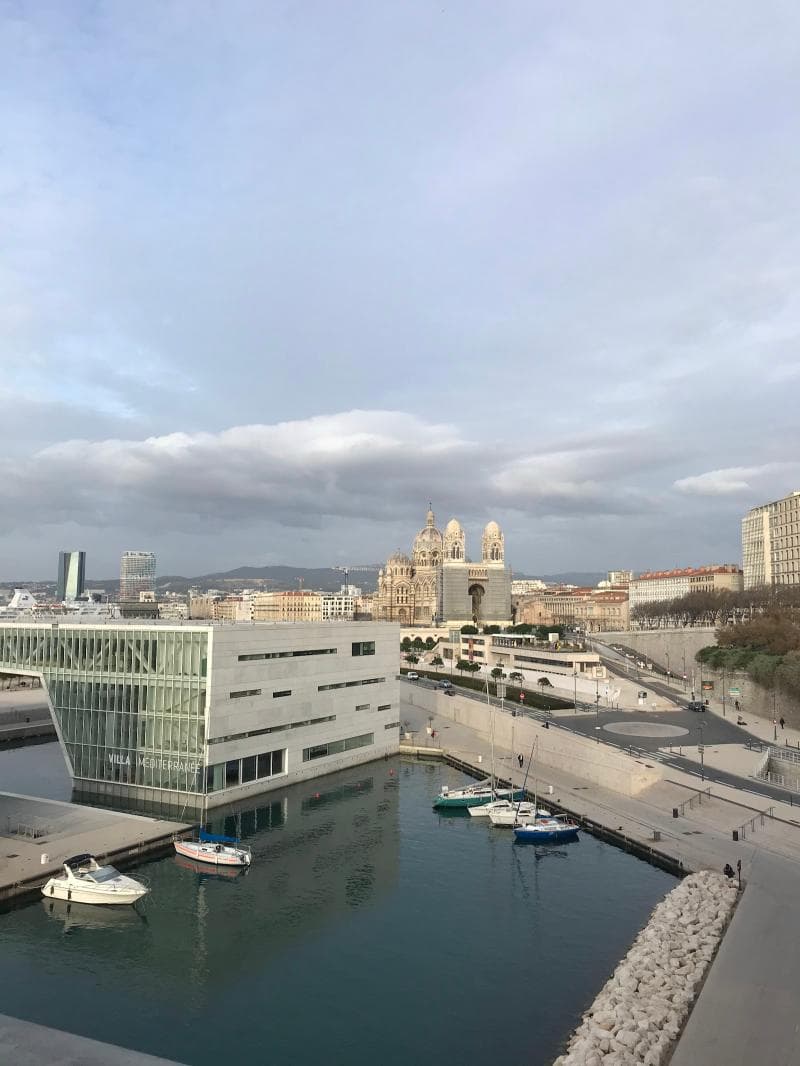
Explore the historic ramparts of Fort Saint-Jean in Marseille, France. Discover centuries of history, stunning Mediterranean views, and its connection to MuCEM.
Overview
Perched majestically at the entrance to Marseille's historic Old Port, the Ramparts of Fort Saint-Jean offer a captivating journey through centuries of Mediterranean history. This iconic sub-spot within the grand Fort Saint-Jean complex is not merely a defensive structure but a vantage point providing breathtaking panoramic views of the sea, the city, and the bustling Vieux-Port. Today, the ramparts are an integral and freely accessible part of the Museum of European and Mediterranean Civilisations (MuCEM), seamlessly blending ancient stonework with modern cultural spaces. Walking the 'Chemin de ronde' — the ancient sentry path along the ramparts — visitors can literally follow in the footsteps of soldiers who once guarded Marseille, experiencing the fort's dual historical purpose: both protecting and, at times, controlling the city itself.
History & Cultural Background
The history of Fort Saint-Jean, and by extension its formidable ramparts, is deeply intertwined with Marseille's long and often tumultuous past. The site's origins trace back to the 12th century, when it was home to a commandery of the Knights Hospitaller of Saint John of Jerusalem, serving as a significant departure point for Crusaders heading to the Holy Land. Evidence of this medieval past, such as the chapel near the Old Port entrance, can still be observed today.
The current iteration of Fort Saint-Jean, including much of its rampart structure, was largely constructed by order of King Louis XIV between 1660 and 1671. This was a strategic move not only to defend Marseille from external threats but also to assert royal authority over the famously rebellious city; historical accounts note that the fort's cannons were pointed inwards, towards Marseille, as much as outwards. The fort incorporates older elements like the 15th-century King René Tower and the 17th-century Fanal (or Lantern) Tower, which served as a lookout and lighthouse for ships.
Over the centuries, the fort adapted to changing historical contexts. It served as a state prison during the French Revolution, holding notable figures like Louis Philippe II, Duke of Orléans, and tragically witnessing massacres. In the 19th and early 20th centuries, it functioned as barracks for the French Army and a clearing station for the Army of Africa. During World War II, German forces used the fort as a munitions depot. An accidental explosion in August 1944 caused significant damage to its historic battlements and buildings. After years of neglect, the fort was classified as a historic monument in 1964. Extensive restoration efforts began in 2010, culminating in its grand reopening in 2013 as a vital part of the MuCEM, finally making its rich history accessible to the public.
What Makes It Special
The ramparts of Fort Saint-Jean offer a truly unique experience, distinguishing them from many other historical fortifications. Their primary allure lies in the spectacular, unobstructed 360-degree views they provide. From these elevated pathways, visitors can gaze across the shimmering Mediterranean Sea, take in the vibrant spectacle of the Old Port with its fishing boats and ferries, and appreciate the sprawling cityscape of Marseille, including the historic Le Panier district and the iconic Notre-Dame de la Garde basilica.
The seamless integration of the ancient fort with the contemporary architecture of the MuCEM via two elegant footbridges is another striking feature. One bridge connects the fort directly to the MuCEM's modern J4 building, while another links it to the historic Panier district, creating a compelling dialogue between past and present. This architectural fusion makes the ramparts a central component of a larger cultural complex. Furthermore, the fort's grounds are home to the 'Jardin des Migrations', a beautiful Mediterranean garden featuring diverse flora, adding a natural and sensory dimension to the historical exploration.
Stories, Fun Facts & Local Details
Beyond their stone and mortar, the ramparts whisper tales of intrigue and resilience. One of the most fascinating aspects is King Louis XIV's clear directive for the fort's construction: to not only defend Marseille but also to keep its rebellious citizens in check. The fact that cannons were deliberately positioned to face the city served as a powerful, albeit subtle, message of royal control.
The site's role as a starting point for Crusaders provides a poignant connection to a bygone era of epic voyages and spiritual quests. Imagine the Knights Hospitaller, clad in their distinctive habits, departing from these very shores for the Holy Land centuries ago. During the French Revolution, the fort became a grim prison, holding prominent figures and witnessing brutal events, including the massacre of Jacobin prisoners in 1794. The devastation caused by the accidental munitions explosion during WWII serves as a stark reminder of the tumultuous 20th century, adding another layer of historical drama to the fort's narrative. Today, the fort's outer areas, including the ramparts and gardens, are freely accessible, allowing locals and visitors alike to reclaim this historic space as a vibrant public area, a testament to Marseille's enduring spirit.
Visitor Perspective
For any curious traveler, a visit to the ramparts of Fort Saint-Jean is an absolute must-do in Marseille. The experience is incredibly immersive: walking along the 'Chemin de ronde' offers a palpable connection to history, transporting you to a time when sentinels paced these very stones. The gentle sea breeze and the sounds of the bustling port below create a sensory backdrop to the stunning visual spectacle.
The accessibility of the fort, especially its connection to the MuCEM and the Panier district via pedestrian bridges, makes it an effortless addition to any itinerary. You can easily combine a historical exploration of the ramparts with a visit to the museum's exhibitions or a stroll through the charming streets of the old town. The fort provides countless photographic opportunities, from sweeping coastal vistas to architectural details. Whether you are a history enthusiast, a culture seeker, or simply someone who appreciates a beautiful view, the ramparts of Fort Saint-Jean promise a memorable and enriching experience, perfectly encapsulating the unique blend of history, culture, and natural beauty that defines Marseille.
Coordinates: 5.362433, 43.295387
View on Google Maps💬 How Travelers Describe This Place
Based on community votes
Must See
556Photogenic
540Unique
470Interesting
410Beautiful
254
Traveler Stories
Discover memorable experiences shared by travelers who have visited this place.
No traveler stories yet.
Be the first traveler to share what made this place memorable.

Tour
By
Spot
Discover amazing places around the world. Your journey starts here.
Explore
© 2026 TourBySpot. All rights reserved.