Ramakien Murals
Bangkok, Thailand
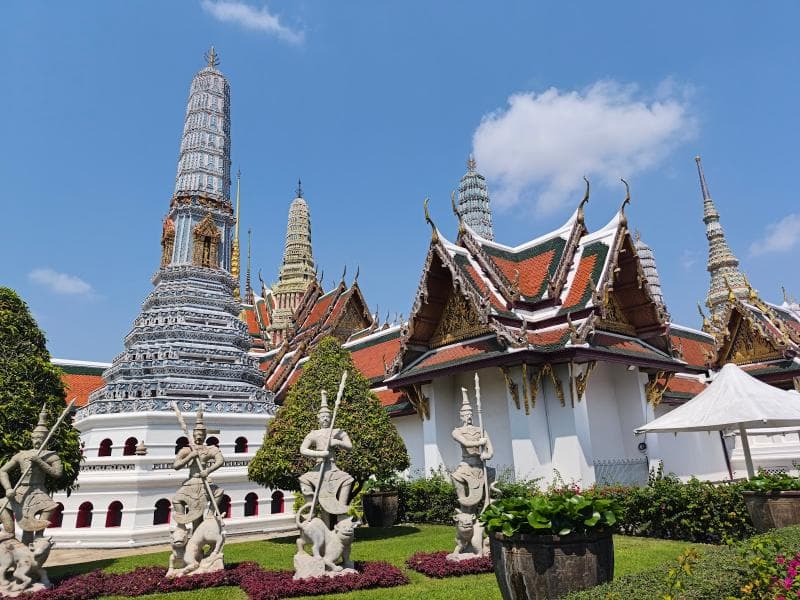
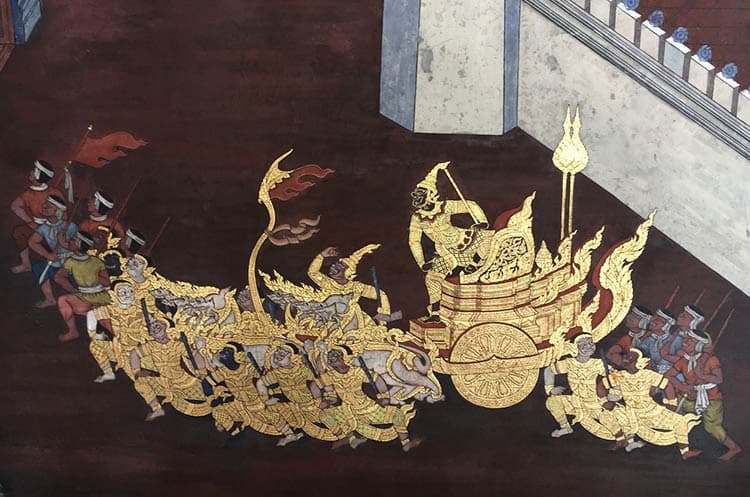
Discover the Ramakien Murals at Wat Phra Kaew in Bangkok, Thailand – a vibrant visual epic depicting Thailand's national tale of heroes and demons.
Overview
Step into a vibrant narrative of ancient legends as you discover the Ramakien Murals, nestled within the revered Wat Phra Kaew (Temple of the Emerald Buddha) in Bangkok, Thailand. These captivating artworks are not merely decorative; they serve as a sprawling visual encyclopedia of Thailand's national epic, the Ramakien. Adorning the inner walls of the cloister that encircles the main temple, these murals span over two kilometers, presenting a continuous, magnificent spectacle of traditional Thai artistry.
As you stroll through the cloister, you'll embark on a journey through 178 intricately painted panels, each depicting a sequential scene from the epic tale. Following them in a clockwise direction, you'll witness the epic unfold, a timeless struggle between good and evil, heroism and villainy, all rendered in exquisite detail and vibrant colors that define traditional Thai painting.
History & Cultural Background
The Ramakien, meaning 'Glory of Rama,' is the Thai adaptation of the ancient Indian Hindu epic, the Ramayana. While its origins trace back centuries, the version most influential in Thailand was largely compiled and rewritten during the reign of King Rama I (1782–1809), the founder of the Chakri dynasty. It was under his patronage that the Wat Phra Kaew was constructed, and the original Ramakien Murals were commissioned in 1783, bringing this epic narrative to life on the temple's walls.
The Ramakien holds a pivotal role in Thai culture, deeply influencing its literature, performing arts—such as the elegant Khon masked dance drama—and visual arts. Though derived from the Hindu Ramayana, the Thai adaptation artfully incorporates local values, beliefs, and traditions. Elements like clothing, weapons, and even the natural landscape depicted in the story are distinctly Thai, reflecting the nation's unique cultural identity. The narrative, while retaining its core themes, was also adapted to align with Thailand's predominantly Theravada Buddhist context, often portraying the hero Phra Ram as an ideal king rather than solely a Hindu deity.
What Makes It Special
What sets the Ramakien Murals apart is their sheer scale and comprehensive storytelling. Stretching over 2,000 meters, they present the entire epic in a continuous, flowing sequence, making it one of the most extensive visual narratives in Thailand. The murals are not static relics; they have been meticulously restored and repainted several times throughout history, typically every fifty years, a testament to the ongoing reverence for this national treasure and the challenges posed by Bangkok's humid climate. The last significant restoration occurred in the 1970s in anticipation of the Chakri Dynasty's bicentennial.
The artistic style is a quintessential example of traditional Thai painting, characterized by its elaborate details, rich color palettes, and the liberal use of gold leaf, which creates a striking and often shimmering effect in the darkened cloister. Beyond their artistic merit, the murals also serve as a historical record, reflecting how different generations of Thai artists interpreted and preserved the Ramakien story while showcasing their craftsmanship.
Stories, Fun Facts & Local Details
The central plot of the Ramakien revolves around the virtuous Prince Phra Ram (an incarnation of the god Vishnu), his loyal wife Nang Sida, and his devoted brother Phra Lak. The conflict ignites when the formidable ten-headed demon king, Tosakanth (the Thai equivalent of Ravana), abducts Nang Sida. Phra Ram, aided by his loyal monkey general Hanuman and his monkey army, embarks on an epic quest to rescue his beloved wife.
A fun fact is that the murals also depict architectural elements like palaces and temples that are adapted from real structures within the capital, subtly embedding the fantastical narrative within a familiar Thai landscape. Sometimes, the character of Phra Ram is even viewed as an early incarnation of the Lord Buddha, and the struggle with Tosakanth as a battle between Dharma and the 'darker forces of human nature,' reflecting the Buddhist principles woven into the epic. This intertwining of Hindu origins with Buddhist interpretations gives the Ramakien a unique spiritual depth in Thailand.
Visitor Perspective
For visitors, walking alongside the Ramakien Murals offers a profound cultural immersion. It's an opportunity to visually absorb a story that has shaped Thai identity for centuries. As you follow the narrative panel by panel, you'll encounter a rich tapestry of gods, demons, mythical creatures, and heroic battles. The murals provide insights into Thai values such as loyalty, duty, and the triumph of good over evil. Observe the intricate details of each scene, the expressive faces of the characters, and the vibrant hues that bring this ancient epic to life. It's an experience that transcends mere sightseeing, offering a deeper connection to Thailand's artistic heritage and the enduring power of its cultural narratives. The sheer scale and detail of this artwork make the Ramakien story particularly striking, leaving a lasting impression on all who witness it.
Coordinates: 100.492, 13.7501
View on Google Maps💬 How Travelers Describe This Place
Based on community votes
Beautiful
836Interesting
795Must See
620Unique
522Photogenic
489
Traveler Stories
Discover memorable experiences shared by travelers who have visited this place.
No traveler stories yet.
Be the first traveler to share what made this place memorable.

Tour
By
Spot
Discover amazing places around the world. Your journey starts here.
Explore
© 2026 TourBySpot. All rights reserved.